
No products in the cart.
How to Create Topic Clusters with AI: A Data-Driven Blueprint for Modern SEO

29
Jul
Jul
Topic clusters have transformed the way websites build authority and rank for competitive keywords. Instead of publishing isolated blog posts, you create a network of interlinked content centered around a single pillar page. This signals deep expertise to search engines. The challenge has always been identifying the right subtopics, understanding semantic relationships, and scaling the work. AI now removes those barriers. This guide shows you exactly how to create topic clusters with AI, from initial research to performance tracking, using tools that analyze language patterns and user intent at scale.
What Are Topic Clusters and Why Do They Matter?
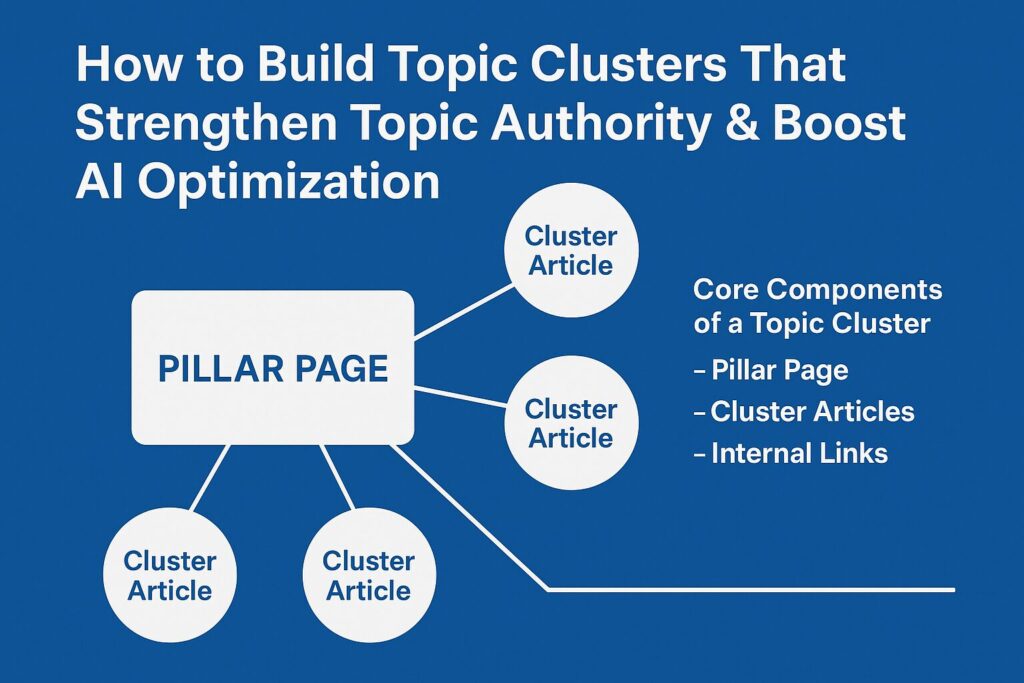
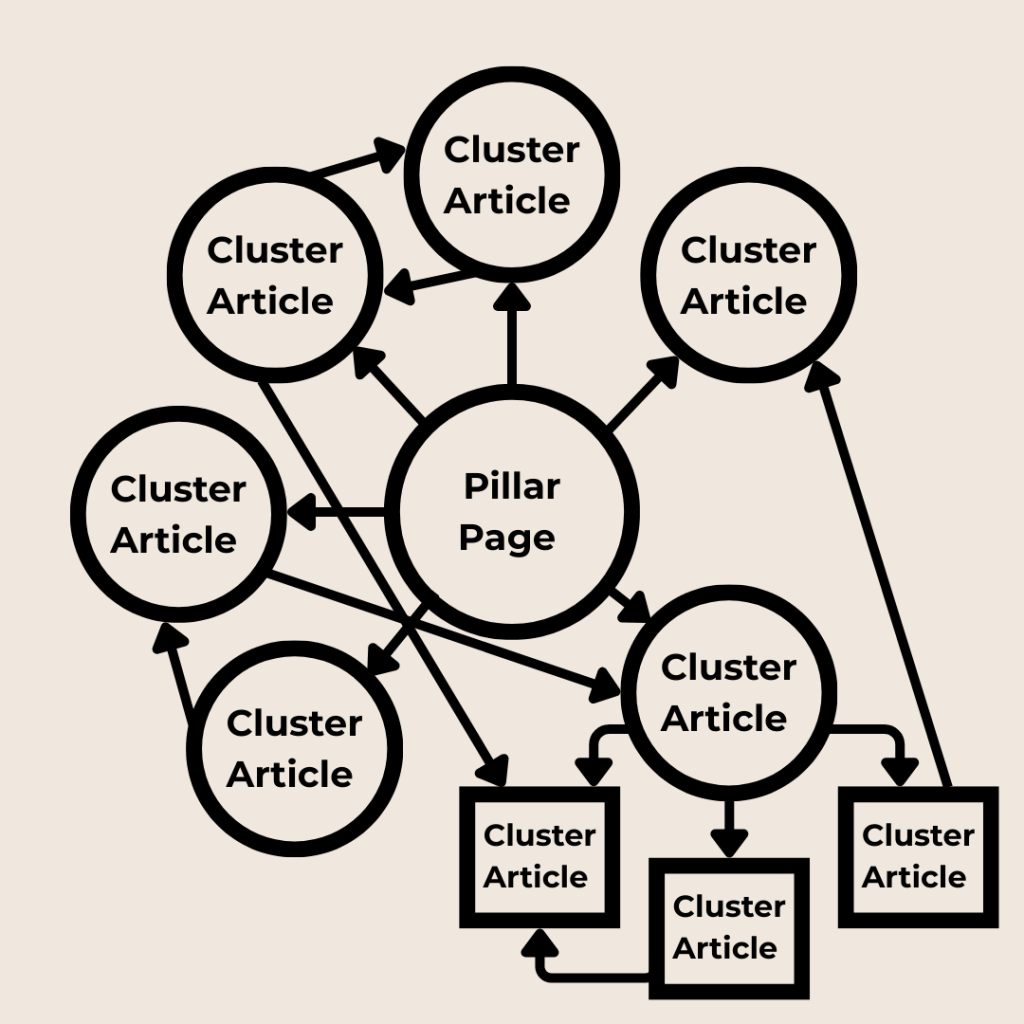
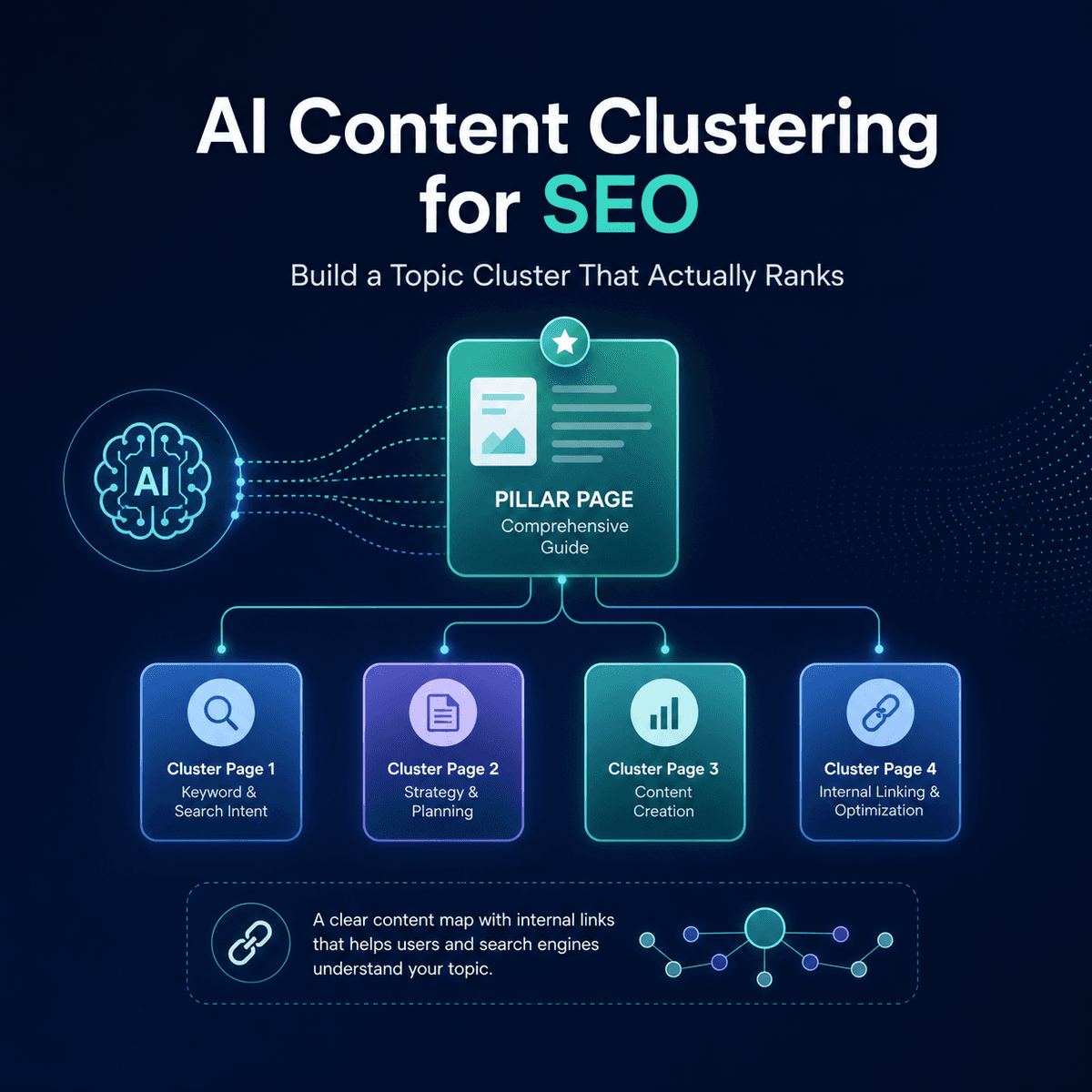
A topic cluster is a content architecture model. It consists of a comprehensive pillar page covering a broad subject, supported by multiple cluster pages that explore related subtopics in detail. Every cluster page links back to the pillar page and, ideally, to other relevant cluster content. This internal linking web helps search engines understand topical depth and the semantic connections between your articles.
The SEO benefit is twofold. First, you build topical authority, which Google rewards with higher rankings across an entire domain segment. Second, the structure improves crawl efficiency and passes equity efficiently. When one page performs well, others in the cluster rise because of the intentional link graph.
For readers, topic clusters offer a natural content journey. A visitor lands on a long-form guide about “email marketing” (pillar), and from there navigates to detailed pieces on segmentation, automation, and deliverability. Time on site increases, bounce rates drop, and conversion paths become clearer.
The Role of AI in Topic Cluster Strategy
Traditional cluster research relied on manual keyword lists and educated guesses. AI changes the game by processing massive datasets—search results, competitor content, user behavior signals—to surface semantic clusters you might never identify on your own. Natural language processing models understand how concepts relate, not just which strings match.
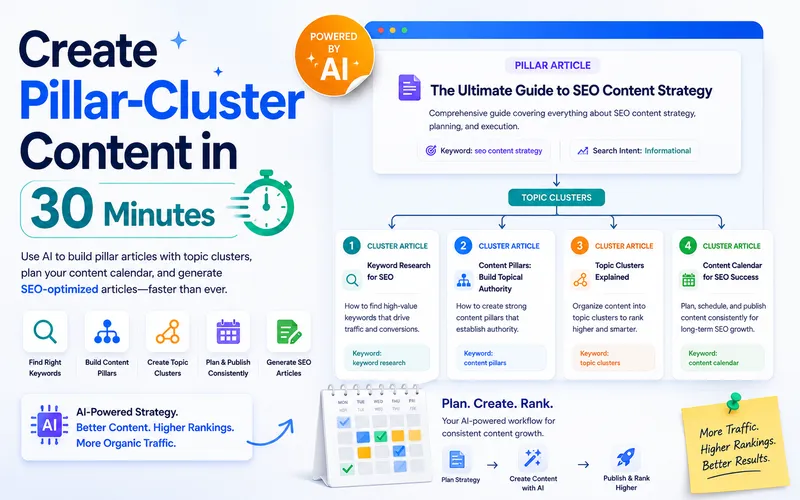
Artificial intelligence assists at every stage: finding cluster topics from seed keywords, analyzing search intent behind queries, generating content briefs with relevant subtopics, identifying internal linking opportunities, and even drafting content that respects entity relationships. It turns what used to be weeks of keyword research into a few focused hours of human-guided machine analysis.
Importantly, AI doesn’t replace strategy. It amplifies it. The best results come when an SEO expert defines the pillar theme and then uses AI to explore the knowledge graph around it, validate ideas with search volume and competition data, and spot gaps that competitors have left open.
Step-by-Step Process to Create Topic Clusters with AI
1. Identify Your Core Topic and Pillar Page
Start with a broad subject that represents a significant revenue or traffic opportunity for your business. It should be something your audience searches for often and that your brand can credibly own. Examples are “content marketing,” “project management software,” or “ketogenic diet.” The pillar page will be your definitive resource on this topic—think 3,000 words or more, covering the what, why, and how.
Use AI to validate demand. Tools like Semrush’s Topic Research or Ahrefs’ Keywords Explorer can take your seed term and show monthly volume, trend data, and the ecosystem of related queries. AI surfaces parent topics and indicates whether a topic truly deserves a pillar page or works better as a cluster subtopic itself.
2. Use AI to Discover Cluster Topics
This is where AI shines brightest. Instead of typing keywords into a research tool one by one, feed your pillar topic into an AI-driven clustering engine. Platforms such as MarketMuse, Keyword Insights, or HubSpot’s Content Strategy tool will analyze search engine results pages, extract entities, and group queries by semantic similarity.
For example, if your pillar is “customer retention strategies,” the AI might return clusters like:
- Churn rate analysis and prediction
- Loyalty program design
- Customer feedback collection methods
- Onboarding and engagement email sequences
- Retention metrics that matter
- Primary and secondary keywords
- Recommended word count based on top performers
- Key questions to answer
- Semantically related terms to include
- Competitor URL examples for reference
- Unmatched speed: AI reduces topic research from days to minutes. You can model hundreds of potential clusters simultaneously, accelerating your content pipeline.
- Data-backed precision: Instead of guessing what subtopics matter, machine learning analyzes search intent, competitor gaps, and semantic connections with empirical consistency.
- Scalable consistency: AI-generated briefs enforce uniform quality and structure across dozens of pages, maintaining brand standards even with multiple writers.
- Improved topical authority: By covering all entity relationships, your site signals comprehensive expertise, which Google’s algorithms reward with higher collective rankings.
- Content refresh intelligence: AI can continuously monitor SERP shifts and notify you when a cluster page needs an update, protecting long-term rankings.
- Ignoring search intent: AI can surface keywords, but if you force an informational keyword into a product page, you will never rank well. Always map intent manually before committing to a page type.
- Creating clusters without a strong pillar: A weak pillar page undermines the entire structure. Ensure your cornerstone content is genuinely comprehensive and well-optimized before you link to it from cluster pages.
- Poor internal linking: Simply listing cluster URLs in a sidebar isn’t enough. In-content contextual links with varied, relevant anchor text are what strengthen the semantic web.
- Neglecting content freshness: AI might help you build a cluster once, but if you never update the pages, rankings will decay. Schedule quarterly reviews using AI monitoring tools.
- Building too many clusters at once: Spreading resources thin leads to incomplete, low-quality pages. Focus on one pillar at a time, execute flawlessly, then expand.
Each cluster becomes a dedicated piece of content. The AI also shows you how those subtopics relate to the parent, which helps you avoid overlap and ensures each page covers a distinct aspect of the larger subject.
3. Analyze Semantic Relationships and Search Intent
Raw keyword lists lack context. Modern natural language models classify intent behind a search: informational, navigational, commercial, transactional. AI tools like Clearscope and SurferSEO examine top-ranking pages for a given cluster query and extract the entities, headings, and questions they address. This tells you exactly what users expect to find.
Turn that insight into a content map. For a cluster around “loyalty program design,” the AI might highlight related concepts like “tiered rewards,” “point expiration,” and “gamification.” It also reveals the dominant intent is informational, meaning a how-to guide or an ultimate listicle would perform best—not a product comparison.
Check for gaps too. AI can show you subtopics that competitors have barely touched. These low-competition, high-relevance angles let you enter the cluster with an immediate authority advantage.
4. Generate a Content Brief for Each Cluster Page
Once cluster topics are solidified, produce a detailed content brief for every page. AI writing assistants (such as Jasper or ChatGPT fed with proper context) can rapidly generate outlines that include:
The brief ensures consistency across the entire cluster. Each page tackles a focused topic but shares your brand voice and formatting standards. You maintain editorial control; AI simply accelerates the research and structuring that often bottlenecks content teams.
5. Write or Optimize Cluster Content with AI Assistance
Drafting can follow two paths. If you have in-house writers, use AI to generate a first draft or to expand sections with data-driven suggestions. Tools that integrate with Google Docs, like Frase or Writer, provide real-time optimization tips as you type—highlighting missing entities, suggesting internal links, and checking readability.
For teams that use AI-generated content, always apply a thorough human review. AI can produce fluent text, but it may omit nuance, oversimplify complex subjects, or drift off-brand. The goal is a symbiotic workflow: machine speed for first drafts, human expertise for depth, storytelling, and factual verification.
6. Build a Strategic Internal Linking Structure
The power of a topic cluster lies in its links. Every cluster page must link to the pillar page, usually with relevant anchor text that includes the core topic or a variation. Additionally, cluster pages should cross-link where logically connected—this reinforces semantic bonds.
AI can now scan your entire site and recommend internal linking opportunities. Platforms like Link Whisper or the internal linking suggestions in Rank Math SEO plugin analyze existing content and highlight where a new cluster page naturally fits. They also detect orphan pages that lack incoming links. A comprehensive interlinking audit conducted by AI at regular intervals keeps the cluster’s architecture healthy as you add new content.
7. Track Performance and Iterate
A topic cluster is a living asset. After publishing, monitor organic traffic to the pillar and cluster pages, keyword rankings, and engagement metrics. Google Search Console can show whether queries across the cluster are rising together. AI analytics tools can correlate ranking improvements with your cluster structure.
Use AI insights to identify underperforming pages. A page might require expanded content, better internal links, or a refresh to match updated search intent. Some AI platforms even suggest new cluster topics that have emerged since your initial build, helping you expand your authority without starting from scratch.
AI Tools for Topic Clustering: A Comparison
Choosing the right technology stack makes the process efficient and scalable. The table below compares leading AI-driven tools based on their core strengths, typical pricing, and best-fit scenarios.
| Tool | Key AI Features | Best For | Starting Price |
|---|---|---|---|
| MarketMuse | Topic modeling, content briefs, competitive heatmaps, semantic entity analysis | Enterprise content teams needing deep topical authority scoring | Custom quote / ~$7,500/year |
| Clearscope | Content optimization, term frequency analysis, readability grading | Optimizing existing cluster content against live SERP data | $170/month |
| Keyword Insights | AI-powered keyword clustering, SERP similarity grouping, cluster visualizations | Rapid discovery of large keyword sets and turning them into logical clusters | $58/month |
| HubSpot Content Strategy | Topic cluster planning, pillar page suggestions, internal linking tracker | Teams already using HubSpot CRM wanting native SEO planning | Free with Marketing Hub starter |
| SurferSEO | Content editor with NLP suggestions, SERP analyzer, internal link audit | Writers and SEOs who want a hands-on optimization environment | $69/month |
| ChatGPT (with proper prompts) | Generate content outlines, identify subtopics, suggest anchor text, simulate intent analysis | Low-budget research and brainstorming when paired with human verification | Free / $20/month for Plus |
No single tool covers every step. Many successful strategies combine a keyword clustering tool for discovery with a content optimizer for drafting and a CMS plugin for internal linking. The right mix depends on your team size, content volume, and technical expertise.
Benefits of Using AI to Create Topic Clusters
Limitations and Challenges
Despite its power, AI is not a replacement for strategic thinking. The biggest risk is over-reliance on automated suggestions without human validation. AI can misinterpret search intent, especially for nuanced or low-data queries. It may also generate content that reads plausibly but contains factual errors—a phenomenon known as hallucination.
Cost can be a barrier. Premium AI clustering tools come with significant subscription fees, making them less accessible to freelancers or very small businesses. Additionally, AI models trained on broad internet data might lack the domain-specific edge that niche industries require. A healthcare or legal topic, for instance, demands expert review far beyond what a language model can guarantee.
Finally, AI sometimes encourages content inflation. A tool might suggest 50 cluster pages for a topic, but publishing thin, overlapping pieces will dilute your authority rather than build it. Editorial restraint is still essential.
Common Mistakes When Building Topic Clusters with AI
Key Considerations for Success
Maintain a human-centered approach. AI generates ideas, but you decide which topics align with your brand’s unique value proposition and your audience’s real problems. Every cluster page should solve a specific user need, not just fill a keyword gap.
Invest in quality content that reflects experience and expertise. Google’s emphasis on E-E-A-T (Experience, Expertise, Authoritativeness, Trustworthiness) means that author bios, credible references, and first-hand examples often matter more than keyword density. AI tools can identify these elements to include, but a human must craft them.
Measure both leading and lagging indicators. Organic traffic growth is a lagging metric. Leading indicators like crawl frequency, indexed pages, click‑through rates, and average position improvements tell you if the cluster structure is being recognized and rewarded sooner.
Frequently Asked Questions

What is a topic cluster in SEO?
A topic cluster is a group of interlinked web pages that cover a broad subject. It includes one pillar page that acts as the main hub and multiple cluster pages that explore specific subtopics. Internal links from clusters back to the pillar, and among clusters themselves, help search engines understand your site’s expertise and improve rankings across the group.
How does AI help create topic clusters?
AI assists by analyzing search data to find semantically related subtopics, determining search intent, building content briefs, and suggesting internal linking structures. It processes enormous amounts of information quickly, revealing patterns and opportunities that manual research would miss. AI also helps optimize content by comparing it against top-performing competitor pages in real time.
Which AI tools are best for topic clustering?
Common choices include MarketMuse for deep topical analysis, Keyword Insights for rapid keyword clustering, Clearscope and SurferSEO for content optimization, and HubSpot’s Content Strategy tool for end-to-end cluster planning. Budget-friendly alternatives include using ChatGPT for brainstorming and Google’s NLP API for entity extraction, though these require more manual validation.
Can I fully automate topic cluster creation?
No. While AI can generate topic ideas, outlines, and even drafts, full automation risks low-quality, generic content that fails to build real authority. Strategic decisions—choosing the right pillar, defining brand voice, verifying facts, and designing a unique internal linking strategy—still require human expertise. The most successful teams use AI as a powerful assistant, not a set-and-forget solution.
How do I measure the impact of topic clusters?
Track organic traffic to both the pillar and cluster pages over time using Google Analytics and Google Search Console. Monitor keyword rankings for terms within the cluster, the number of pages indexed, and internal link click-through rates. A healthy cluster shows correlated growth: as the pillar gains authority, cluster pages rise, and the entire group captures more long-tail searches.
Conclusion
Creating topic clusters with AI is no longer a futuristic idea; it is a practical, scalable method for building enduring organic search visibility. By letting artificial intelligence handle the heavy lifting of topic discovery, intent analysis, and optimization suggestions, you free your team to focus on strategy, storytelling, and user experience. The result is a site structure that search engines understand intuitively and readers genuinely value. Start with a single pillar, apply the steps outlined, and use the right blend of AI tools to grow your topical authority methodically. The compound effect of well-built clusters will strengthen your entire content ecosystem for years to come.
Xem thêm:
- AI SEO LLM Search Optimization: The Complete Guide to Ranking in Generative Search
- AI SEO Generative Search Visibility: The Complete Playbook for 2025
- Gemini vs ChatGPT for SEO: Which AI Tool Truly Elevates Your Search Rankings
- The Ultimate Guide to AI Comparison Articles That Actually Help Readers Decide
- AI SEO Topic Modeling: The Complete Guide to Content That Ranks
Bài viết cùng chủ đề:

AI SEO SEO Automation with Make: The Complete Workflow Guide

AI SEO SEO Automation with Zapier: The Complete Workflow Guide

AI SEO SEO Automation with n8n: The Complete Workflow Guide
AI SEO SEO Automation with Gemini: The Complete Guide to Scaling Organic Growth

AI SEO SEO Automation with Claude: The Complete Guide to Scaling Content in 2025

AI SEO SEO Automation with ChatGPT: The Complete Playbook for 2025

AI SEO & SEO Automation for Affiliate Sites: The 2025 Playbook for Passive Income Growth
AI SEO & SEO Automation for Bloggers: The Complete Guide to Scaling Your Content

AI SEO & SEO Automation for Agencies: The Complete 2025 Playbook

AI SEO and SEO Automation for Ecommerce: The Complete Playbook for 2025

AI SEO & SEO Automation for WordPress: The Complete Playbook for 2025
AI SEO SEO Automation Strategy: The Complete Playbook for 2025

Mastering the AI SEO SEO Automation Process: A Complete Guide to Scaling Organic Growth
AI SEO SEO Automation System: The Complete Guide to Scaling Organic Growth in 2025
AI SEO SEO Automation Platform: The Complete Guide to Scaling Organic Growth in 2025
AI SEO SEO Automation Software: The Complete Guide to Scaling Organic Growth in 2025















