
No products in the cart.
AI SEO LLM Visibility: The Complete Guide to Ranking in ChatGPT, Perplexity, and AI Overviews
10
Aug
Aug
The landscape of search is shifting beneath our feet. While traditional Google rankings remain vital, a new frontier has emerged: AI SEO LLM Visibility. This concept refers to the ability of your brand, content, and products to be cited, referenced, or recommended by Large Language Models (LLMs) like ChatGPT, Claude, Gemini, and Perplexity. As users increasingly turn to AI chatbots for answers, ensuring your digital assets are visible within these generative engines is no longer optional—it is a critical component of a modern SEO strategy. This guide provides a deep dive into what LLM visibility means, why it matters, and how to optimize for it effectively.
What is AI SEO LLM Visibility?
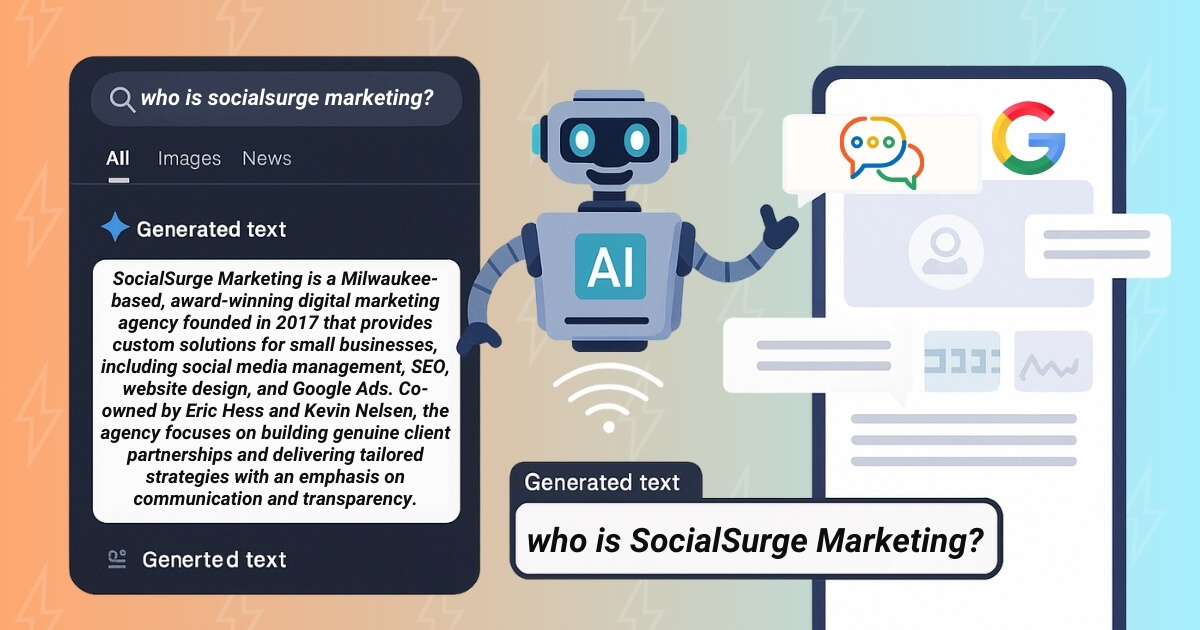
AI SEO LLM Visibility measures how frequently and accurately an AI model references your brand or content when generating a response. Unlike traditional SEO, which focuses on ranking in a list of blue links, LLM visibility focuses on being the source of the answer itself. When a user asks ChatGPT for the “best project management software for remote teams,” the LLM synthesizes information from various sources to provide a conversational answer. If your software is mentioned in that response, you have achieved LLM visibility.
This is fundamentally different from a click-through. In traditional search, you fight for the top spot to earn a click. In the AI space, you are fighting for a mention within a synthesized paragraph. The goal is to become a trusted data point that the model uses to construct its answer. This requires a shift in mindset from optimizing for crawlers to optimizing for semantic understanding and factual accuracy.
The Shift from PageRank to ContextRank
Google’s original algorithm relied on PageRank, a system that counted links to determine a page’s importance. LLMs operate on a different principle. They use transformer-based architectures that predict the next word in a sequence based on massive datasets. They do not “see” your website as a page; they see it as a collection of tokens and semantic entities. Therefore, AI SEO LLM Visibility relies on ContextRank—your ability to provide clear, unambiguous, and well-structured context that the model can easily parse and associate with specific queries.
Why LLM Visibility Matters for Your Brand
The adoption rate of AI search tools is staggering. Perplexity processes millions of queries daily, and ChatGPT has integrated web browsing capabilities. More importantly, Google’s AI Overviews (formerly SGE) now sit at the top of the search results page, often answering the query without requiring a user to click through to a website. This creates a “zero-click” environment where the answer is the destination.
If your content is not the source of that answer, you lose brand awareness, referral traffic, and potential conversions. Building AI SEO LLM Visibility ensures that when your target audience asks a question, your brand is part of the conversation. It builds authority and trust, positioning you as a thought leader in your niche.
How LLMs Source Information: The Mechanics of Visibility
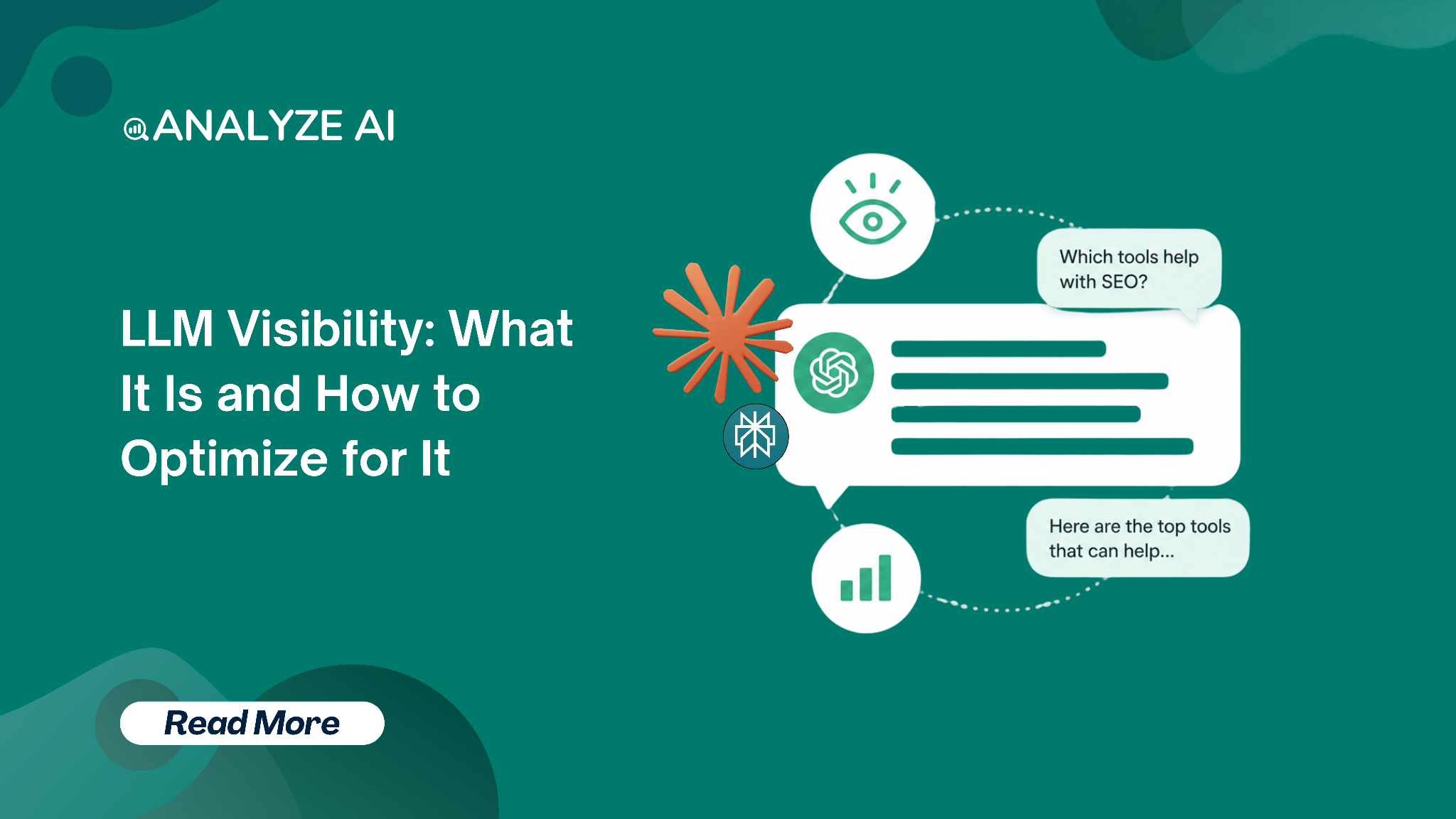
To optimize for LLMs, you must understand how they retrieve information. Most modern LLMs use a technique called Retrieval-Augmented Generation (RAG). When a user asks a question, the model does not immediately generate an answer. Instead, it searches an index of web pages (or a vector database) to find relevant passages. It then uses those passages as context to generate a coherent response.
This process involves three key steps:
- Retrieval: The system identifies candidate documents based on keyword and semantic similarity to the query.
- Ranking: The retrieved passages are scored for relevance and authority.
- Generation: The LLM synthesizes the top-ranked passages into a natural language answer.
- Audit Your Current Visibility: Ask ChatGPT and Perplexity 10 questions related to your industry. Record if your brand is mentioned.
- Identify Content Gaps: Analyze the answers you received. What sources did the AI cite? What information is missing? Create content that fills those gaps.
- Update Existing Content: Go through your top 20 pages. Rewrite the introductions to be “answer-first.” Add a clear FAQ section using FAQPage schema.
- Implement Schema: Use tools like Schema.org to add Organization, Product, and Article markup to your site.
- Launch a Digital PR Campaign: Pitch unique data or expert commentary to industry publications to earn high-authority brand mentions.
- Monitor and Iterate: Re-run the manual audit monthly. Track your referral traffic from AI platforms. Adjust your strategy based on what is working.
Your goal is to optimize for the retrieval and ranking stages. You need to ensure your content is structured in a way that makes it easy for the retrieval system to find and rank it highly.
Structured Data and Schema Markup
Schema markup is the most direct way to communicate with AI crawlers. By adding structured data to your HTML, you provide explicit clues about the meaning of your content. For example, using FAQPage schema tells the LLM that your content contains a list of questions and answers. Using Product schema provides specific attributes like price, rating, and availability. This reduces ambiguity and increases the likelihood that your content is selected for citation.
Core Strategies to Improve AI SEO LLM Visibility
Improving your visibility in AI search requires a multi-faceted approach that combines technical SEO with high-quality content creation. Here are the core strategies that yield the highest return on investment.
1. Optimize for Entity Clarity
LLMs think in entities—people, places, organizations, and concepts. Your content must clearly define who you are and what you do. Ensure your “About” page is detailed and factual. Use consistent naming conventions for your brand and products across the web. If you are a software company, clearly state the problem you solve and the primary features you offer. This helps the LLM associate your entity with specific user intents.
2. Create “Answer-First” Content
Traditional SEO often uses a “question-introduction-answer” structure. For LLMs, you need to invert this. Put the answer in the first paragraph, or even the first sentence. Use direct, declarative statements. If the query is “What is the capital of France?” your content should start with “The capital of France is Paris.” This “answer-first” approach makes it trivially easy for the RAG system to extract the exact passage it needs.
3. Build Topical Authority with Pillar Pages
LLMs favor sources that demonstrate comprehensive knowledge of a subject. Instead of writing scattered blog posts, create “pillar pages” that cover a topic in exhaustive detail. A pillar page about “Email Marketing” should cover everything from deliverability to segmentation to automation. Then, link out to “cluster” posts that dive deeper into specific subtopics. This creates a web of interconnected information that signals authority to the AI.
4. Leverage Digital PR and Brand Mentions
LLMs are trained on a vast corpus of text, including news articles, forums, and social media. When your brand is mentioned in high-authority publications, it becomes part of the model’s training data or retrieval index. Digital PR is not just about links anymore; it is about earning citations. A mention in Forbes or TechCrunch significantly boosts your AI SEO LLM Visibility because these sources are heavily weighted in the retrieval process.
5. Optimize for Conversational Queries
Users type different queries into ChatGPT than they do into Google. Google queries are often fragmented (“best pizza NYC”). AI queries are conversational (“What is the best pizza place in New York City that has a good outdoor seating area?”). Optimize your content for long-tail, conversational keywords. Include natural language phrases and synonyms that a human would use when speaking, not just when typing.
Technical SEO Adjustments for AI Crawlers
While content is king, technical accessibility is the throne. If AI crawlers cannot access your site, your content is invisible. Here are the technical adjustments you need to make.
Robots.txt and Crawl Budget
Ensure your robots.txt file is not blocking AI crawlers like GPTBot, ClaudeBot, or Google-Extended. These crawlers have specific user-agent strings. You should explicitly allow them to access your site. However, you may want to block them from crawling low-value pages like tag pages or internal search results to preserve your crawl budget for high-value content.
Server Response Times
AI crawlers are aggressive and impatient. If your server takes too long to respond, the crawler may abandon the request. Ensure your hosting can handle spikes in traffic from AI bots. A slow site not only hurts your Google rankings but also reduces your chances of being indexed by LLMs.
Clean HTML Structure
Use semantic HTML tags correctly. Use H1 for the main title, H2 for sections, and H3 for subsections. Avoid using JavaScript to render critical content. While Google can render JS, many AI crawlers have limited JavaScript capabilities. If your content is loaded dynamically via JS, the AI may only see an empty shell. Server-side rendering or static HTML is the safest bet for maximum LLM visibility.
Measuring Your AI SEO LLM Visibility
You cannot improve what you cannot measure. Tracking your visibility in LLMs is more challenging than traditional SEO, but there are methods to gauge your performance.
Manual Audits
The simplest method is to manually query various LLMs (ChatGPT, Perplexity, Gemini) with your target keywords. Note whether your brand appears in the response. Do this regularly to track changes. Create a spreadsheet to log your presence or absence for specific queries.
Brand Mention Monitoring
Use tools like Google Alerts or Brand24 to monitor where your brand is mentioned across the web. While this doesn’t directly show you LLM citations, it helps you understand your overall digital footprint. An increase in high-quality mentions often correlates with an increase in AI visibility.
Referral Traffic Analysis
Check your analytics for traffic coming from AI platforms. While ChatGPT does not currently pass clicks in the same way Google does, Perplexity does send referral traffic. Monitor your “Perplexity” referral source in Google Analytics. An increase in this traffic indicates that the AI is confident enough in your content to recommend it to users.
Comparison: Traditional SEO vs. AI SEO LLM Visibility
Understanding the differences between these two disciplines is crucial for allocating your resources effectively. The table below highlights the key distinctions.
| Feature | Traditional SEO | AI SEO LLM Visibility |
|---|---|---|
| Primary Goal | Rank #1 in search results to earn clicks | Be cited as a source within an AI-generated answer |
| User Intent | Informational, Navigational, Transactional | Primarily Informational and Comparative |
| Content Format | Optimized for snippets, lists, and click-through | Optimized for direct answers, entity clarity, and factual accuracy |
| Key Metric | Organic Traffic, Keyword Rankings, CTR | Brand Mentions, Citation Frequency, Referral Traffic from AI |
| Technical Focus | Page speed, mobile-friendliness, backlinks | Structured data, crawlability for AI bots, clean HTML |
| Content Depth | Often 1,500-2,000 words targeting one keyword | Comprehensive pillar pages covering entire topics |
Common Mistakes That Hurt Your LLM Visibility
Many brands are inadvertently sabotaging their chances of being featured by AI models. Here are the most common pitfalls and how to avoid them.
1. Blocking AI Crawlers
Some website owners block GPTBot and other AI crawlers out of fear of content scraping. While this protects your content from being used in training data, it also completely eliminates your AI SEO LLM Visibility. If you want to be cited, you must allow access. The risk of being “scraped” is outweighed by the benefit of being the primary source.
2. Relying on Vague, Fluffy Content
LLMs are trained to detect fluff. Content that says “In today’s fast-paced digital world…” without providing specific data is useless to an AI. They need facts, statistics, and clear definitions. If your content is 80% filler, the A
3. Ignoring the “People Also Ask” Section
Google’s “People Also Ask” (PAA) boxes are a goldmine of conversational queries. These are the exact types of questions users ask AI chatbots. If you are not answering these specific questions in your content, you are missing out on a massive opportunity. Create a dedicated FAQ section on your pages that addresses these PAA queries directly.
4. Inconsistent NAP (Name, Address, Phone Number)
For local businesses, inconsistent citations across the web confuse LLMs. If your business name is “Smith Law Firm” on one site and “Smith & Associates Law” on another, the AI may not recognize them as the same entity. Ensure your NAP is consistent across all directories, social profiles, and your own website.
Important Notes on Content Ownership and Ethics
As you optimize for AI visibility, it is important to consider the ethical implications. LLMs often paraphrase content rather than quoting it directly. This means your brand might be the source of the answer, but the user may not see your name. To mitigate this, focus on building brand recognition through unique insights and proprietary data. If you have a unique study or statistic, the AI is more likely to cite you as the source.
Furthermore, do not try to “trick” the AI with hidden text or manipulative schema. LLMs are becoming increasingly sophisticated at detecting spam. Focus on providing genuine value. The goal is to be the best answer, not the sneakiest one.
Practical Application: A Step-by-Step Guide
Frequently Asked Questions (FAQ)
What is the difference between AI SEO and LLM Visibility?
AI SEO is the overarching discipline of optimizing for all AI-driven search experiences, including Google’s AI Overviews and traditional algorithms. LLM Visibility is a specific subset of AI SEO that focuses exclusively on being cited by Large Language Models like ChatGPT and Claude. You can have good AI SEO (ranking well in AI Overviews) but poor LLM visibility (not being mentioned by ChatGPT).
How do I check my LLM visibility?
You can check your LLM visibility by manually querying AI chatbots with your target keywords and noting if your brand appears. For a more scalable approach, use brand monitoring tools to track mentions across the web, and analyze your referral traffic from platforms like Perplexity. There are also emerging third-party tools that specifically track citations from major LLMs.
Does backlinks still matter for AI SEO LLM Visibility?
Yes, but indirectly. Backlinks are a strong signal of authority. LLMs are trained on data that includes link graphs. A page with many high-quality backlinks is more likely to be considered authoritative and trustworthy by the retrieval system. However, the direct “link juice” concept is less relevant than the overall authority signal the links provide.
Should I block GPTBot from my website?
No, if you want to be visible in AI search. Blocking GPTBot prevents OpenAI’s crawler from reading your content, which means you cannot be cited in ChatGPT responses. Unless you have a specific legal or competitive reason to block it, allowing access is the recommended strategy for maximizing visibility.
How long does it take to see results from LLM optimization?
It varies. If you update existing high-authority pages with answer-first content and schema, you might see changes within a few weeks. However, building the entity authority required to be consistently cited can take several months. Consistency and high-quality output are the most important factors.
Conclusion
The rise of generative AI is not the end of SEO; it is the evolution of SEO. AI SEO LLM Visibility is the new battleground for brand awareness and digital authority. By shifting your focus from click-through rates to citation frequency, you position your brand to thrive in an era where answers are generated, not just listed. The strategies outlined here—entity clarity, answer-first content, technical accessibility, and digital PR—are the building blocks of a robust AI visibility strategy. Start implementing these changes now to ensure that when the world asks an AI a question, the AI answers with your brand.
Xem thêm:
- AI SEO Seasonal Content: The Complete Playbook for Year-Round Organic Growth
- AI SEO Slug Generator: The Complete Guide to Perfect URLs in 2025
- AI Search Intent: How Artificial Intelligence Transforms Query Understanding and Content Relevance
- AI SEO Product Reviews: The Complete Guide to Smarter Buying Decisions
- AI SEO JavaScript SEO: The Complete Guide to Modern Search Optimization
Bài viết cùng chủ đề:

AI SEO SEO Automation with Make: The Complete Workflow Guide

AI SEO SEO Automation with Zapier: The Complete Workflow Guide

AI SEO SEO Automation with n8n: The Complete Workflow Guide
AI SEO SEO Automation with Gemini: The Complete Guide to Scaling Organic Growth

AI SEO SEO Automation with Claude: The Complete Guide to Scaling Content in 2025

AI SEO SEO Automation with ChatGPT: The Complete Playbook for 2025

AI SEO & SEO Automation for Affiliate Sites: The 2025 Playbook for Passive Income Growth
AI SEO & SEO Automation for Bloggers: The Complete Guide to Scaling Your Content

AI SEO & SEO Automation for Agencies: The Complete 2025 Playbook

AI SEO and SEO Automation for Ecommerce: The Complete Playbook for 2025

AI SEO & SEO Automation for WordPress: The Complete Playbook for 2025
AI SEO SEO Automation Strategy: The Complete Playbook for 2025

Mastering the AI SEO SEO Automation Process: A Complete Guide to Scaling Organic Growth
AI SEO SEO Automation System: The Complete Guide to Scaling Organic Growth in 2025
AI SEO SEO Automation Platform: The Complete Guide to Scaling Organic Growth in 2025
AI SEO SEO Automation Software: The Complete Guide to Scaling Organic Growth in 2025















