
No products in the cart.
AI SEO Question Keywords: The Complete Guide to Ranking in Zero-Click Search
10
Aug
Aug
Search behavior has shifted dramatically. People no longer type fragmented phrases like “best running shoes.” They ask complete questions: “What are the best running shoes for flat feet?” This shift makes AI SEO question keywords essential for modern content strategy. Search engines and AI assistants like ChatGPT, Google’s AI Overviews, and Bing Chat prioritize direct answers to natural language queries. Understanding how to find, optimize, and rank for these question-based keywords is now a core skill for any SEO professional.
What Are AI SEO Question Keywords?
AI SEO question keywords are long-tail search queries phrased as complete questions. They typically begin with interrogative words such as “what,” “why,” “how,” “when,” “where,” and “which.” These keywords reflect the conversational tone of voice search and the way people interact with AI-powered search tools.
Unlike traditional keywords that focus on product names or generic terms, question keywords target specific informational intent. A user searching “how to clean a cast iron skillet” wants a step-by-step guide, not a product page. The rise of AI search engines has amplified the importance of these queries because AI models are trained to extract concise, accurate answers from web content that directly addresses the question.
The Connection Between AI Search and Question Keywords
AI search engines work differently from traditional algorithms. They use natural language processing (NLP) to understand the semantic meaning behind a query. When a user asks a question, the AI scans indexed content to find passages that provide a direct answer. Content that is structured around clear questions and answers has a higher chance of being selected as the featured snippet or the cited source in an AI-generated response.
This means that optimizing for AI SEO question keywords is not just about ranking on page one. It is about becoming the primary source of information that AI systems trust and reference. The goal is to create content that answers the question so clearly that the AI uses it verbatim.
Why Question Keywords Matter in Modern SEO
The importance of question keywords goes beyond simple traffic generation. They offer several strategic advantages that traditional keywords cannot match.
Higher Conversion Intent
Users who ask specific questions are further along in the buying journey. They have already identified a problem and are actively seeking a solution. For example, someone searching “what is the difference between SSD and HDD” is likely comparing products before a purchase. Content that answers this question effectively can guide that user toward a buying decision.
Voice Search Optimization
Voice assistants like Siri, Alexa, and Google Assistant rely heavily on question-based queries. When someone speaks into their phone, they use natural language. Optimizing for question keywords ensures your content is discoverable through voice search, which is growing rapidly in usage.
Featured Snippet Opportunities
Google’s featured snippets, often called “position zero,” are almost always pulled from content that directly answers a question. The format of the snippet—a paragraph, list, or table—matches the structure of the answer. By targeting question keywords, you significantly increase your chances of earning this prime real estate.
Lower Competition
Question keywords are long-tail phrases with lower search volume but also lower competition. Ranking for a broad term like “digital marketing” is nearly impossible for a new site. Ranking for “how to create a digital marketing strategy for a small business” is far more achievable and attracts highly relevant traffic.
How to Find AI SEO Question Keywords
Finding the right question keywords requires a systematic approach. Several methods and tools can help you uncover the exact questions your target audience is asking.
Method 1: Use Keyword Research Tools
Tools like Ahrefs, SEMrush, and Moz have dedicated features for finding question-based keywords. In Ahrefs, you can use the “Questions” filter under the “Matching Terms” report. This filter shows only keywords that contain question words. SEMrush offers a similar feature in its “Keyword Magic Tool” where you can filter by question modifiers.
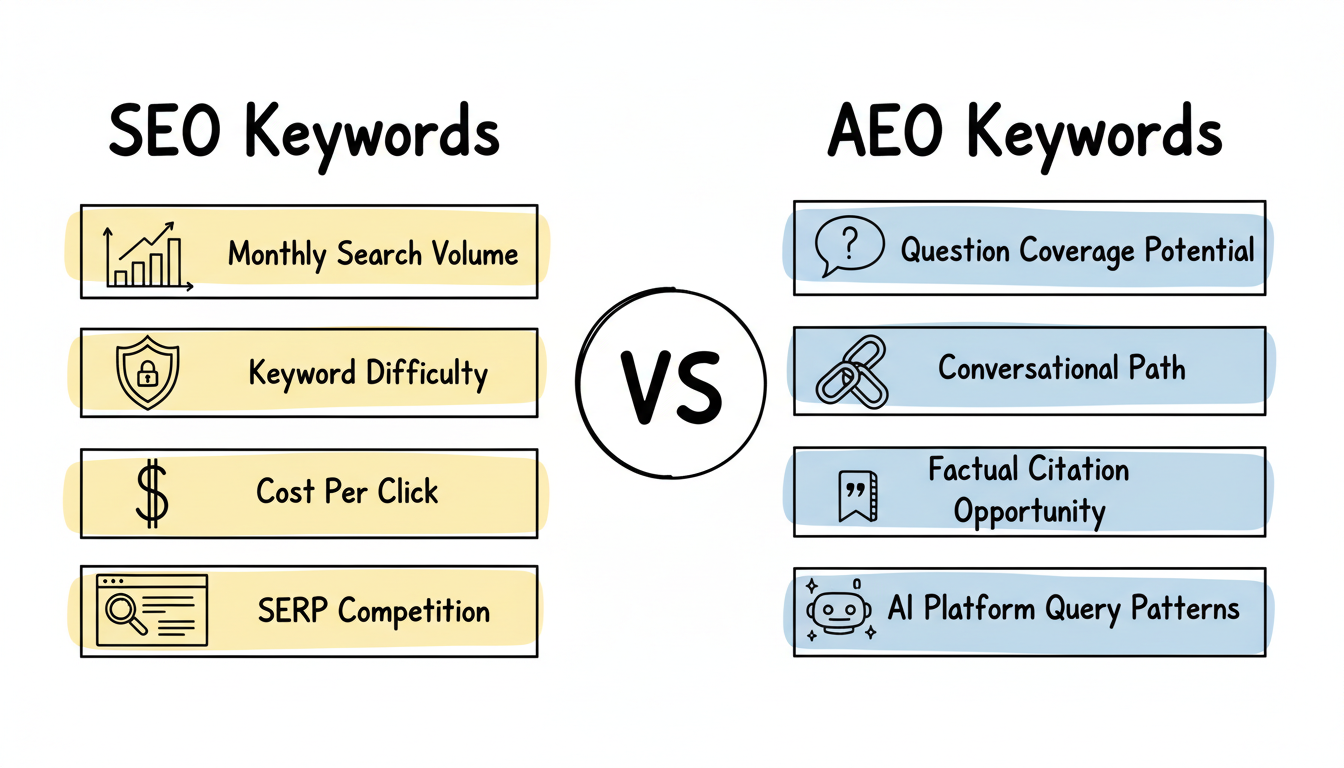
Google Keyword Planner also provides question-based suggestions, although the data is less granular. The key is to look for question phrases that have a reasonable search volume (at least 50-100 monthly searches) and a manageable keyword difficulty score.
Method 2: Mine “People Also Ask” Boxes
Google’s “People Also Ask” (PAA) feature is a goldmine for question keywords. When you search for any topic, Google displays a list of related questions. Each time you click on one, more questions appear. This creates a branching tree of related queries. You can manually extract these questions or use tools like AlsoAsked.com, which automates the process and shows the hierarchical relationship between questions.
Method 3: Analyze AI Chatbot Responses
Ask ChatGPT, Claude, or Perplexity a broad question about your niche. The A For example, ask “What should I know about email marketing?” The AI might respond with sections on deliverability, subject lines, automation, and metrics. Each of those sections represents a potential question keyword like “how to improve email deliverability” or “what is a good email open rate.”
Method 4: Scrape Forums and Q&A Sites
Reddit, Quora, and niche-specific forums are filled with real questions from real users. Search these platforms for your core topic and note the phrasing of the questions. People often ask the same question in slightly different ways. This gives you insight into the natural language variations you need to target.
Method 5: Use Google Autocomplete
Type your main keyword into Google and observe the autocomplete suggestions. Then, add a question word like “how” or “why” before your keyword and observe the new suggestions. This free method reveals the most common question-based searches related to your topic.
How to Optimize Content for AI SEO Question Keywords
Finding the keywords is only half the battle. You must structure your content so that search engines and AI systems can easily extract the answers.
Use the Question as the H2 or H3 Heading
When you write an article, use the exact question keyword as a heading. This signals to search engines that the following content directly addresses that query. For example, if your keyword is “how to reduce bounce rate,” use that exact phrase as an H2 heading. Underneath, provide a direct, concise answer in the first paragraph.
Provide a Direct Answer in the First 50 Words
AI systems and featured snippets favor content that provides an immediate answer. Do not bury the answer in a long introduction. Start with a clear, direct response. For example, if the question is “what is a good bounce rate,” the first sentence should be “A good bounce rate is generally between 26% and 40%.” Then, you can expand with context and details.
Use Structured Data (FAQ Schema)
Implementing FAQPage schema markup on your page helps search engines understand the question-and-answer structure of your content. This markup can increase your chances of appearing in rich results and AI-generated answers. The schema should match the visible content on the page.
Format Answers for Readability
Use bullet points, numbered lists, and short paragraphs to break down complex answers. AI systems often pull lists directly into their responses. A well-formatted list is more likely to be cited than a dense block of text.
Cover Related Questions in a Single Article
Instead of creating a separate article for every question, group related questions together. A comprehensive guide that answers 10 related questions about a topic is more valuable than 10 thin articles. This approach also helps with internal linking and topical authority.
Practical Application: A Step-by-Step Guide
- Identify Your Core Topic: Choose a broad topic relevant to your business. For example, “project management software.”
- Generate Question Keywords: Use the methods above to find 20-30 questions related to this topic. Examples include “what is project management software,” “how much does project management software cost,” and “which project management software is best for small teams.”
- Group Questions by Intent: Sort the questions into categories. Some are informational (“what is”), some are comparative (“vs”), and some are transactional (“best for”).
- Create a Pillar Page: Write a comprehensive guide that answers the most important questions. Use the questions as H2 and H3 headings.
- Create Supporting Articles: For questions that require deep dives, create separate articles that link back to the pillar page.
- Optimize the Answer Format: Ensure each answer is concise, accurate, and formatted with lists or tables where appropriate.
- Monitor Performance: Track your rankings for these question keywords in Google Search Console. Look for impressions and click-through rates to gauge success.
Common Mistakes and How to Avoid Them
Many SEO professionals make avoidable errors when targeting question keywords. Here are the most common pitfalls.
Mistake 1: Keyword Stuffing in the Answer
Repeating the question keyword multiple times in the answer does not help. It makes the content sound robotic and can trigger spam filters. Use the keyword once in the heading and once in the first sentence of the answer. Then, write naturally.
Mistake 2: Ignoring User Intent
Not all questions are the same. Some users want a quick definition, while others want a detailed tutorial. Matching the content format to the intent is crucial. If the question is “what is,” a short paragraph is sufficient. If the question is “how to,” a step-by-step guide is necessary.
Mistake 3: Creating Thin Content
Answering a question in 50 words is not enough to rank. While the direct answer should be short, the surrounding content needs depth. Expand on the answer with examples, case studies, statistics, and related subtopics to provide comprehensive value.
Mistake 4: Forgetting About Entity Optimization
AI search engines rely on entities (people, places, things, concepts) to understand content. Include related entities in your content. For example, if you are writing about “how to bake bread,” mention specific entities like “yeast,” “gluten,” “proofing,” and “oven temperature.” This helps the AI connect your content to the broader knowledge graph.
Mistake 5: Neglecting Mobile Experience
Most voice searches and question-based queries happen on mobile devices. If your page loads slowly or is difficult to navigate on a phone, users will bounce, and search engines will take notice. Ensure your content is fully responsive and fast-loading.
Important Notes on AI Search and Content Quality
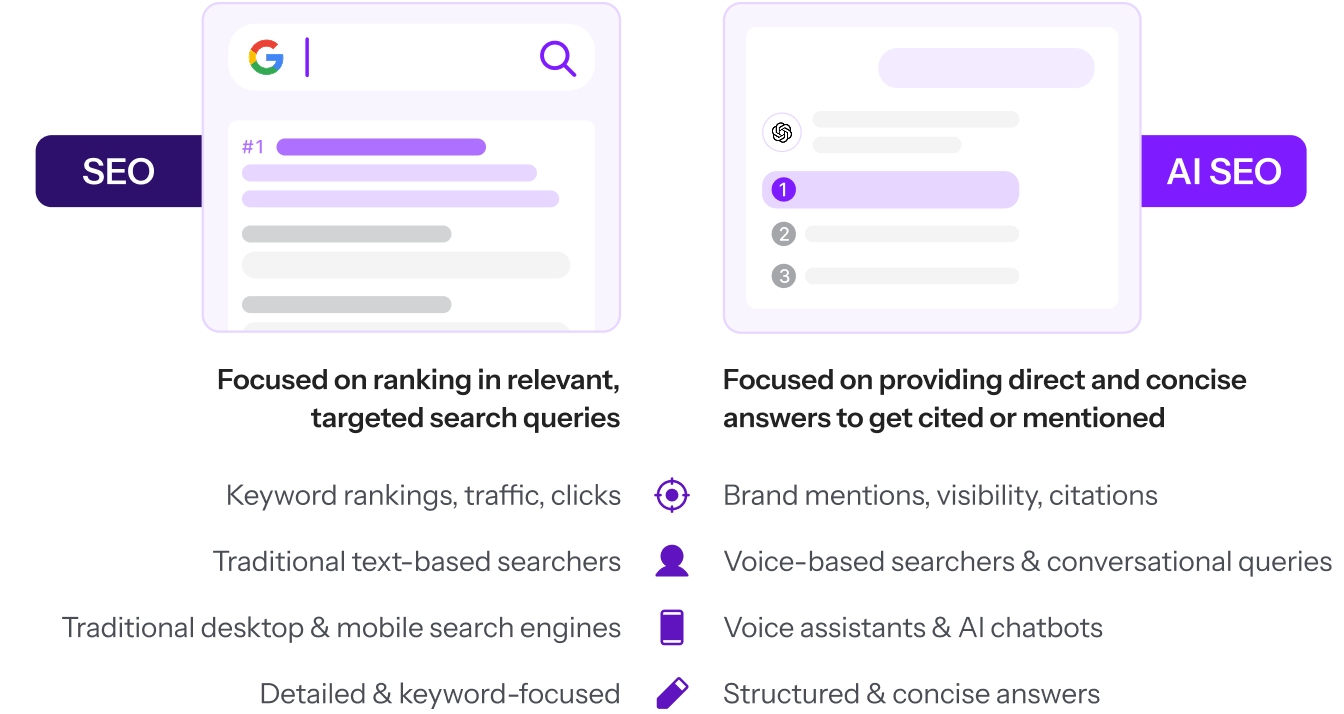
As AI search evolves, the quality bar for content continues to rise. AI systems are becoming better at detecting low-value, AI-generated fluff. To maintain visibility, focus on the following principles.
- Original Research: Conduct your own surveys, analyze your own data, and share unique insights. AI systems cannot replicate original data, making it highly valuable.
- Expertise and Authority: Showcase your credentials. Include author bios, cite credible sources, and link to authoritative websites. This builds trust with both users and AI algorithms.
- User Experience: Content that is easy to read, visually appealing, and logically structured will always outperform poorly formatted content. Use images, videos, and infographics to enhance understanding.
- Regular Updates: AI search engines favor fresh content. Review and update your question-based articles regularly to ensure the information remains accurate and current.
Comparison: Question Keywords vs. Traditional Keywords
Understanding the difference between these two types of keywords helps clarify their respective roles in a strategy.
| Feature | Question Keywords | Traditional Keywords |
|---|---|---|
| Search Volume | Lower individual volume | Higher individual volume |
| Competition | Lower competition | Higher competition |
| User Intent | Informational, specific | Mixed, often commercial |
| Content Format | Q&A, guides, tutorials | Product pages, blog posts |
| Conversion Rate | Higher for niche queries | Lower but broader reach |
| AI Search Optimization | Directly aligned | Indirectly aligned |
Both types are necessary. Traditional keywords build the foundation of your site’s topical authority, while question keywords capture the specific, high-intent traffic that converts. A balanced strategy uses both.
Frequently Asked Questions (FAQ)
What is the difference between AI SEO question keywords and regular long-tail keywords?
AI SEO question keywords are a specific subset of long-tail keywords. The key difference is the format. Question keywords are phrased as complete sentences with interrogative words, while regular long-tail keywords are usually fragmented phrases. For example, “best laptop for video editing” is a long-tail keyword, while “what is the best laptop for video editing under 1000 dollars” is a question keyword. The question format is more aligned with voice search and AI assistant queries.
How many question keywords should I target per article?
T The primary keyword should be the main focus of the H1 and the first H2. The secondary keywords should be used as subheadings throughout the article. This creates a comprehensive resource that covers a topic cluster of related questions.
Do question keywords help with voice search ranking?
Yes, they are essential for voice search. Voice search queries are almost always phrased as full questions because people speak naturally. When you optimize for question keywords, you are matching the exact language patterns used in voice searches. This increases the likelihood that your content will be the source of the voice assistant’s spoken answer.
Can I use AI tools to generate question keyword ideas?
Yes, AI tools like ChatGPT and Jasper can generate extensive lists of question keywords based on a seed topic. However, you must verify the search volume and difficulty of these suggestions using a dedicated SEO tool. AI-generated ideas are a starting point, not a final strategy. The best approach is to combine AI brainstorming with data from keyword research platforms.
How long does it take to rank for question keywords?
Ranking time varies based on the competition and the authority of your domain. For low-competition, long-tail question keywords, you might see results in 2-4 weeks. For more competitive queries, it can take 3-6 months. Consistency is key. Publishing high-quality, question-focused content regularly and building backlinks to that content will accelerate the process.
Conclusion
AI SEO question keywords represent the intersection of user intent, natural language processing, and the rise of AI-powered search. They are not a passing trend but a fundamental shift in how people find information online. By identifying the exact questions your audience asks, structuring your content to provide direct answers, and optimizing for the technical requirements of AI systems, you position your website as a trusted authority.
The strategy requires effort. You must conduct thorough keyword research, create detailed and genuinely helpful content, and continuously monitor your performance. The rewards, however, are substantial: higher click-through rates, featured snippet placements, and visibility in AI-generated responses. Start by researching the questions in your niche today. The answers you provide will define your success in the evolving landscape of search.
Xem thêm:
- AI SEO Myths Debunked: The Truth About Ranking in the Age of Algorithms
- AI SEO Generative Engine Optimization Tools: The Complete Guide to Ranking in the Age of Answer Engines
- AI SEO Keyword Semantics: The Complete Guide to Search Intent Optimization
- AI SEO Topical Gaps: The Complete Guide to Finding and Filling Content Voids
- AI SEO Skyscraper Technique: The 2025 Guide to Dominating Search Rankings
Bài viết cùng chủ đề:

AI SEO SEO Automation with Make: The Complete Workflow Guide

AI SEO SEO Automation with Zapier: The Complete Workflow Guide

AI SEO SEO Automation with n8n: The Complete Workflow Guide
AI SEO SEO Automation with Gemini: The Complete Guide to Scaling Organic Growth

AI SEO SEO Automation with Claude: The Complete Guide to Scaling Content in 2025

AI SEO SEO Automation with ChatGPT: The Complete Playbook for 2025

AI SEO & SEO Automation for Affiliate Sites: The 2025 Playbook for Passive Income Growth
AI SEO & SEO Automation for Bloggers: The Complete Guide to Scaling Your Content

AI SEO & SEO Automation for Agencies: The Complete 2025 Playbook

AI SEO and SEO Automation for Ecommerce: The Complete Playbook for 2025

AI SEO & SEO Automation for WordPress: The Complete Playbook for 2025
AI SEO SEO Automation Strategy: The Complete Playbook for 2025

Mastering the AI SEO SEO Automation Process: A Complete Guide to Scaling Organic Growth
AI SEO SEO Automation System: The Complete Guide to Scaling Organic Growth in 2025
AI SEO SEO Automation Platform: The Complete Guide to Scaling Organic Growth in 2025
AI SEO SEO Automation Software: The Complete Guide to Scaling Organic Growth in 2025















