
No products in the cart.
AI SEO Optimization Workflow: The Complete Guide to Scaling Organic Growth in 2025
31
Jul
Jul
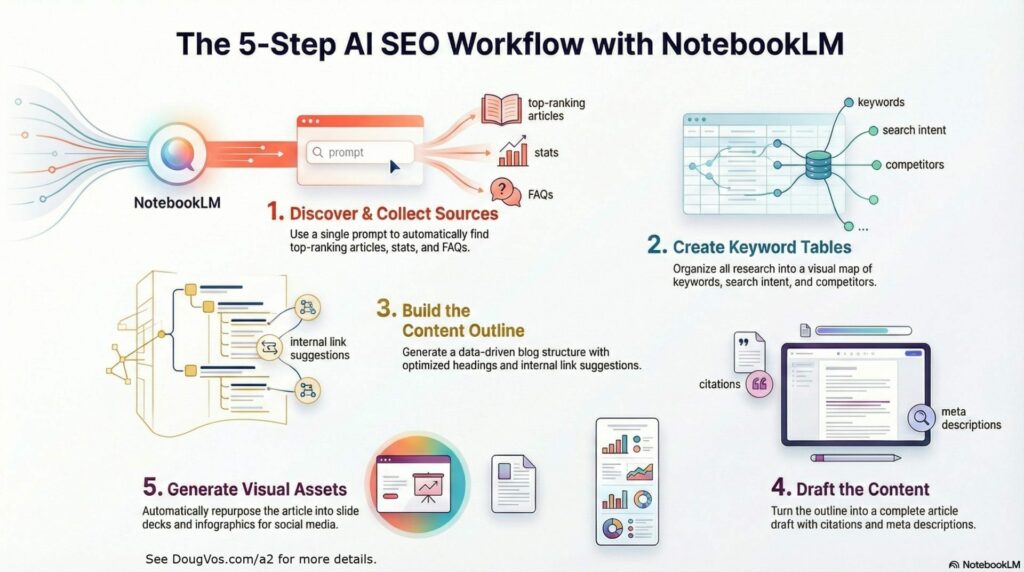
The digital marketing landscape has shifted dramatically. Traditional SEO relied on manual audits, gut feeling, and slow iteration cycles. Today, the AI SEO optimization workflow has become the standard for teams that want to scale their organic traffic without scaling their headcount. This workflow integrates machine learning, natural language processing, and predictive analytics into every stage of the SEO process—from keyword discovery to content optimization and technical monitoring. By adopting a structured AI-driven approach, businesses can process thousands of data points in seconds, identify patterns invisible to the human eye, and adapt to search engine algorithm updates in real time. This guide breaks down the exact steps, tools, and strategies needed to build a robust AI SEO optimization workflow that delivers measurable results.
What is an AI SEO Optimization Workflow?
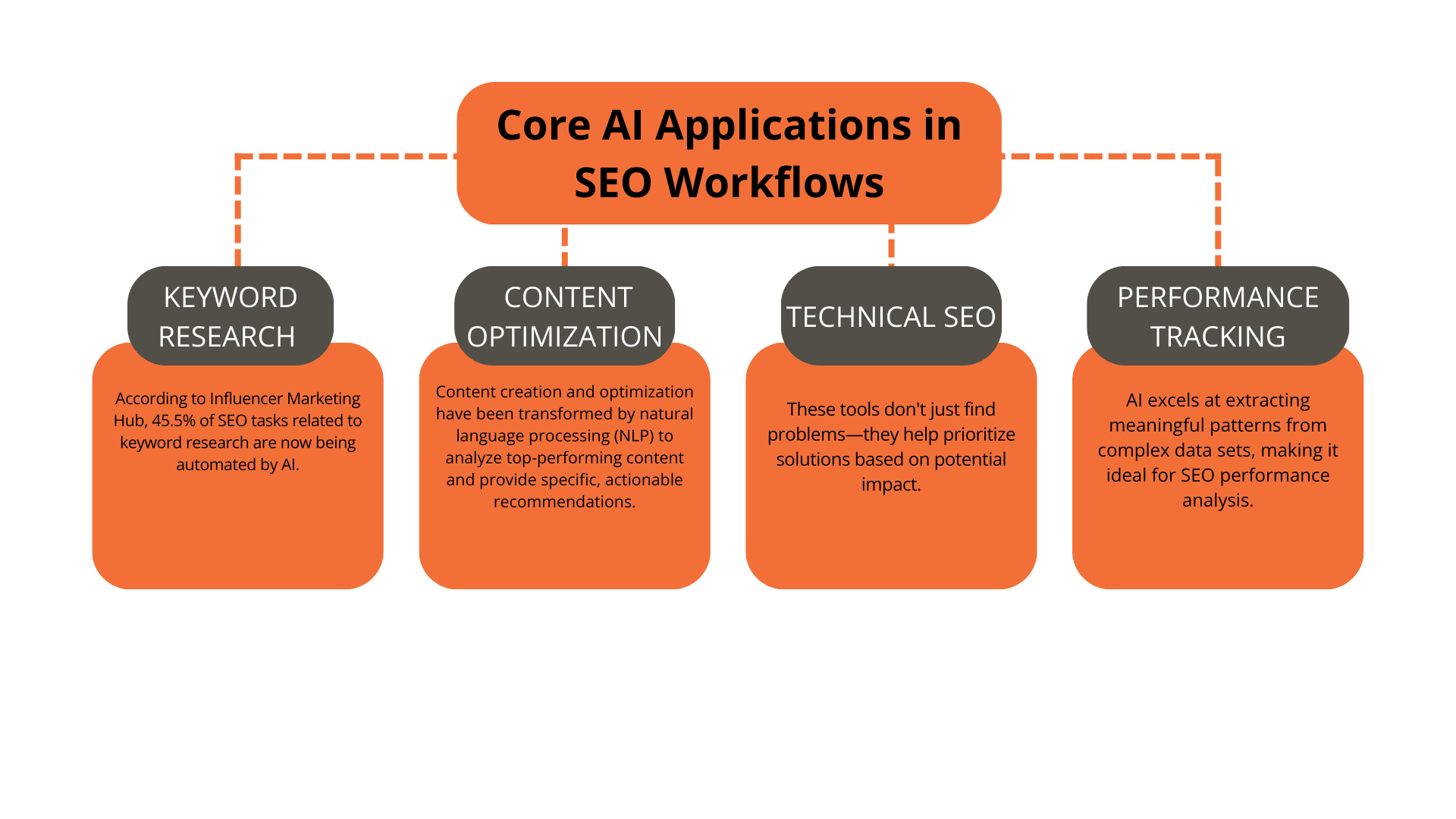
An AI SEO optimization workflow is a systematic process that uses artificial intelligence tools to automate, enhance, and accelerate search engine optimization tasks. Unlike traditional workflows that rely heavily on manual research and subjective judgment, this approach leverages algorithms to analyze search intent, content gaps, competitor strategies, and technical site health. The core objective is to reduce the time between data collection and actionable implementation while improving the accuracy of predictions about what will rank.
The workflow typically spans five key phases: data ingestion, analysis, strategy formulation, content creation, and performance monitoring. Each phase feeds into the next, creating a continuous loop of improvement. For example, AI tools can crawl your site and competitors’ sites simultaneously, extract semantic entities, and suggest content clusters that are more likely to satisfy Google’s ranking requirements. This is not about replacing human expertise but augmenting it with computational power that can handle the sheer volume of data involved in modern SEO.
Why Traditional SEO Workflows Are Failing
Manual SEO processes are becoming obsolete for several concrete reasons. First, the volume of search queries is exploding. Google processes over 8.5 billion searches per day, and the long-tail keyword space is virtually infinite. A human analyst can manually evaluate maybe 50 to 100 keywords per day, while an AI system can evaluate 50,000 in the same timeframe. Second, search engine algorithms now prioritize semantic relevance and user engagement metrics over simple keyword matching. Understanding the nuanced relationship between entities, topics, and user intent requires pattern recognition that exceeds human cognitive limits.
Third, the speed of algorithm updates has increased. Google releases thousands of updates annually, and core updates can shift rankings overnight. A traditional workflow that takes two weeks to implement changes will always be playing catch-up. Finally, the cost of manual labor is prohibitive. Hiring enough SEO specialists to manually audit, optimize, and monitor a large enterprise site can cost hundreds of thousands of dollars annually. An AI SEO optimization workflow reduces this overhead by automating repetitive tasks, allowing a smaller team to manage a larger portfolio of pages.
Core Components of an AI SEO Optimization Workflow
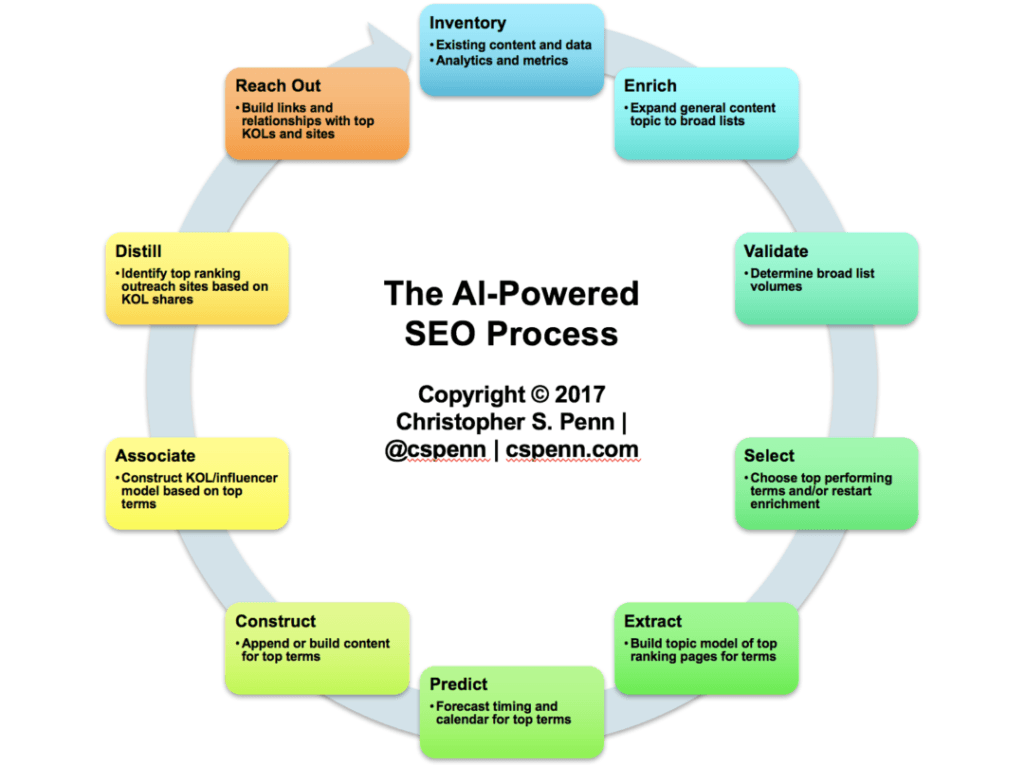
To build an effective system, you need to understand the distinct components that make up the workflow. Each component serves a specific function and integrates with the others to form a cohesive pipeline.
1. Automated Keyword and Topic Clustering
The first stage involves using AI to discover and organize keywords. Tools like Clearscope, MarketMuse, and Surfer SEO use machine learning to analyze top-ranking pages for a given seed keyword. They extract the entities, subtopics, and semantic variations that Google associates with the primary topic. Instead of a flat list of keywords, the AI generates a topical map. This map shows which keywords are head terms, which are supporting terms, and how they should be grouped into pillar pages and cluster content. This process eliminates the guesswork of keyword research and ensures that your content architecture aligns with how search engines understand the subject matter.
2. Predictive Content Gap Analysis
Once you have your topic clusters, the next component is identifying gaps in your existing content versus your competitors. AI tools can crawl your site and your top ten competitors’ sites, then compare them on a page-by-page basis. The analysis goes beyond simple “we don’t have a page for this keyword.” It examines content depth, readability scores, internal linking structure, and the presence of multimedia elements. The output is a prioritized list of content opportunities, ranked by the estimated difficulty of ranking and the potential traffic value. This allows you to focus your writing resources on pages that will actually move the needle.
3. AI-Assisted Content Generation and Optimization
This is the most visible and widely adopted component. Large language models (LLMs) like GPT-4 and Claude can generate draft outlines, write introductory paragraphs, and suggest heading structures. However, the most effective workflows use AI for optimization rather than full generation. The AI analyzes your draft against the top-ranking pages and provides real-time suggestions for adding missing terms, improving readability, and adjusting tone. It can also generate meta descriptions, alt text, and schema markup automatically. The key is to use AI as a co-pilot, not an autopilot. Human editors must review all output for factual accuracy, brand voice, and originality.
4. Technical SEO Auditing and Monitoring
Technical issues like broken links, slow page speed, and crawl errors can silently kill your rankings. An AI workflow automates the detection of these issues. Tools like Screaming Frog and Sitebulb have AI-powered modules that not only find errors but also suggest the exact code changes needed to fix them. More advanced systems use predictive analytics to forecast how technical changes will impact rankings before you implement them. For example, the AI can simulate a site migration and predict which pages will lose traffic and which will gain it, allowing you to prepare redirects and content updates in advance.
5. Performance Prediction and SERP Analysis
The final component is the feedback loop. AI systems monitor your rankings, click-through rates, and engagement metrics daily. They analyze the search engine results pages (SERPs) to detect changes in the competitive landscape. If a new competitor enters the top three, the AI flags this and analyzes what they are doing differently. It might notice that the competitor has a video embedded, or a more comprehensive FAQ section, or a faster loading time. The system then generates a recommendation report, telling you exactly what to update to regain your position. This continuous monitoring is what separates a static workflow from a dynamic one.
Step-by-Step Guide to Building Your AI SEO Optimization Workflow
Implementing this workflow requires a strategic approach.
Step 1: Audit Your Current Data Infrastructure
Before you can use AI, you need clean, accessible data. Start by consolidating your data sources. This includes Google Search Console, Google Analytics, your CMS, and your SEO crawler. Ensure that all data is being tracked correctly and that there are no gaps in historical data. Most AI tools integrate directly with these platforms via API, but they require proper authentication and data permissions. If your data is scattered across spreadsheets and different team members’ local drives, the A
Step 2: Select the Right AI Tool Stack
T You will likely need a combination. For content optimization, tools like Surfer SEO or Frase are excellent. For technical audits, consider using Sitebulb or Lumar (formerly DeepCrawl). For keyword clustering and SERP analysis, tools like SE Ranking or Ahrefs have AI features built in. For content generation, you will need access to an LLM API like OpenAI or Anthropic. The key is to choose tools that have open APIs so you can connect them together. A common stack is: Ahrefs for research, Surfer for on-page optimization, and a custom Python script that uses GPT-4 to generate briefs based on the data from the first two.
Step 3: Define Your Content Brief Generation Process
The most critical step in the workflow is creating the content brief. This is the document that tells your writers exactly what to create. An AI-generated brief should include the primary keyword, secondary keywords, the recommended word count, the entities that must be covered, the suggested heading structure, and examples of what the top-ranking pages are doing well. It should also include the target audience and the search intent (informational, transactional, or navigational). A well-crafted brief reduces the time a writer spends on research by 50% and increases the likelihood of ranking on the first attempt.
Step 4: Implement a Human-in-the-Loop Review System
AI is powerful, but it is not infallible. You must have a human review every piece of content before it is published. This is not just for grammar and spelling. The human reviewer must check for factual accuracy, brand alignment, and the inclusion of personal experience or unique insights that AI cannot generate. Google’s E-E-A-T guidelines (Experience, Expertise, Authoritativeness, Trustworthiness) explicitly reward content that demonstrates first-hand experience. An AI cannot write about what it is like to use a product or visit a location. Your workflow must include a step where a subject matter expert adds this layer of authenticity.
Step 5: Automate the Publishing and Monitoring Loop
Once your content is approved, the workflow should automatically handle the technical aspects of publishing. This includes formatting the content in HTML, generating the meta tags, compressing images, and submitting the URL to Google Search Console. After publishing, the monitoring phase begins. Set up automated daily reports that track keyword positions, impressions, and clicks. Configure alerts for significant drops or spikes in traffic. The AI should be able to correlate these changes with specific actions (e.g., a Google update, a competitor change, or a technical error) so you can react quickly.
Benefits of an AI SEO Optimization Workflow
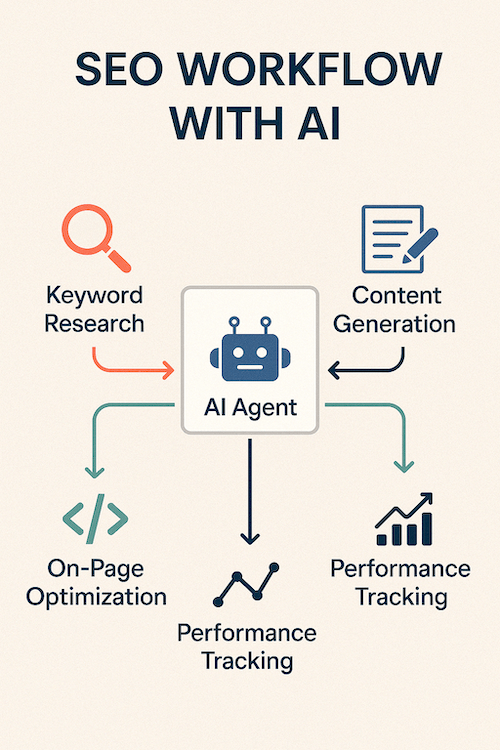
The advantages of adopting this system are substantial and measurable. Here are the primary benefits that justify the investment in time and resources.
- Scalability: You can manage 10x more content without hiring 10x more staff. AI automates the research and analysis phases, allowing your team to focus on writing and editing.
- Speed: Tasks that took days, such as a full site audit or a competitor analysis, now take hours. This allows you to react to algorithm updates and market shifts in real time.
- Accuracy: AI eliminates human error in data analysis. It does not miss a broken link or a missing alt tag. It also removes personal bias from keyword selection, focusing purely on data-driven opportunities.
- Improved ROI: By targeting the right keywords with the right content structure, your pages rank faster and higher. This translates directly into more organic traffic and lower customer acquisition costs.
- Consistency: An AI workflow ensures that every piece of content follows the same optimization standards. T
Limitations and Challenges to Consider
While the benefits are compelling, it is equally important to understand the limitations. Ignoring these can lead to frustration and poor results.
Data Dependency: The output quality of AI is directly proportional to the input data quality. If your analytics tracking is broken or your historical data is sparse, the A You must invest in data hygiene before relying on AI insights.
Lack of Creativity: AI can optimize for known patterns, but it cannot create truly novel or viral content. It struggles with humor, emotional storytelling, and breaking industry norms. For brand-building content, human creativity remains essential.
Algorithm Limitations: AI models are trained on historical data. They cannot predict the future with certainty. If Google makes a radical change to its ranking algorithm, the A
Cost of Tools: High-quality AI SEO tools are not cheap. A full stack can cost anywhere from $500 to $5,000 per month. For small businesses, this may be prohibitive. However, the cost is often offset by the reduction in manual labor hours.
AI SEO Optimization Workflow vs. Traditional Workflow: A Comparison
To fully appreciate the value of the AI-driven approach, it is helpful to see a direct comparison with the traditional method.
| Aspect | Traditional Workflow | AI SEO Optimization Workflow |
|---|---|---|
| Keyword Research | Manual review of keyword tools, exporting to spreadsheets, grouping by intuition. | Automated clustering based on semantic similarity and search intent, updated in real time. |
| Content Creation | Writer researches top 10 results manually, writes draft, then uses a plugin for basic SEO checks. | AI generates a detailed brief with entities and structure; writer fills in the gaps with expertise. |
| Technical Audits | Monthly or quarterly manual crawl using desktop software, exporting error lists. | Continuous cloud-based crawling with automated issue detection and fix suggestions. |
| Competitor Analysis | Manual review of competitor pages, noting their headings and keywords. | Automated tracking of competitor changes, with alerts on their new content and backlinks. |
| Reporting | Weekly manual compilation of data from multiple sources into a slide deck. | Automated dashboards with natural language summaries explaining the “why” behind the data. |
| Speed of Implementation | 2-4 weeks from data collection to content publication. | 2-4 days from data collection to content publication. |
Common Mistakes and How to Avoid Them
Many teams fail to see results from their AI workflow because they make predictable errors. Here are the most common pitfalls and the strategies to avoid them.
Mistake 1: Over-Reliance on AI-Generated Content
Publishing raw AI text without human editing is a fast track to losing rankings. Google’s systems can detect unhelpful, mass-produced content. The solution is to use AI for the skeleton and have a human add the muscle and skin. Always include personal anecdotes, original data, and unique perspectives that cannot be scraped from other websites.
Mistake 2: Ignoring Search Intent
An AI tool might tell you that a keyword has high volume and low difficulty, but it cannot tell you if the user wants to buy a product, read a tutorial, or find a store location. If you write a product review for a transactional keyword, you will fail. Always manually review the current SERP for your target keywords to confirm the intent before writing.
Mistake 3: Failing to Update the AI Models
AI tools are constantly improving. If you do not update your software and retrain your custom models, you will be using outdated information. Set a monthly reminder to check for feature updates and new integrations in your tool stack.
Mistake 4: Neglecting the Human Review for E-E-A-T
Google’s quality raters are trained to look for signs of expertise and trust. An AI-generated article about medical advice or financial planning will be flagged as untrustworthy if it lacks author credentials and citations. Ensure your workflow includes a step to add author bios, references to credible sources, and a clear “last updated” date.
Important Notes for Implementation
When rolling out this workflow, keep these critical points in mind. First, start small. Do not try to automate your entire SEO operation in one week. Pick one content cluster, run it through the AI workflow, and compare the results against your previous manual process. Once you see the improvement, expand to other clusters.
Second, maintain a feedback loop with your writers. They are the ones using the AI-generated briefs. Ask them what is missing from the briefs and what is confusing. The AI is only as good as the instructions it receives, and your writers can help you refine those instructions.
Third, do not forget about backlinks. AI is excellent at optimizing on-page factors, but it cannot build high-quality backlinks for you. You still need a manual outreach strategy to acquire authoritative links. The AI workflow can help you identify link prospects by analyzing competitor backlinks, but the actual relationship building requires human effort.
Finally, ensure you have a clear content governance policy. Define who has the authority to publish content, who is responsible for updating old content, and what the process is for removing outdated pages. An AI workflow can generate a lot of content quickly, and without governance, you will end up with a bloated site full of low-value pages.
Frequently Asked Questions
What is the difference between AI SEO and traditional SEO?
Traditional SEO relies on manual research, manual audits, and human intuition to make decisions. AI SEO uses machine learning algorithms to automate data collection, analyze patterns, and predict outcomes. The key difference is speed and scale. AI can process thousands of data points simultaneously and identify correlations that humans would miss, allowing for faster iteration and more precise targeting.
Can AI completely replace human SEO specialists?
No. AI cannot replace the strategic thinking, creative writing, and relationship-building skills of a human specialist. AI is a tool that automates repetitive tasks and provides data-driven insights. Humans are still required to interpret the data, make strategic decisions, create original content, and build authority through outreach and partnerships. The most successful teams use AI to augment their human talent, not replace it.
How long does it take to see results from an AI SEO workflow?
Results vary depending on the competitiveness of your niche and the current state of your website. For low-competition keywords, you might see improvements in 2-4 weeks. For highly competitive keywords, it can take 3-6 months. The AI workflow speeds up the process by reducing the time spent on research and analysis, but Google still needs time to crawl, index, and rank your new or updated content.
What are the best AI tools for SEO in 2025?
The best tools depend on your specific needs. For content optimization, Surfer SEO and MarketMuse are top choices. For keyword research and competitor analysis, Ahrefs and Semrush have robust AI features. For technical audits, Sitebulb and Lumar are excellent. For content generation, OpenAI’s GPT-4 and Google’s Gemini are the leading models. A comprehensive workflow typically uses a combination of these tools.
Is AI-generated content penalized by Google?
Google does not penalize content simply because it is generated by AI. However, Google does penalize low-quality content that is designed to manipulate search rankings, regardless of whether it is written by a human or a machine. If AI-generated content is accurate, helpful, and provides a good user experience, it can rank well. The key is to ensure that AI content is reviewed and edited by a human to add value and ensure factual accuracy.
Conclusion
The AI SEO optimization workflow is no longer a futuristic concept; it is a practical necessity for teams that want to remain competitive. By automating the heavy lifting of keyword research, content briefs, technical audits, and performance monitoring, you free up your human talent to focus on what they do best: creating compelling content and building relationships. The transition requires an investment in tools and a commitment to changing your processes, but the payoff in terms of scalability, speed, and ROI is substantial. Start by auditing your current workflow, identify the bottlenecks, and implement AI solutions to address those specific pain points. The future of search is data-driven, and the teams that adopt this workflow today will be the ones leading their industries tomorrow.
Xem thêm:
- AI SEO Pagination: The Complete Guide to Smarter Site Architecture in 2025
- AI SEO Monitoring: The Ultimate Guide to Smarter Search Performance Tracking
- AI Rich Snippets: What They Are, Why They’re Taking Over Search, and How to Win Them
- AI SEO Email Outreach: The Complete Guide to Automating Link Building in 2025
- AI SEO Content Audits: The Complete Guide to Automated Content Optimization
Bài viết cùng chủ đề:

AI SEO SEO Automation with Make: The Complete Workflow Guide

AI SEO SEO Automation with Zapier: The Complete Workflow Guide

AI SEO SEO Automation with n8n: The Complete Workflow Guide
AI SEO SEO Automation with Gemini: The Complete Guide to Scaling Organic Growth

AI SEO SEO Automation with Claude: The Complete Guide to Scaling Content in 2025

AI SEO SEO Automation with ChatGPT: The Complete Playbook for 2025

AI SEO & SEO Automation for Affiliate Sites: The 2025 Playbook for Passive Income Growth
AI SEO & SEO Automation for Bloggers: The Complete Guide to Scaling Your Content

AI SEO & SEO Automation for Agencies: The Complete 2025 Playbook

AI SEO and SEO Automation for Ecommerce: The Complete Playbook for 2025

AI SEO & SEO Automation for WordPress: The Complete Playbook for 2025
AI SEO SEO Automation Strategy: The Complete Playbook for 2025

Mastering the AI SEO SEO Automation Process: A Complete Guide to Scaling Organic Growth
AI SEO SEO Automation System: The Complete Guide to Scaling Organic Growth in 2025
AI SEO SEO Automation Platform: The Complete Guide to Scaling Organic Growth in 2025
AI SEO SEO Automation Software: The Complete Guide to Scaling Organic Growth in 2025















