
No products in the cart.
AI SEO Perplexity Spaces: The Complete Guide to Optimizing for Answer Engines
31
Jul
Jul
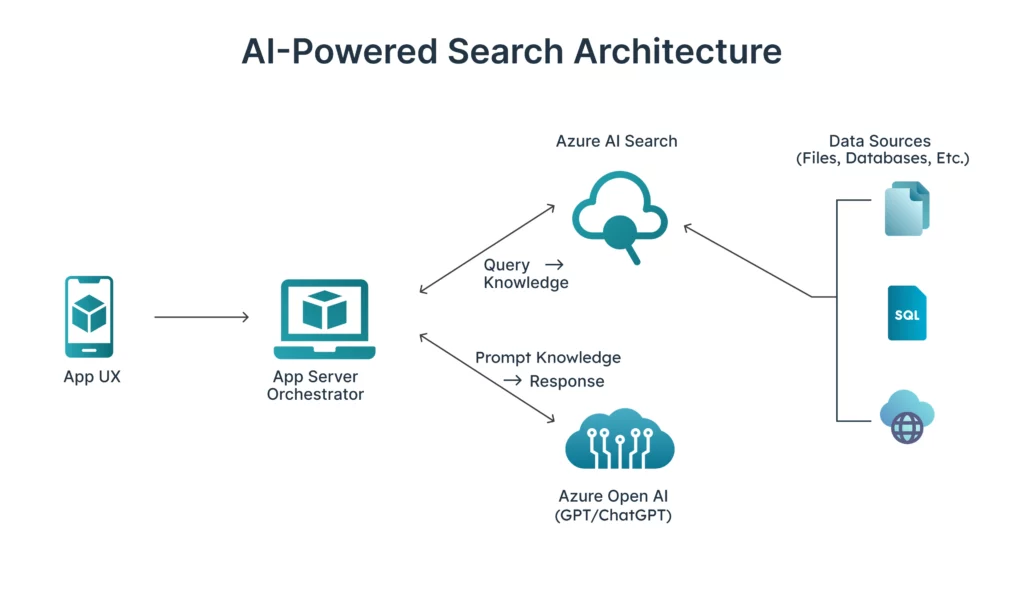
The digital marketing landscape is shifting beneath our feet. Traditional search engine optimization focused on Google’s ranking algorithms, but a new player has emerged that demands attention: AI SEO Perplexity Spaces. This innovative platform combines the power of conversational AI with organized, persistent workspaces, creating a unique environment where brands can be discovered, cited, and recommended. Understanding how to optimize for this new paradigm is no longer optional; it is essential for maintaining visibility in an AI-driven future. This guide provides a deep dive into what Perplexity Spaces means for SEO professionals and how to build a winning strategy around it.
What Exactly Are Perplexity Spaces?
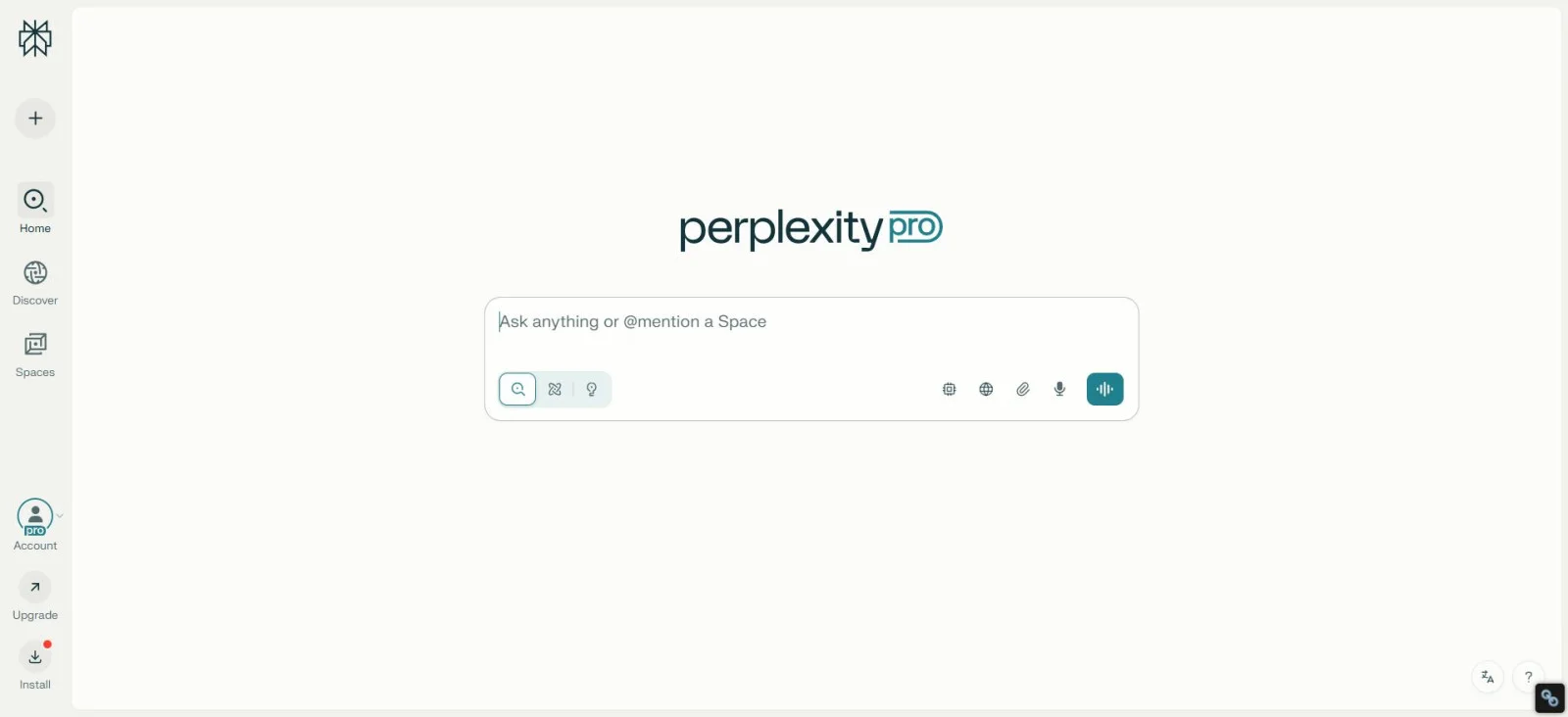
Perplexity AI, known for its advanced answer engine, introduced Spaces as a feature that allows users to create dedicated, topic-specific hubs for research and collaboration. Unlike a standard search query, a Space is a persistent context. Users can upload files, add specific URLs, and set custom instructions. The AI then uses this curated knowledge base to generate answers, synthesize information, and provide citations exclusively from the sources within that Space.
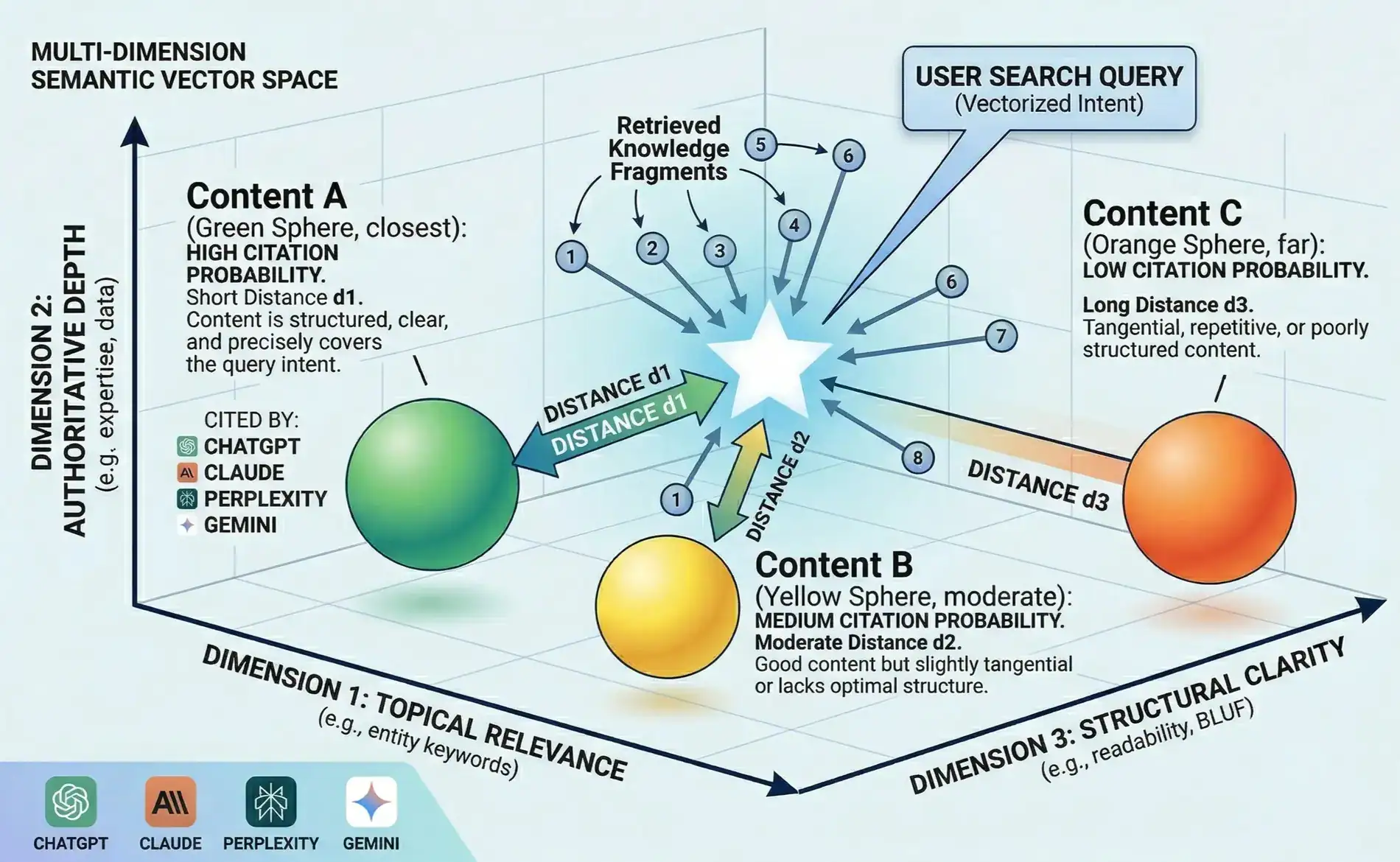
From an SEO perspective, this is a significant departure from the open web. When a user searches on Google, the algorithm crawls billions of pages. When a user queries a Perplexity Space, the AI only looks at the data you have provided. This creates a “walled garden” of information. The implication is clear: if your content is not included in a relevant Space, you are invisible to that specific audience. This makes AI SEO Perplexity Spaces a game of inclusion, not just ranking.
The Shift from Ranking to Being Referenced
Traditional SEO focuses on metrics like Domain Authority, backlinks, and keyword density. AI SEO Perplexity Spaces flips the script. The primary goal is to become a trusted source that users or businesses choose to upload into their Spaces. This is a shift from optimizing for a crawler to optimizing for a human curator who is building a knowledge base.
This means your content must be exceptionally clear, factual, and self-contained. The AI needs to extract precise answers from your text without ambiguity. If your content is buried under fluff or contradictory statements, the A The focus is on semantic clarity and data verifiability.
Key Differences Between Google SEO and Perplexity Spaces
| Feature | Traditional Google SEO | AI SEO Perplexity Spaces |
|---|---|---|
| Primary Target | Search Engine Crawlers | AI Model & User Curators |
| Content Scope | Open Web Index | Curated Uploads & Links |
| Success Metric | Page Rank & CTR | Citation Frequency & Accuracy |
| Content Style | Keyword-rich, Structured | Direct, Factual, Contextual |
| User Intent | Discovery & Browsing | Deep Research & Synthesis |
This table illustrates the core differences. In a Space, the user has already defined the context. They are not looking for general information; they are looking for specific answers to specific questions within a defined dataset. Your content must be the definitive answer to those questions.
How to Optimize Content for Perplexity Spaces
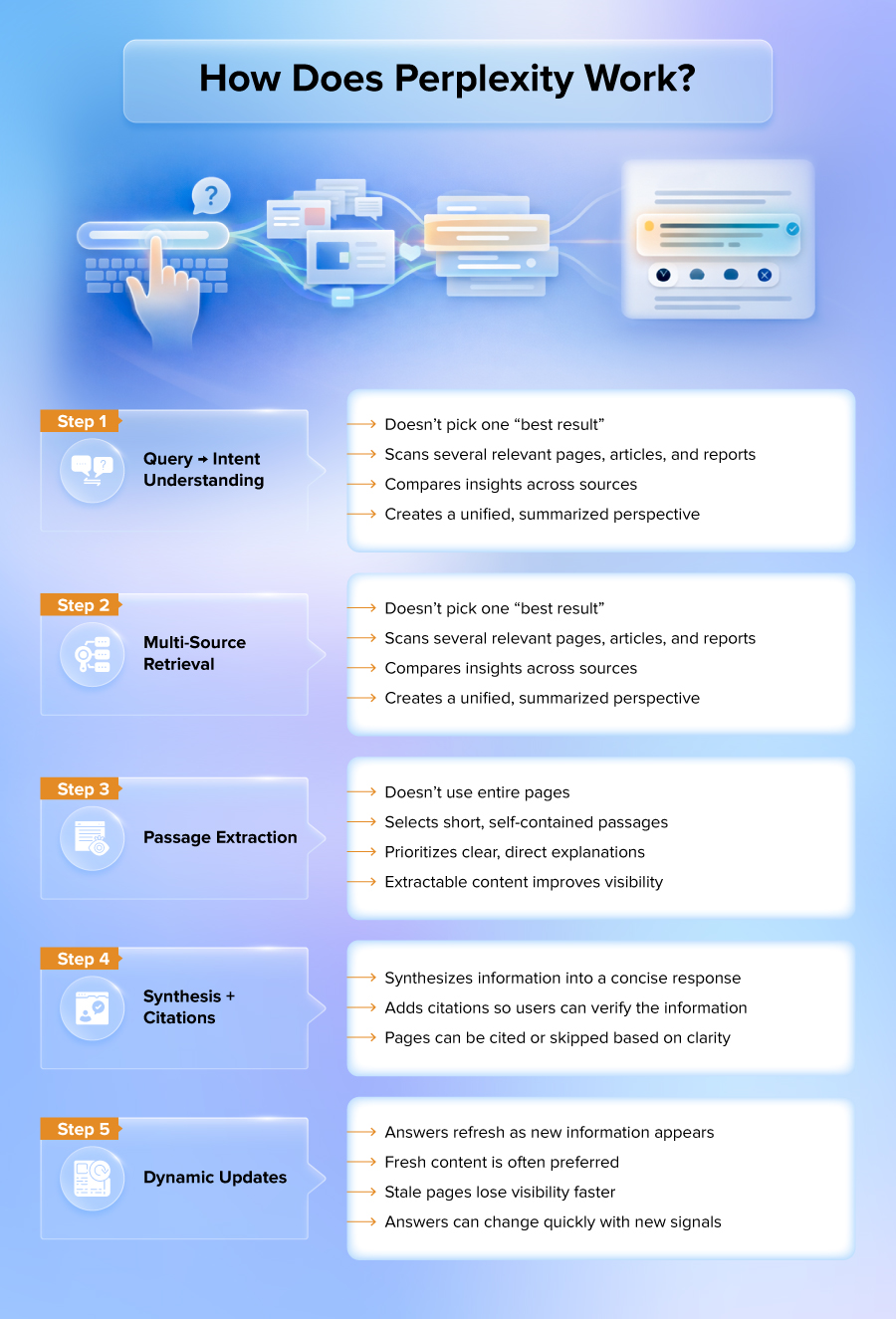
Optimizing for this platform requires a technical yet human-centric approach. The AI is designed to mimic human reasoning, so your content must be logical and well-structured. Here are the critical steps to ensure your content is “Space-ready.”
1. Prioritize Direct Answers and Definitions
The AI loves clear, concise definitions. If your page is about “AI SEO Perplexity Spaces,” do not spend three paragraphs introducing the topic. Start with a direct definition. Use bullet points for key features and specifications. The easier it is for the AI to parse your data, the more likely it is to use it as a citation.
For example, instead of writing “In today’s fast-paced digital world, many companies are looking for ways to improve their online presence,” write “AI SEO Perplexity Spaces is a feature that allows users to create curated research environments.” This directness is the cornerstone of optimization.
2. Create Comprehensive, Self-Contained Guides
When a user uploads your guide to a Space, they expect it to be the final word on the subject. This means your content must be exhaustive. Cover every angle, answer every potential question, and provide data tables where necessary. The A
If you are writing about a process, break it down into numbered steps. If you are comparing products, use a comparison table. This structured data is gold for the AI. It allows the model to extract and present information in a user-friendly format, which increases the likelihood of your source being cited.
3. Leverage Schema Markup and Structured Data
While Perplexity reads natural language, it also benefits from structured data. Implementing schema markup (like FAQPage, HowTo, and Article) helps the AI understand the hierarchy and relationships within your content. This is a technical SEO task that pays dividends in the AI space. It helps the model identify the question and the corresponding answer with greater accuracy.
Ensure your HTML is clean and semantic. Use proper
and tags to outline your content. The AI uses these headings to navigate your page and understand the context of each section. A well-structured page is a trustworthy page in the eyes of the AI.Practical Applications and Use Cases
Practical Applications and Use Cases
Understanding the “how” is important, but understanding the “where” is crucial. Here are the primary scenarios where AI SEO Perplexity Spaces becomes a critical part of your strategy.
Internal Knowledge Management
Companies are using Spaces to create internal wikis. Instead of searching through a clunky intranet, employees ask the AI questions. If your department creates a guide on “Onboarding Procedures,” and it is uploaded to a Space, your content becomes the official source. This is internal SEO, but it builds your reputation as an authority within your organization.
Niche Research Hubs
Investors and analysts use Spaces to track specific markets. They upload whitepapers, news articles, and financial reports. If your brand publishes a market analysis report, and it is uploaded to these Spaces, you gain visibility with high-value decision-makers. This is where E-E-A-T (Experience, Expertise, Authoritativeness, Trustworthiness) becomes paramount. The A
Content Repurposing for AI Consumption
You should create content specifically designed to be uploaded. This is different from your blog posts. Create “AI-Ready” PDFs or web pages that are stripped of navigation clutter and focus purely on data. These assets are designed to be dropped into a Space and queried. This proactive approach ensures you control the narrative.
Benefits and Limitations of This New SEO Frontier
Like any new technology, there are pros and cons to focusing on AI SEO Perplexity Spaces.
The Benefits
- High Intent Traffic: Users in a Space are deeply engaged. They are researching, not browsing. A citation here leads to high-quality, relevant traffic.
- Less Competition: Fewer brands are optimizing for this specifically, offering a first-mover advantage.
- Contextual Relevance: Your content is viewed in the context of other curated sources, which can enhance your authority by association.
- Direct Feedback Loop: You can see what questions are being asked in public Spaces and tailor your content to answer them precisely.
- Closed Ecosystem: You cannot control who uploads your content or how they frame the context.
- Lack of Analytics: Traditional SEO tools do not track citations within private Spaces. You are working in the dark regarding performance metrics.
- Contextual Bias: If a user uploads your content alongside a critical review, the AI might synthesize a negative response, even if your content is positive.
- Scalability Issues: Creating “AI-Ready” content requires extra time and resources, which may not be feasible for all teams.
The Limitations
Common Mistakes and How to Avoid Them
As you venture into this new territory, be aware of these common pitfalls that can derail your efforts.
Mistake 1: Keyword Stuffing
Do not repeat “AI SEO Perplexity Spaces” in every sentence. The AI detects this as spam. Focus on semantic relevance and natural language. Write for a human expert, not a robot.
Mistake 2: Ignoring Data Accuracy
If your content contains outdated statistics, the A Ensure all data is current and sourced. The AI is a tool of verification; if you are wrong, you are out.
Mistake 3: Over-Optimizing for Google
Content that is too short (under 300 words) or too focused on “People Also Ask” boxes may lack the depth needed for a Space. Spaces require comprehensive, long-form content that can stand alone as a reference document.
Mistake 4: Neglecting the “Upload” Experience
If you offer a PDF for download, ensure it is text-based, not an image scan. The AI cannot read images. Ensure your PDFs are searchable and have a logical reading order.
Important Notes for Your Strategy
Do not abandon traditional SEO. Google is still the primary driver of traffic for most websites. Instead, view AI SEO Perplexity Spaces as a complementary layer. It is a reputation management tool. You are building a digital footprint that is readable by machines.
Focus on building topical authority. Create “pillar pages” that cover a topic in exhaustive detail. These are the pages most likely to be uploaded to a Space. Ensure your author bios are clear and display credentials. The AI uses these signals to assess trustworthiness.
Finally, monitor public Spaces related to your industry. Perplexity allows some Spaces to be public. Search for your brand name within these Spaces to see how the AI describes you. This is your new “SERP” tracking.
Frequently Asked Questions (FAQ)
What is the difference between Perplexity Spaces and regular Perplexity search?
Regular Perplexity search queries the live web index. Perplexity Spaces allows users to create a persistent, curated environment where they upload specific files and URLs. The AI only uses the information within that Space to generate answers, providing more controlled and context-specific results.
How do I get my website included in a Perplexity Space?
You cannot directly force inclusion. You must create high-quality, authoritative content that users want to upload. The key is to create comprehensive, data-rich guides and whitepapers that serve as definitive references. If your content is the best resource on a topic, users will add it to their Spaces.
Does traditional backlink building help with AI SEO Perplexity Spaces?
Indirectly, yes. Backlinks build your site’s overall authority, which influences the AI’s trust in your domain. However, within a specific Space, the AI only sees the uploaded content. It does not see your backlink profile. Therefore, the quality of the uploaded document is more important than the number of links pointing to it.
Is it necessary to create separate content for AI Spaces?
It is highly recommended. While your standard blog posts can be used, creating “AI-Ready” assets—such as clean PDFs or dedicated landing pages with no navigation—ensures the AI can parse the information without distraction. These assets are designed specifically for machine consumption and synthesis.
How can I measure the ROI of optimizing for Perplexity Spaces?
Measurement is challenging. You can track referral traffic from perplexity.ai to your site. You can also monitor brand mentions within public Spaces. However, the primary ROI is often brand safety and authority. By being a cited source, you ensure the AI represents your brand accurately, which prevents misinformation and builds long-term trust.
Conclusion
AI SEO Perplexity Spaces represents a fundamental shift in how information is consumed. It moves the focus from ranking to referencing. By creating clear, comprehensive, and verifiable content, you position your brand as a primary source for AI-driven research. This is not a fleeting trend; it is the blueprint for the future of digital discovery. Start by auditing your best content, reformatting it for clarity, and making it available for the curators of tomorrow. The brands that adapt to this new ecosystem today will be the authorities cited tomorrow.
Xem thêm:
- Mastering AI SEO Related Keywords: The Complete Guide to Future-Proof Search Rankings
- AI SEO Search Performance: The Complete Guide to Ranking in the Age of Machine Learning
- AI SEO Product Comparison: The Definitive Guide to Choosing the Right Tool in 2025
- AI SEO Topic Authority: The Complete Guide to Dominating Search Rankings in 2025
- AI SEO Contextual Keywords: The Complete Guide to Smarter Search Rankings
Bài viết cùng chủ đề:

AI SEO SEO Automation with Make: The Complete Workflow Guide

AI SEO SEO Automation with Zapier: The Complete Workflow Guide

AI SEO SEO Automation with n8n: The Complete Workflow Guide
AI SEO SEO Automation with Gemini: The Complete Guide to Scaling Organic Growth

AI SEO SEO Automation with Claude: The Complete Guide to Scaling Content in 2025

AI SEO SEO Automation with ChatGPT: The Complete Playbook for 2025

AI SEO & SEO Automation for Affiliate Sites: The 2025 Playbook for Passive Income Growth
AI SEO & SEO Automation for Bloggers: The Complete Guide to Scaling Your Content

AI SEO & SEO Automation for Agencies: The Complete 2025 Playbook

AI SEO and SEO Automation for Ecommerce: The Complete Playbook for 2025

AI SEO & SEO Automation for WordPress: The Complete Playbook for 2025
AI SEO SEO Automation Strategy: The Complete Playbook for 2025

Mastering the AI SEO SEO Automation Process: A Complete Guide to Scaling Organic Growth
AI SEO SEO Automation System: The Complete Guide to Scaling Organic Growth in 2025
AI SEO SEO Automation Platform: The Complete Guide to Scaling Organic Growth in 2025
AI SEO SEO Automation Software: The Complete Guide to Scaling Organic Growth in 2025















