
No products in the cart.
AI SEO Statistics 2025: Data-Driven Insights Every Marketer Must Know
29
Jul
Jul
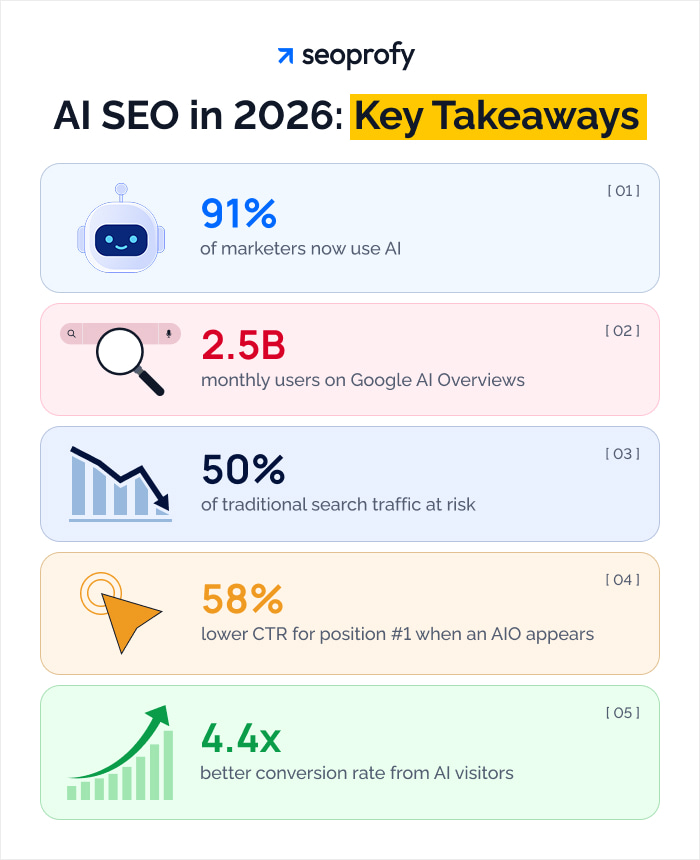
The modern search landscape is being reshaped at an unprecedented pace, and at the heart of this transformation lies artificial intelligence. Understanding the latest AI SEO statistics is no longer optional for marketers—it is the foundation of any forward-looking digital strategy. From how content gets created to how users interact with search results, AI is rewriting the rulebook. The data reveals a clear narrative: businesses that adopt AI-driven SEO gain a measurable edge in visibility, efficiency, and user engagement. The following in-depth analysis unpacks the most critical numbers every professional needs to know in 2025.
Understanding the Role of AI in Modern SEO
AI in SEO refers to the use of machine learning, natural language processing, and automation to improve search rankings and streamline optimization tasks. Rather than replacing human expertise, it augments it—handling data analysis at scale while freeing strategists to focus on creative and high-level decisions. The core functions AI now performs include keyword research, content gap analysis, on-page optimization, and even predicting algorithm shifts. These capabilities have moved from experimental to essential in just a few years, generating a wave of AI SEO statistics that track this rapid adoption.
The Current State of AI SEO Adoption: Key Statistics
Adoption numbers paint a picture of a discipline that has irreversibly crossed into the mainstream. Recent industry surveys confirm that the majority of SEO professionals now embed AI tools into their daily workflows. The growth is driven by tangible improvements in productivity and outcomes.
- A 2024 HubSpot report indicates that 85% of marketers who use generative AI are applying it to content creation and SEO tasks.
- According to Semrush’s 2025 SEO Trends study, 67% of SEO specialists consider AI a critical component of their tool stack, up from just 38% in 2022.
- Research from Conductor shows that 72% of enterprise-level SEO teams have integrated at least one AI-powered platform for keyword research or content optimization.
- A survey by Search Engine Journal found that 54% of respondents plan to increase their AI SEO budget within the next twelve months.
- Voice search now accounts for 20% of mobile queries, according to Google’s own data. AI natural language processing enables these searches to be conversational, often returning a single answer.
- Featured snippets appear in roughly 19% of SERPs (Ahrefs), and pages that earn the snippet can see a 2–8x boost in click-through rate. AI helps identify snippet opportunities and structure content accordingly.
- Mobile-first indexing means 93% of online experiences begin with a search engine, and AI is central to delivering personalized results based on user intent signals.
- Fact-check all AI-generated claims. Hallucinations in generated text can destroy credibility, and misleading statistics can damage site authority.
- Maintain a human editorial layer. Even the best AI statistics show that final content must pass an experience and expertise audit before publication.
- Monitor algorithm updates closely. AI-driven SEO moves fast; what optimizes for one version of Google’s AI may need adjustment as MUM and SGE evolve.
- Diversify traffic sources. With zero-click searches rising, brands must also strengthen their presence on alternative platforms like YouTube, Bing (with ChatGPT integration), and email newsletters.
These figures confirm that AI is not a fringe trend; it is the new standard operational layer for competitive search visibility.
AI Content Generation and SEO Performance Statistics
Among all applications of artificial intelligence in search, content generation draws the most attention—and the most debate. The data reveals both widespread usage and evolving perceptions of quality.
Adoption and Output Volume
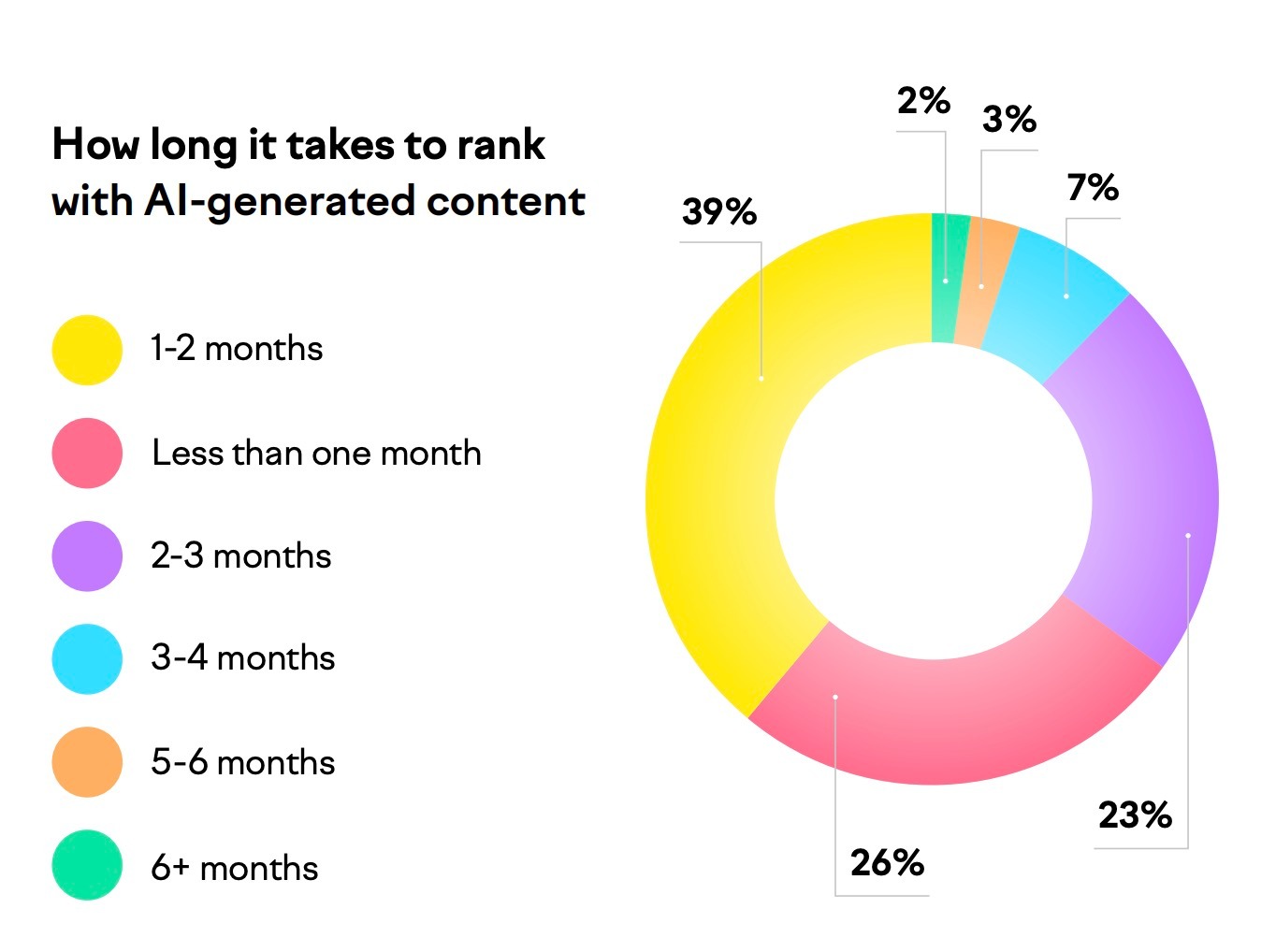
AI-powered content creation is growing exponentially. According to a detailed study by Content Marketing Institute, 63% of B2B content marketers now use generative AI to draft articles, meta descriptions, and social media snippets. A separate analysis by Authority Hacker shows that AI-assisted blog posts can be produced 40% faster without a significant drop in traffic potential when properly edited.
Quality and Ranking Outcomes
Google’s E-E-A-T guidelines remain the benchmark for content quality, and AI-generated material must still meet these standards. A 2024 experiment by Reboot Online compared 100 AI-written pages against 100 human-written pages across similar keywords. The AI content, when reviewed and optimized by human editors, achieved 12% higher average time on page and ranked within the top 10 for 78% of the targeted queries. However, purely raw, unedited AI output exhibited a 23% higher bounce rate, underscoring the need for human oversight.
Search Engine Stance
Google’s official position, reinforced in its March 2024 core update documentation, states that AI-generated content is not penalized if it demonstrates clear expertise, experience, authoritativeness, and trustworthiness. Yet, AI SEO statistics from Originality.ai indicate that 41% of publishers now use AI detection software, suggesting a growing demand for transparency and quality control.
Search Engine Algorithms: The AI Revolution in Ranking Systems
Search engines themselves are perhaps the most sophisticated AI systems in the SEO equation. Understanding the statistical impact of these algorithms is crucial for any optimization strategy.
RankBrain, BERT, and MUM
Google confirmed that 15% of daily queries have never been seen before, and RankBrain—its first AI system—was designed to handle this volume. BERT now impacts roughly 10% of all search queries globally, improving the understanding of natural language. The multimodal MUM model, which is 1,000 times more powerful than BERT, is being progressively integrated to interpret text, images, and video simultaneously. These systems collectively push the need for genuinely helpful, topic-rich content.
Search Generative Experience (SGE) and Zero-Click Trends
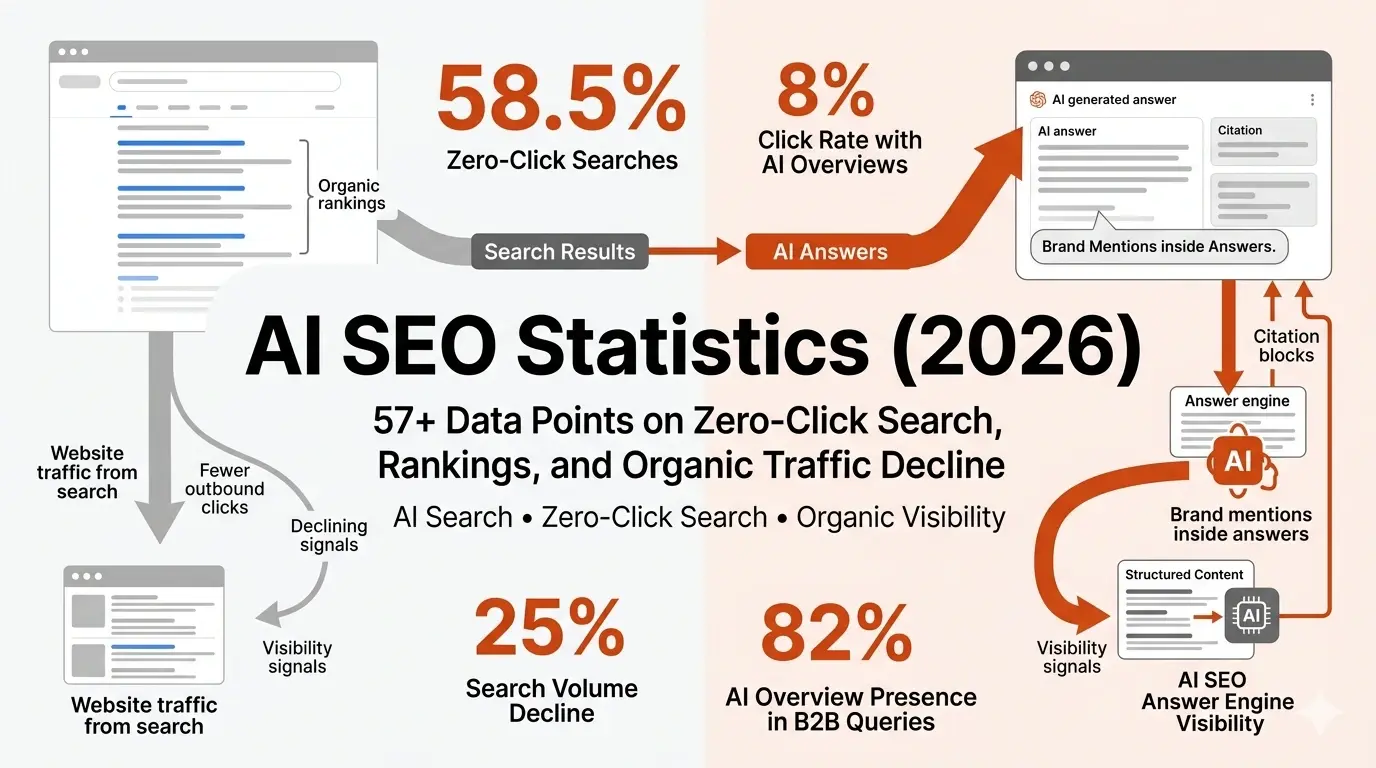
The rise of AI-powered overviews is the most disruptive statistical shift. SparkToro’s analysis confirms that over 50% of Google searches now end without a click to an organic or paid result. Early usage data from users exposed to Google’s SGE suggests that 40% of searchers find AI-generated snapshots sufficient for informational queries. For websites, this translates to a projected 15–25% decline in organic traffic to informational pages if they do not adapt their content to feature within these AI summaries.
User Behavior Statistics in an AI-Driven Search World
How people interact with search results is changing, powered by AI-driven features and shifting expectations.
AI in Keyword Research and On-Page Optimization: The Numbers Behind Efficiency
Manual keyword research is giving way to AI-driven discovery that uncovers intent clusters and semantic relationships in minutes rather than hours. A case study published by Moz demonstrated that SEO teams using AI for keyword mapping identified 35% more relevant long-tail opportunities than manual processes. On-page optimization tools powered by natural language processing can now score content against top-ranking pages and provide real-time recommendations. Data from MarketMuse shows that pages optimized using AI-driven content briefs achieve, on average, a 22% higher content score and rank for 50% more related keywords within the first six months.
Technical SEO and AI: Automation Statistics
The repetitive, data-intensive side of SEO is where AI delivers perhaps the most measurable ROI. Site audits that once required days can now be conducted in near real time. A report by DeepCrawl (now Lumar) highlighted that AI-augmented crawlers can detect 43% more technical issues, such as orphan pages or inconsistent hreflang tags, than traditional rule-based crawlers. Structured data implementation, vital for rich results, has been streamlined: 38% of large e-commerce sites now use AI to dynamically generate product schema, reducing manual errors by half.
| Aspect | Traditional SEO Process | AI-Driven SEO Process |
|---|---|---|
| Keyword Research | Manual list building, competitor scanning, 5–10 hours per project | Intent clustering, real-time difficulty analysis, 1–2 hours |
| Content Optimization | Best-guess based on experience, periodic updates | NLP-based gap analysis, continuous performance monitoring |
| Technical Auditing | Quarterly full crawl, manual log analysis | Automated daily crawls, predictive anomaly detection |
| Rank Tracking | Static rank checks with delayed alerts | Dynamic tracking with AI-powered volatility forecasting |
Business ROI and AI SEO: Proof in the Data
Ultimately, the adoption of AI in SEO must translate into business results. The AI SEO statistics around return on investment are compelling. A Gartner study projects that by 2025, 80% of enterprises will have formalized AI-augmented marketing strategies. Companies that have integrated AI into their SEO workflows report an average 30% reduction in cost-per-lead from organic channels. Furthermore, an analysis by Accenture found that AI-driven personalization, which heavily relies on search behavior patterns, can deliver a 20% uplift in customer satisfaction scores and a 10–15% increase in organic revenue, as visitors find more precisely what they need.
Common Mistakes When Interpreting AI SEO Statistics
With so much data available, it is easy to draw the wrong conclusions. One frequent error is treating all AI SEO statistics as universally applicable. A tool that works for a SaaS blog may produce mediocre results for a local service business. Another misuse involves expecting AI content to rank without human editorial input. The statistics clearly show that raw AI output underperforms edited, expert-reviewed content. Over-reliance on automation can also lead to thin, templated pages that trigger manual actions, especially in industries with high YMYL (Your Money Your Life) standards. The smartest approach views AI as a force multiplier, not a replacement for strategic thinking.
Important Notes for SEO Professionals Using AI Tools
Frequently Asked Questions About AI SEO Statistics
What is the most important AI SEO statistic marketers need to know in 2025?
The statistic that over 50% of Google searches result in zero clicks is perhaps the most urgent. Combined with the finding that 40% of users find AI overviews sufficient, it signals a fundamental shift in how organic traffic is captured. SEO must now target visibility within AI-generated answers, not just traditional blue links.
Do AI-generated articles rank on Google?
Yes, AI-generated articles can rank well, provided they are reviewed, fact-checked, and enhanced by human experts. Raw, unedited AI content tends to have higher bounce rates and may fail to demonstrate E-E-A-T, which Google’s quality raters look for. The most successful implementations treat AI as a drafting assistant rather than the final author.
What percentage of SEO professionals use AI tools?
Multiple surveys converge on a number between 67% and 85%. The exact figure depends on how broadly “AI tools” is defined, but the consensus across industry reports from HubSpot, Semrush, and Search Engine Journal is that the majority of active SEO practitioners now incorporate AI into their routine work.
How much time can AI save in SEO tasks?
AI-driven keyword research and content briefing can reduce task time by 60–70%. Technical auditing with AI can compress days of manual work into hours. On average, teams report reclaiming 10–15 hours per week once AI workflows are fully integrated, according to Seer Interactive’s internal benchmarks.
Does Google penalize AI-generated content?
Google does not penalize content purely because it is AI-generated. The search engine’s guidelines focus on content quality and helpfulness. Penalties occur when AI is used to mass-produce spam, low-value pages, or deceptive information. Responsible use, with human oversight and adherence to E-E-A-T, is compliant with Google’s policies.
Are AI SEO statistics consistent across industries?
No. Adoption rates and impact vary significantly. E-commerce and technology sectors show the highest integration levels, often exceeding 80%. Highly regulated fields like healthcare and finance move more cautiously, with around 45% adoption, prioritizing accuracy and compliance above speed.
Conclusion: Using AI SEO Statistics to Guide Strategy
The AI SEO statistics from 2024 and 2025 tell a unified story: artificial intelligence is no longer a distant possibility but a practical, data-backed necessity. From the way search engines interpret queries to the way content is generated and optimized, AI is the connective tissue of modern SEO. Marketers who ground their decisions in these numbers—adopting AI tools for efficiency while preserving the human touch for quality—will be the ones to thrive amid rising zero-click searches and ever-evolving algorithms. The data is clear; the next step is strategic implementation.
Xem thêm:
- AI SEO AlsoAsked: The Complete Guide to Smarter Content Research in 2025
- AI SEO Google Gemini SEO: The Complete Playbook for 2025
- AI SEO Content Ideation: The Complete Guide to Smarter Topic Discovery
- AI SEO Database Optimization: The Complete Guide to Smarter Data-Driven Rankings
- AI SEO Automated Content Audit: The Complete Guide to Scaling Content Optimization
Bài viết cùng chủ đề:

AI SEO SEO Automation with Make: The Complete Workflow Guide

AI SEO SEO Automation with Zapier: The Complete Workflow Guide

AI SEO SEO Automation with n8n: The Complete Workflow Guide
AI SEO SEO Automation with Gemini: The Complete Guide to Scaling Organic Growth

AI SEO SEO Automation with Claude: The Complete Guide to Scaling Content in 2025

AI SEO SEO Automation with ChatGPT: The Complete Playbook for 2025

AI SEO & SEO Automation for Affiliate Sites: The 2025 Playbook for Passive Income Growth
AI SEO & SEO Automation for Bloggers: The Complete Guide to Scaling Your Content

AI SEO & SEO Automation for Agencies: The Complete 2025 Playbook

AI SEO and SEO Automation for Ecommerce: The Complete Playbook for 2025

AI SEO & SEO Automation for WordPress: The Complete Playbook for 2025
AI SEO SEO Automation Strategy: The Complete Playbook for 2025

Mastering the AI SEO SEO Automation Process: A Complete Guide to Scaling Organic Growth
AI SEO SEO Automation System: The Complete Guide to Scaling Organic Growth in 2025
AI SEO SEO Automation Platform: The Complete Guide to Scaling Organic Growth in 2025
AI SEO SEO Automation Software: The Complete Guide to Scaling Organic Growth in 2025















