
No products in the cart.
AI SEO Topic Ideas: The Complete Guide to Generating High-Ranking Content at Scale

10
Aug
Aug
Generating fresh, relevant content consistently is one of the biggest challenges in digital marketing. This is where AI SEO topic ideas come into play, transforming how marketers approach content strategy. By leveraging artificial intelligence, you can uncover hidden search patterns, analyze competitor gaps, and produce a steady stream of topics that resonate with your audience. This guide explores how to use AI for topic discovery, the tools available, and the strategies that separate successful campaigns from those that fail.
What Are AI SEO Topic Ideas?

AI SEO topic ideas refer to content suggestions generated using machine learning algorithms and natural language processing. These systems analyze vast amounts of search data, user behavior, and existing content to identify topics that have high potential for ranking. Unlike manual brainstorming, AI can process millions of data points in seconds, revealing opportunities that would take a human analyst weeks to uncover.
The core value lies in the ability to predict what users are searching for before the trend peaks. AI models examine search intent, question patterns, and semantic relationships between keywords. This allows you to create content that answers real user needs rather than guessing based on intuition alone.
How AI Generates Content Topic Suggestions
AI systems use several methods to generate topic ideas. The most common approach involves analyzing search engine results pages (SERPs) for a seed keyword. The AI examines the top-ranking pages, extracts common themes, and identifies gaps in the existing content. It then suggests topics that fill those gaps with a higher chance of ranking.
Another method uses predictive analytics. By tracking search volume trends over time, AI can forecast which topics are gaining momentum. This is particularly useful for seasonal content or emerging industry trends. The AI also analyzes user engagement metrics from social media and forums to understand what questions people are asking in real-time.
Natural language generation (NLG) takes this a step further. The AI doesn’t just suggest a topic title; it outlines subtopics, related questions, and even suggests content structure. This creates a complete content brief that guides writers toward producing comprehensive, authoritative articles.
Top AI Tools for Generating SEO Topic Ideas
Several tools have emerged as leaders in the AI topic generation space. Each offers unique features that cater to different content strategies.
Semrush Topic Research
Semrush uses AI to analyze search intent and provide topic clusters. You enter a seed keyword, and the tool generates a mind map of related topics, questions, and subtopics. It also shows search volume and difficulty scores, helping you prioritize topics that offer the best return on effort.
Ahrefs Content Explorer
While primarily a backlink tool, Ahrefs uses AI to surface content gaps. You can search for any keyword and see which topics have high engagement but low competition. The tool also shows you which of your competitors’ pages are gaining links, giving you a clear direction for your own content.
Surfer AI
Surfer AI goes beyond topic generation. It creates full content outlines based on SERP analysis. The tool examines the top 20 ranking pages for a keyword and generates a structure that covers all necessary subtopics. This ensures your content is comprehensive enough to compete with established pages.
Clearscope
Clearscope uses AI to analyze the semantic relevance of your content. While it’s primarily an optimization tool, its content brief feature generates topic ideas based on what Google considers relevant for a given keyword. This helps you cover all angles of a topic in a single article.
How to Use AI for Topic Clustering
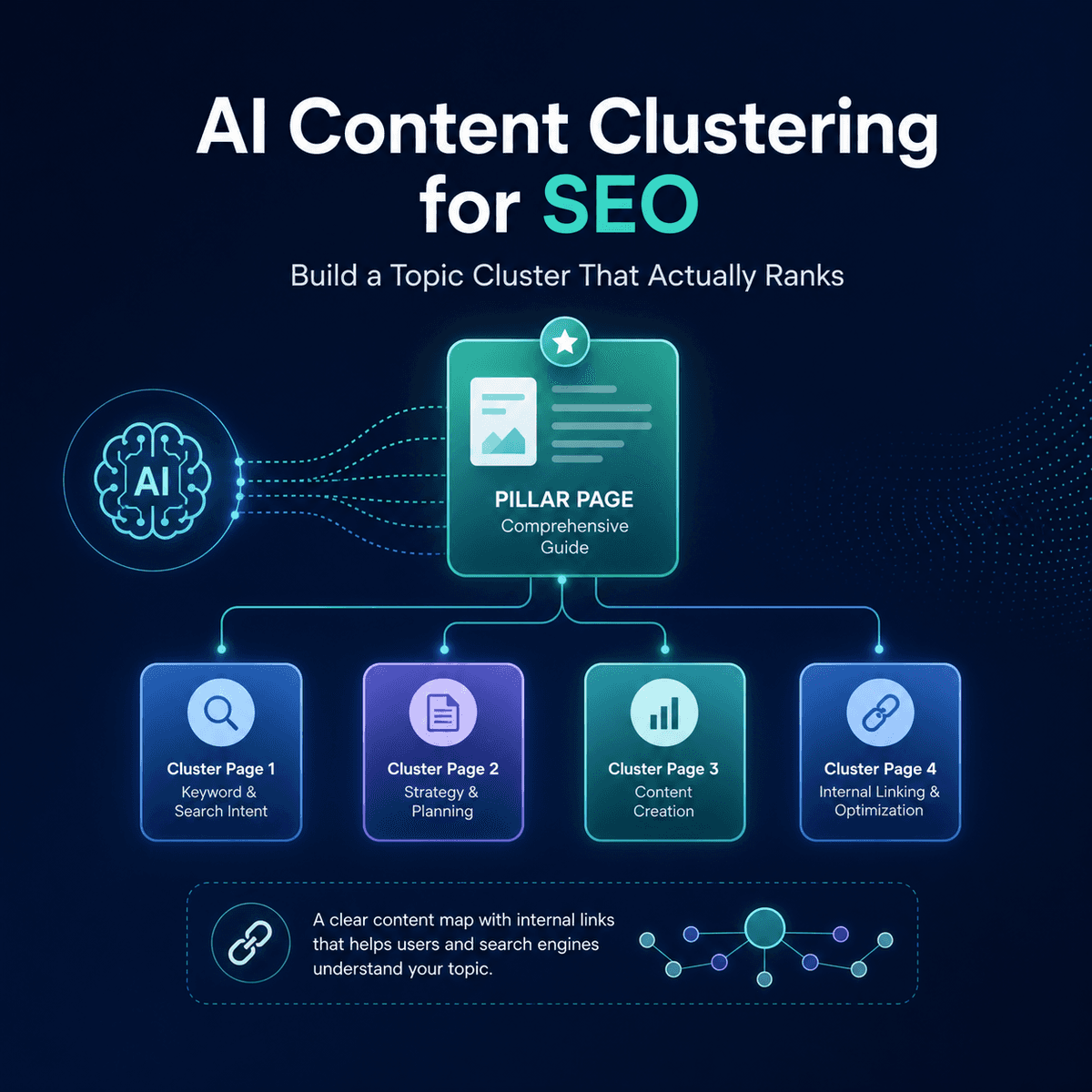
Topic clustering is a strategy where you create a pillar page covering a broad topic and then support it with cluster content targeting specific subtopics. AI excels at this because it can identify the semantic relationships between keywords.
Start with a broad topic that is central to your business. For example, if you sell fitness equipment, your pillar page might be “Home Gym Setup.” Use an AI tool to generate related subtopics like “Best Adjustable Dumbbells,” “How to Choose a Treadmill,” and “Home Gym Flooring Options.” Each of these becomes a cluster page that links back to the pillar.
AI helps you identify which subtopics have enough search volume to justify a dedicated page. It also reveals questions that users ask about the main topic, which you can address in the cluster content. This creates a web of interlinked pages that signals authority to search engines.
Benefits of Using AI for Content Ideation
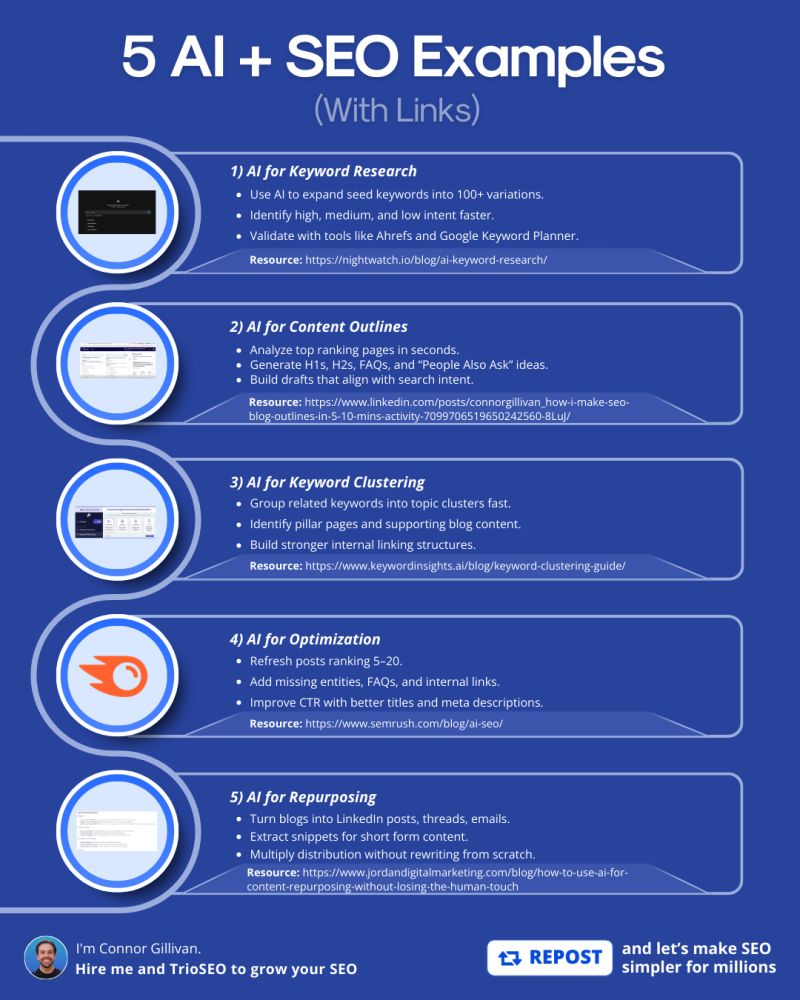
The advantages of AI-driven topic generation extend beyond saving time. Here are the key benefits:
- Data-Driven Decisions: AI removes guesswork by providing concrete data on search volume, competition, and user intent.
- Scalability: You can generate hundreds of topic ideas in minutes, making it easy to plan content for months ahead.
- Gap Identification: AI reveals topics your competitors haven’t covered, giving you a first-mover advantage.
- Intent Matching: AI analyzes whether a keyword has informational, transactional, or navigational intent, ensuring your content matches what users expect.
- Consistent Quality: AI-generated briefs ensure every piece of content follows a proven structure that ranks well.
Limitations and Challenges of AI Topic Generation
While powerful, AI topic generation has limitations that marketers must understand.
AI lacks the human context that comes from industry experience. It might suggest topics that are technically relevant but not aligned with your brand voice or business goals. You still need a human editor to filter suggestions through the lens of your overall strategy.
Another challenge is the risk of generating generic topics. Since AI analyzes existing content, it may suggest topics that are already saturated. The AI doesn’t know about your unique expertise or proprietary data that could differentiate your content.
Finally, AI tools can be expensive. Premium features that offer deep analysis often require a subscription. For small businesses or solo bloggers, the cost may outweigh the benefits, especially if you only need a few topic ideas per month.
AI Topic Ideas vs. Traditional Keyword Research
Traditional keyword research relies on tools like Google Keyword Planner or manual SERP analysis. This approach focuses on search volume and keyword difficulty. AI topic generation takes a broader view, considering user intent, content gaps, and semantic relevance.
| Aspect | Traditional Keyword Research | AI Topic Generation |
|---|---|---|
| Data Sources | Search volume, CPC, competition | SERP analysis, user behavior, semantic relationships |
| Output | List of keywords with metrics | Content briefs, subtopics, questions, outlines |
| Focus | Ranking for specific terms | Covering complete topics comprehensively |
| Time Required | Hours of manual analysis | Minutes with automated tools |
| Human Input | High – requires interpreting data | Moderate – requires filtering suggestions |
Both approaches have merit. Traditional research is useful for understanding baseline metrics. AI topic generation excels at finding angles and subtopics that traditional tools miss. The best strategy combines both, using traditional research for validation and AI for discovery.
Step-by-Step Guide to Generating AI SEO Topic Ideas
Follow this process to build a robust content pipeline using AI tools.
Step 1: Define Your Core Topics
List the main categories that align with your business. These should be broad enough to generate multiple subtopics but specific enough to attract qualified traffic. For a digital marketing agency, core topics might include SEO, content marketing, social media, and email marketing.
Step 2: Input Seed Keywords into AI Tools
For each core topic, enter a seed keyword into your chosen AI tool. Use variations like long-tail keywords and question-based queries. The more seeds you provide, the more diverse your topic suggestions will be.
Step 3: Analyze the Generated Suggestions
Review the topics the AI generates. Look for patterns in search intent. Group topics into informational (how-to guides), commercial (product comparisons), and transactional (buying guides). This helps you plan content for different stages of the buyer’s journey.
Step 4: Filter for Relevance and Authority
Not every AI suggestion will be worth pursuing. Filter topics based on your expertise. If you lack the authority to rank for a topic, skip it. Also, consider whether the topic aligns with your brand values and business objectives.
Step 5: Validate with Search Data
Before committing to a topic, validate it using traditional keyword tools. Check search volume trends and current ranking difficulty. A topic with high volume but extreme competition might not be worth the effort if you’re a new site.
Step 6: Create Content Briefs
Use the AI tool to generate a content brief for each selected topic. This should include suggested headings, related questions, and semantic keywords. Share this brief with your writers to ensure consistency and completeness.
Practical Applications of AI Topic Ideas

AI topic generation works across various content formats and industries. Here are practical ways to apply it.
Blog Content Planning
Use AI to plan a month’s worth of blog posts. Generate topics for each pillar page and its supporting clusters. This ensures your blog covers a topic comprehensively, which Google rewards with higher rankings.
Video Content Strategy
AI topic ideas translate well to video. Use the generated questions as video titles. Create a series of short videos answering each question, then link them in a playlist. This captures users who prefer video content over reading.
Email Newsletter Topics
Repurpose AI-generated topics for your email campaigns. Each newsletter can address a specific question or subtopic, providing value to your subscribers while driving traffic to your website.
Product Descriptions and Landing Pages
AI can generate topic ideas for product pages by analyzing what users search for before making a purchase. This helps you create landing pages that address common objections and questions, improving conversion rates.
Common Mistakes When Using AI for Topic Generation
Avoid these pitfalls to get the most from AI tools.
Ignoring Search Intent: Generating topics without understanding intent leads to mismatched content. A user searching “best running shoes” wants a comparison, not a history of shoe manufacturing. Always check the intent behind a topic before creating content.
Overreliance on AI: AI is a tool, not a replacement for human judgment. Blindly publishing AI-generated topics without review can damage your brand’s credibility. Always have an expert review suggestions for accuracy and relevance.
Neglecting Content Quality: AI might generate great topics, but if your content is thin or poorly written, rankings will suffer. Use AI for ideation, but invest in quality writing and editing.
Focusing Only on High-Volume Topics: High-volume topics attract heavy competition. AI tools often suggest these because they’re popular. Instead, look for long-tail topics with lower volume but higher conversion potential.
Not Updating Old Content: AI topic generation is not just for new content. Use it to identify gaps in your existing articles. Update old posts with new subtopics to maintain relevance and rankings.
Important Notes for Maximizing AI Topic Success
Keep these considerations in mind as you integrate AI into your content strategy.
AI tools are only as good as the data they analyze. Ensure your seed keywords are accurate and representative of your target audience. Use multiple tools to cross-reference suggestions and avoid bias from a single algorithm.
Track the performance of AI-generated topics. Monitor rankings, traffic, and engagement metrics. This data helps you refine your approach and identify which types of topics perform best for your niche.
Stay updated on AI advancements. The technology evolves rapidly, and new features are constantly added. Subscribe to industry newsletters and attend webinars to stay ahead of the curve.
Combine AI insights with your own expertise. The best content comes from a collaboration between machine intelligence and human creativity. Use AI to handle the data analysis, and use your experience to add unique perspectives and insights.
Frequently Asked Questions
What is the best AI tool for generating SEO topic ideas?
The best tool depends on your needs and budget. Semrush and Ahrefs offer comprehensive features for serious marketers. Surfer AI and Clearscope are excellent for content optimization and brief generation. For free options, Google’s autocomplete and “People Also Ask” features provide basic topic ideas without any cost.
Can AI replace human content strategists?
No, AI cannot replace human strategists. AI excels at data processing and pattern recognition, but it lacks the creativity, industry experience, and strategic thinking that humans bring. The most effective approach is a partnership where AI handles data analysis and humans make strategic decisions.
How many topic ideas should I generate per month?
The number depends on your content capacity. A realistic goal is to generate 2-3 times more topics than you plan to publish. This gives you flexibility to choose the best options and adapt to changing trends. For a blog publishing 4 posts per month, generate 8-12 topic ideas.
Are AI-generated topics guaranteed to rank?
No, there are no guarantees in SEO. AI-generated topics have a higher chance of ranking because they’re based on data, but success depends on many factors including content quality, backlinks, site authority, and user engagement. Use AI to improve your odds, not to guarantee outcomes.
How do I know if an AI topic idea is worth pursuing?
Evaluate each topic based on three criteria: search volume, competition level, and relevance to your business. A topic with moderate volume, low competition, and high relevance is ideal. Also consider whether you can create content that is significantly better than what’s currently ranking.
Conclusion
AI SEO topic ideas represent a significant advancement in content strategy. By leveraging machine learning, you can uncover opportunities that would otherwise remain hidden, plan content more efficiently, and stay ahead of your competition. The key is to use AI as a complement to human expertise, not a replacement. Combine data-driven insights with your industry knowledge to create content that ranks well and genuinely helps your audience. Start with a few seed keywords, experiment with different tools, and refine your process based on performance data. The result is a content pipeline that consistently delivers value and drives organic growth.
Xem thêm:
- AI SEO URL Generator: The Complete Guide to Automated Link Optimization
- AI SEO GEO Traffic: The Complete Guide to Generative Engine Optimization
- AI SEO Automated Keyword Research: The Complete Guide to Scaling Content Strategy
- The Ultimate Guide to AI Prompt Optimization: Unlocking Precision in Every AI Interaction
- AI SEO WCAG: The Complete Guide to Accessible, AI-Optimized Content
Bài viết cùng chủ đề:

AI SEO SEO Automation with Make: The Complete Workflow Guide

AI SEO SEO Automation with Zapier: The Complete Workflow Guide

AI SEO SEO Automation with n8n: The Complete Workflow Guide
AI SEO SEO Automation with Gemini: The Complete Guide to Scaling Organic Growth

AI SEO SEO Automation with Claude: The Complete Guide to Scaling Content in 2025

AI SEO SEO Automation with ChatGPT: The Complete Playbook for 2025

AI SEO & SEO Automation for Affiliate Sites: The 2025 Playbook for Passive Income Growth
AI SEO & SEO Automation for Bloggers: The Complete Guide to Scaling Your Content

AI SEO & SEO Automation for Agencies: The Complete 2025 Playbook

AI SEO and SEO Automation for Ecommerce: The Complete Playbook for 2025

AI SEO & SEO Automation for WordPress: The Complete Playbook for 2025
AI SEO SEO Automation Strategy: The Complete Playbook for 2025

Mastering the AI SEO SEO Automation Process: A Complete Guide to Scaling Organic Growth
AI SEO SEO Automation System: The Complete Guide to Scaling Organic Growth in 2025
AI SEO SEO Automation Platform: The Complete Guide to Scaling Organic Growth in 2025
AI SEO SEO Automation Software: The Complete Guide to Scaling Organic Growth in 2025















