
No products in the cart.
AI SEO Topic Research: The Complete Guide to Data-Driven Content Planning
10
Aug
Aug
AI SEO topic research has transformed how content teams identify opportunities, predict search trends, and build topical authority. Instead of relying on manual brainstorming or gut feeling, modern marketers use machine learning models to analyze millions of search queries, SERP features, and user behavior patterns. This guide explains exactly how AI-powered topic research works, what tools deliver real results, and how to build a content pipeline that consistently ranks. You will learn the step-by-step process, common pitfalls, and practical strategies used by top-performing SEO teams in 2025.
What Is AI SEO Topic Research?

AI SEO topic research refers to the process of using artificial intelligence algorithms to discover, cluster, and prioritize content topics that have high ranking potential. Traditional keyword research relies on volume and difficulty scores. AI takes this further by analyzing semantic relationships, search intent signals, entity connections, and content gaps across thousands of competing pages.
The core difference lies in pattern recognition. AI models process massive datasets from search engines, social platforms, and user engagement metrics. They identify which topics are gaining momentum, which questions remain unanswered, and which subtopics your competitors have overlooked. This creates a data-driven roadmap for content creation that aligns with both user needs and algorithmic preferences.
How AI Topic Discovery Differs from Manual Methods
Manual topic research typically involves typing keywords into a tool, exporting lists, and manually grouping related terms. This approach misses contextual nuances. AI systems, however, use natural language processing (NLP) to understand the meaning behind queries. For example, the query “best running shoes” could mean budget options, marathon training, or trail running. AI disambiguates these intents by analyzing co-occurring terms and user journey stages.
Another key difference is speed. An AI system can analyze 10,000 keywords and their SERP features in minutes. A human researcher would need days to achieve the same depth. AI also continuously learns from new data, meaning your topic suggestions improve over time as the model observes which content pieces perform well.
Why AI Topic Research Matters for SEO Success
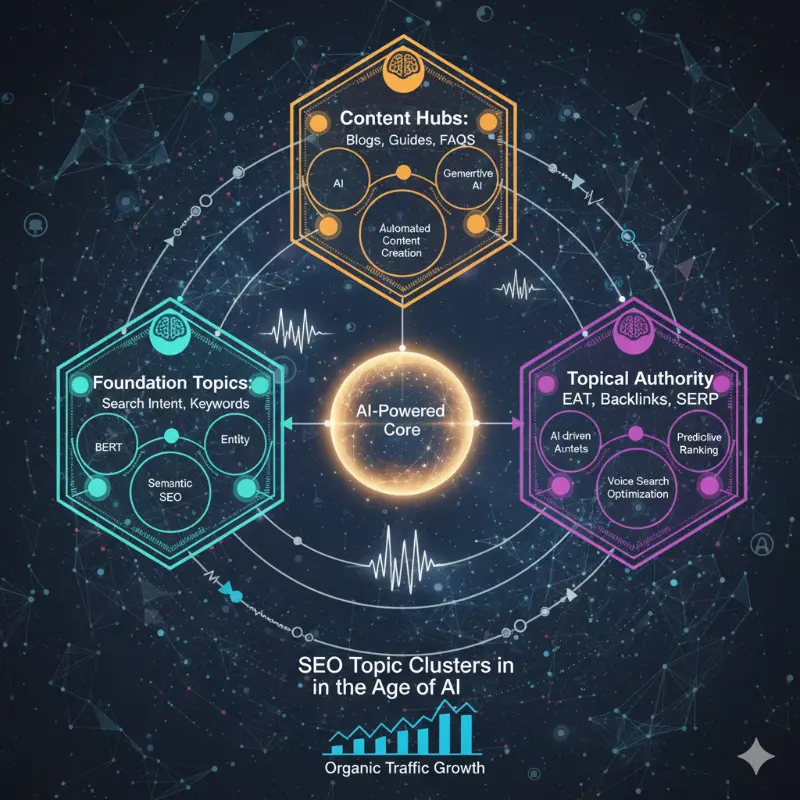
Search engines now prioritize topical depth over individual keyword density. Google’s RankBrain and BERT algorithms evaluate whether a page comprehensively covers a subject. AI topic research helps you map out entire topic clusters, ensuring your website becomes the authoritative resource for a given niche.
Consider the travel industry. A generic article about “Paris travel tips” might rank for that exact phrase. But an AI-driven topic cluster would include separate articles on “Paris museum passes,” “best croissants in Le Marais,” “how to skip lines at the Louvre,” and “Paris in winter vs. summer.” Each piece targets a specific intent while linking back to a pillar page. This interlinked structure signals expertise to search engines.
Additionally, AI topic research reduces wasted effort. Instead of creating content that never ranks, you focus on topics where you have a realistic chance of earning featured snippets, People Also Ask placements, or top-three positions. This efficiency directly impacts ROI.
Core Components of an AI Topic Research Workflow

Implementing AI SEO topic research requires a structured workflow. The following components form the backbone of any successful strategy.
1. Seed Keyword Expansion
Start with a small set of seed keywords relevant to your business. AI tools like Clearscope, MarketMuse, or Surfer SEO expand these seeds into hundreds of related terms. The expansion process uses semantic analysis to find synonyms, related entities, and long-tail variations that you might not have considered.
For example, a seed keyword “vegan protein powder” expands to include “pea protein isolate,” “plant-based recovery shakes,” “vegan protein without stevia,” and “best vegan protein for women over 50.” Each expansion reveals a distinct user intent that deserves its own content piece.
2. SERP Feature Analysis
AI tools analyze the current search engine results page for each candidate topic. They identify which SERP features appear: featured snippets, video carousels, image packs, or “People Also Ask” boxes. This information tells you what content format to use. If a featured snippet exists, you can structure your article to target that position with a concise, direct answer.
For instance, if the SERP for “how to clean a cast iron skillet” shows a video carousel, you know that video content is essential. If it shows a listicle, you should format your answer as a numbered list. AI tools automate this analysis across hundreds of topics simultaneously.
3. Content Gap Identification
Content gap analysis compares your existing pages against the topics your competitors cover. AI algorithms crawl competitor domains, extract their main topics, and compare them to your site’s structure. The output is a list of missing topics that your audience expects you to cover.
This component is particularly valuable for e-commerce sites. If you sell skincare products and your competitor has a comprehensive guide on “ingredient interactions” while you do not, AI flags this gap. You then prioritize creating that content to capture traffic you are currently losing.
4. Search Intent Classification
Not all topics with high volume are worth targeting. AI classifies search intent into four categories: informational, navigational, commercial, and transactional. For a blog focused on lead generation, informational topics might be primary. For an online store, commercial and transactional topics drive sales.
AI models examine the language of the query, the type of content currently ranking, and user behavior signals. A query like “best CRM for small business” has commercial intent. A query like “what is CRM” has informational intent. Your topic research should balance both, depending on your funnel stage.
Top AI Tools for SEO Topic Research
Several platforms offer robust AI-driven topic research capabilities. Each has unique strengths, and the best choice depends on your budget and specific needs.
| Tool | Key Features | Best For | Pricing Model |
|---|---|---|---|
| MarketMuse | Content inventory, topic modeling, competitive gap analysis | Enterprise teams building large content libraries | Subscription, tiered |
| Clearscope | Keyword clustering, content grading, SERP analysis | Bloggers and agencies needing quick optimization | Per-article credits |
| Surfer SEO | Real-time content editor, NLP term extraction, SERP analyzer | Freelancers and small teams | Subscription, tiered |
| Frase.io | AI content briefs, question extraction, outline generation | Content writers who want structured briefs | Subscription, tiered |
| Ahrefs (AI features) | Keyword difficulty, content gap, AI content writing | SEO professionals needing all-in-one suite | Subscription, tiered |
When evaluating tools, consider the accuracy of their semantic analysis. Some tools simply count keyword frequency, while others understand context. Test a tool with a small batch of topics before committing to a full subscription.
Step-by-Step Guide to Conducting AI SEO Topic Research
Follow this practical process to generate a high-performing topic list for your next content cycle.
Step 1: Define Your Content Pillars
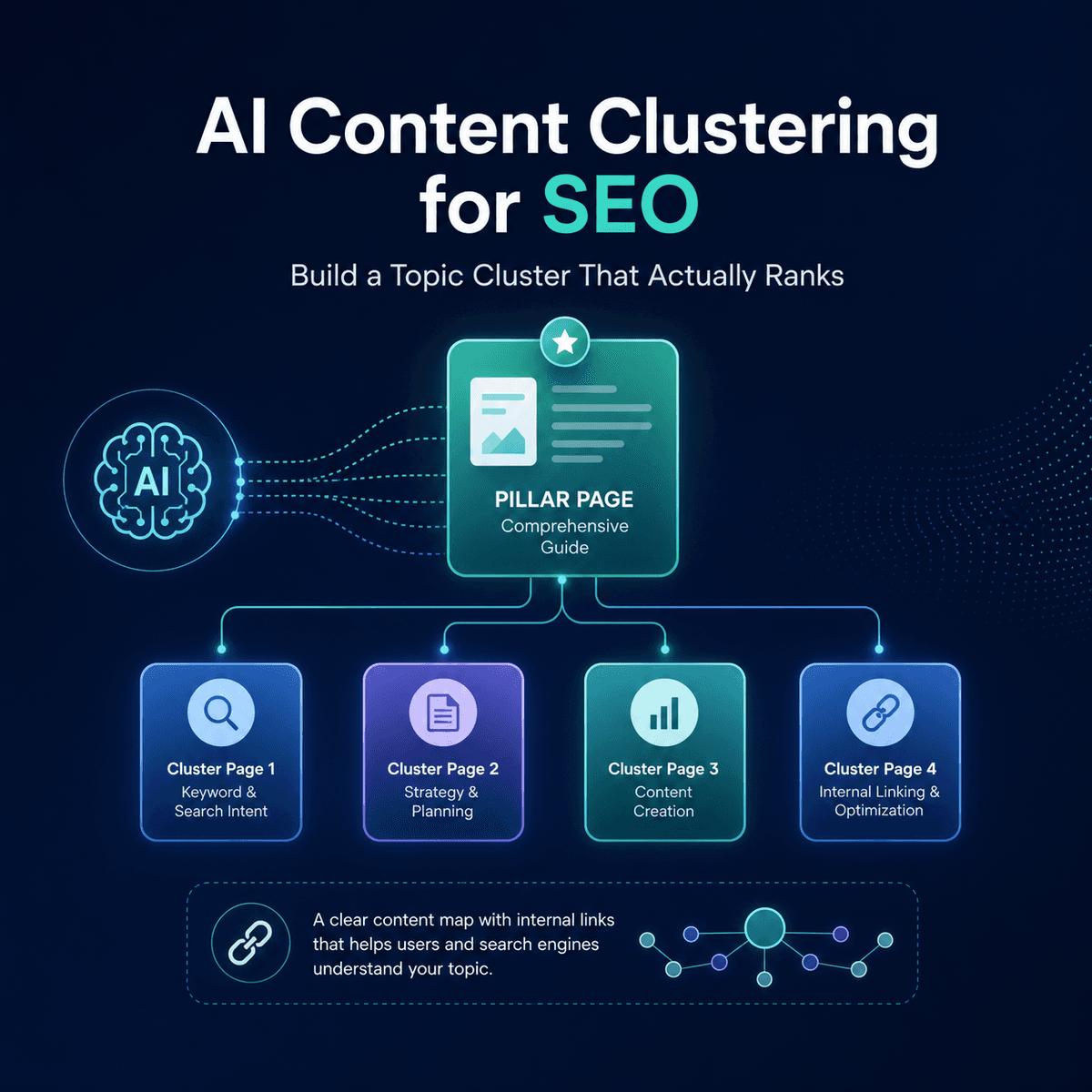
Identify three to five broad categories that define your business expertise. For a digital marketing agency, pillars might be “SEO,” “Content Marketing,” “Social Media,” and “Email Marketing.” These pillars serve as the foundation for your topic clusters. AI tools work best when they have clear boundaries to operate within.
Step 2: Input Seed Keywords into an AI Tool
Enter 10-20 seed keywords per pillar into your chosen AI research tool. The tool will generate a list of related topics, questions, and subtopics. Do not filter anything at this stage. The goal is to capture a wide net of possibilities.
Step 3: Analyze the SERP Features for Each Topic
Export the topic list and run a SERP analysis for the top 50 candidates. Look for patterns. Which topics have featured snippets? Which have video results? Which have no strong competitor? Prioritize topics where the SERP shows weakness, such as thin content or outdated articles.
Step 4: Cluster Topics by Search Intent
Group your topics into informational, commercial, and transactional buckets. For each bucket, define the primary goal. Informational topics build authority and attract backlinks. Commercial topics capture users near the point of purchase. Transactional topics target high-intent buyers.
Your content calendar should include a healthy mix. A typical ratio is 60% informational, 30% commercial, and 10% transactional for a lead-generation business.
Step 5: Validate with Search Volume and Difficulty
Use a traditional keyword tool like Ahrefs or SEMrush to check search volume and keyword difficulty for your AI-generated topics. AI tools sometimes suggest topics with zero search volume. While these can be valuable for long-tail strategy, they should not dominate your calendar. Aim for topics with a minimum of 100 monthly searches and a difficulty score below 40 for new websites.
Step 6: Create Content Briefs
For each approved topic, generate a detailed content brief using AI. The brief should include the primary keyword, secondary keywords, suggested headings, questions to answer, and entities to mention. This brief guides your writers and ensures consistency across your team.
Benefits of Using AI for Topic Research
The advantages extend beyond simple time savings. AI topic research fundamentally improves content quality and strategic alignment.
- Comprehensive coverage: AI identifies subtopics that human researchers often miss, ensuring your content is exhaustive.
- Predictive insights: Machine learning models detect emerging trends before they peak, giving you a first-mover advantage.
- Scalability: You can research hundreds of topics in a single session, making it feasible to plan content for months in advance.
- Consistency: AI applies the same criteria to every topic, removing personal bias from the selection process.
- Better internal linking: AI tools suggest related topics that should link to each other, strengthening your site architecture.
Limitations and Challenges of AI Topic Research

AI is not a replacement for human judgment. Several limitations require attention.
First, AI tools rely on historical data. They cannot predict sudden shifts in user behavior caused by news events, viral trends, or algorithm updates. You still need human monitoring of your industry to catch these changes.
Second, AI-generated topics can be generic. Many competitors use the same tools, leading to similar content strategies. To differentiate, you must layer your unique expertise and experience onto the AI suggestions.
Third, AI tools sometimes misinterpret niche jargon. If you operate in a highly specialized field, review all AI suggestions manually to ensure accuracy.
Common Mistakes in AI SEO Topic Research
Avoid these frequent errors to maximize your results.
Ignoring Search Intent
Focusing solely on keyword volume leads to mismatched content. A high-volume keyword with transactional intent will not perform well if you write an informational article. Always verify intent before creating content.
Over-Reliance on AI Output
Publishing AI-generated topic lists without human review produces bland, generic content. Use AI as a starting point, then apply your industry knowledge to refine and personalize each topic.
Neglecting Topic Clusters
Creating isolated articles without internal links reduces their ranking potential. AI topic research should always produce a cluster map showing how each piece connects to a pillar page.
Chasing Every Snippet
Not every featured snippet is worth targeting. Some snippets have low click-through rates because they fully answer the query on the SERP. Evaluate whether winning the snippet aligns with your traffic goals.
Practical Applications Across Industries
AI topic research works across diverse sectors, each with unique applications.
In healthcare, AI helps identify patient questions that lack reliable answers. A clinic can create content on “early signs of diabetes” or “how to lower A1C naturally” based on AI-identified gaps in current medical content.
In e-commerce, AI topic research powers buying guides and comparison articles. A furniture store might discover that “best sofa for small apartments” has high demand but weak existing content. They create a comprehensive guide featuring their products, capturing high-intent traffic.
In SaaS, AI topic research supports feature-based content. A project management tool might find that “how to automate task assignments” is a trending topic. They create a tutorial showing their software’s automation features, attracting users searching for solutions.
Important Notes for Implementing AI Topic Research
Keep these considerations in mind as you integrate AI into your workflow.
Data privacy matters. Some AI tools process your data on external servers. Review their privacy policies, especially if you handle sensitive client information.
AI tools require training. The more data you feed them, the better their suggestions become. Connect your Google Search Console and analytics accounts to your AI tool to provide real performance data.
Combine AI with human creativity. The best content strategies emerge from a partnership between machine efficiency and human insight. Use AI to handle the heavy lifting of data analysis, then apply your editorial judgment to select the most impactful topics.
Frequently Asked Questions
What is the difference between AI topic research and traditional keyword research?
Traditional keyword research focuses on individual search terms, their volume, and difficulty. AI topic research analyzes entire semantic fields, including related entities, user intent, and content gaps. It produces clusters of topics rather than isolated keywords, enabling more comprehensive content strategies.
How much does AI SEO topic research cost?
Costs vary widely. Basic tools like Frase start around $15 per month. Premium platforms like MarketMuse can cost several hundred dollars monthly. Many traditional SEO suites like Ahrefs and SEMrush include basic AI features in their standard plans, which range from $99 to $200 per month.
Can AI topic research replace human content strategists?
No. AI provides data and suggestions, but human strategists are essential for interpreting results, applying brand context, and making final decisions. AI excels at pattern recognition and scale, while humans excel at creativity and strategic judgment.
How often should I conduct AI topic research?
Run a full topic research cycle quarterly. Additionally, perform a quick monthly check to identify emerging trends or new content gaps. Search behavior changes constantly, so regular updates keep your strategy current.
Does AI topic research work for local SEO?
Yes. AI tools can analyze location-specific queries and identify local content opportunities. For example, a dentist could discover topics like “emergency dentist open on Sunday” or “invisalign cost in [city name]” that have high local relevance.
Conclusion
AI SEO topic research represents a significant advancement over manual methods. It enables content teams to work faster, cover more ground, and align their output with genuine user needs. The key to success lies in combining AI’s analytical power with human editorial oversight. Start by selecting a reliable tool, defining your content pillars, and running a structured research cycle. Monitor your results, refine your approach, and let the data guide your next content decisions. The websites that thrive in search rankings will be those that embrace AI topic research as a core part of their content strategy.
Xem thêm:
- AI SEO AI Search Reputation: The Complete Playbook for 2025
- AI SEO Keywords Everywhere: The Complete Guide to Smarter Keyword Research in 2025
- AI SEO for Local Business: The Complete Guide to Dominating Local Search with Artificial Intelligence
- AI SEO Information Architecture: The Complete Guide to Future-Proofing Your Website
- AI SEO Table Generator: The Complete Guide to Smarter Content in 2025
Bài viết cùng chủ đề:

AI SEO SEO Automation with Make: The Complete Workflow Guide

AI SEO SEO Automation with Zapier: The Complete Workflow Guide

AI SEO SEO Automation with n8n: The Complete Workflow Guide
AI SEO SEO Automation with Gemini: The Complete Guide to Scaling Organic Growth

AI SEO SEO Automation with Claude: The Complete Guide to Scaling Content in 2025

AI SEO SEO Automation with ChatGPT: The Complete Playbook for 2025

AI SEO & SEO Automation for Affiliate Sites: The 2025 Playbook for Passive Income Growth
AI SEO & SEO Automation for Bloggers: The Complete Guide to Scaling Your Content

AI SEO & SEO Automation for Agencies: The Complete 2025 Playbook

AI SEO and SEO Automation for Ecommerce: The Complete Playbook for 2025

AI SEO & SEO Automation for WordPress: The Complete Playbook for 2025
AI SEO SEO Automation Strategy: The Complete Playbook for 2025

Mastering the AI SEO SEO Automation Process: A Complete Guide to Scaling Organic Growth
AI SEO SEO Automation System: The Complete Guide to Scaling Organic Growth in 2025
AI SEO SEO Automation Platform: The Complete Guide to Scaling Organic Growth in 2025
AI SEO SEO Automation Software: The Complete Guide to Scaling Organic Growth in 2025















