
No products in the cart.
AI SEO Topical Keywords: The Complete Guide to Future-Proof Content Strategy
10
Aug
Aug
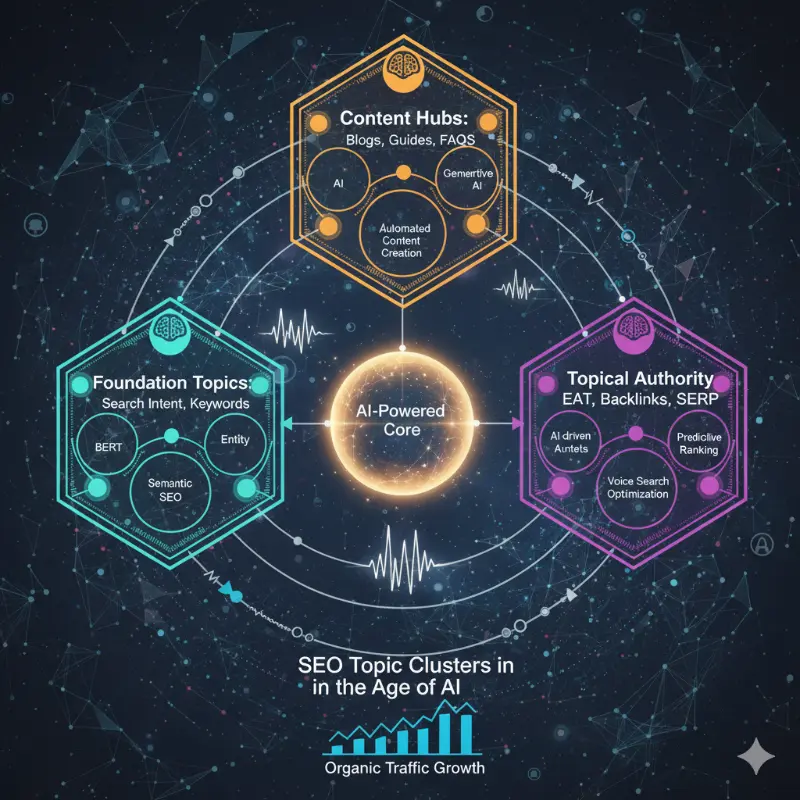
The landscape of search engine optimization has shifted dramatically with the integration of artificial intelligence into search algorithms. Understanding AI SEO Topical Keywords is no longer optional for digital marketers who want to maintain visibility in search results. This comprehensive guide explores how AI interprets topical relevance, why traditional keyword strategies fall short, and how to build a content architecture that aligns with machine learning ranking systems. The approach outlined here moves beyond simple keyword density toward semantic depth and contextual authority.
Understanding AI SEO Topical Keywords
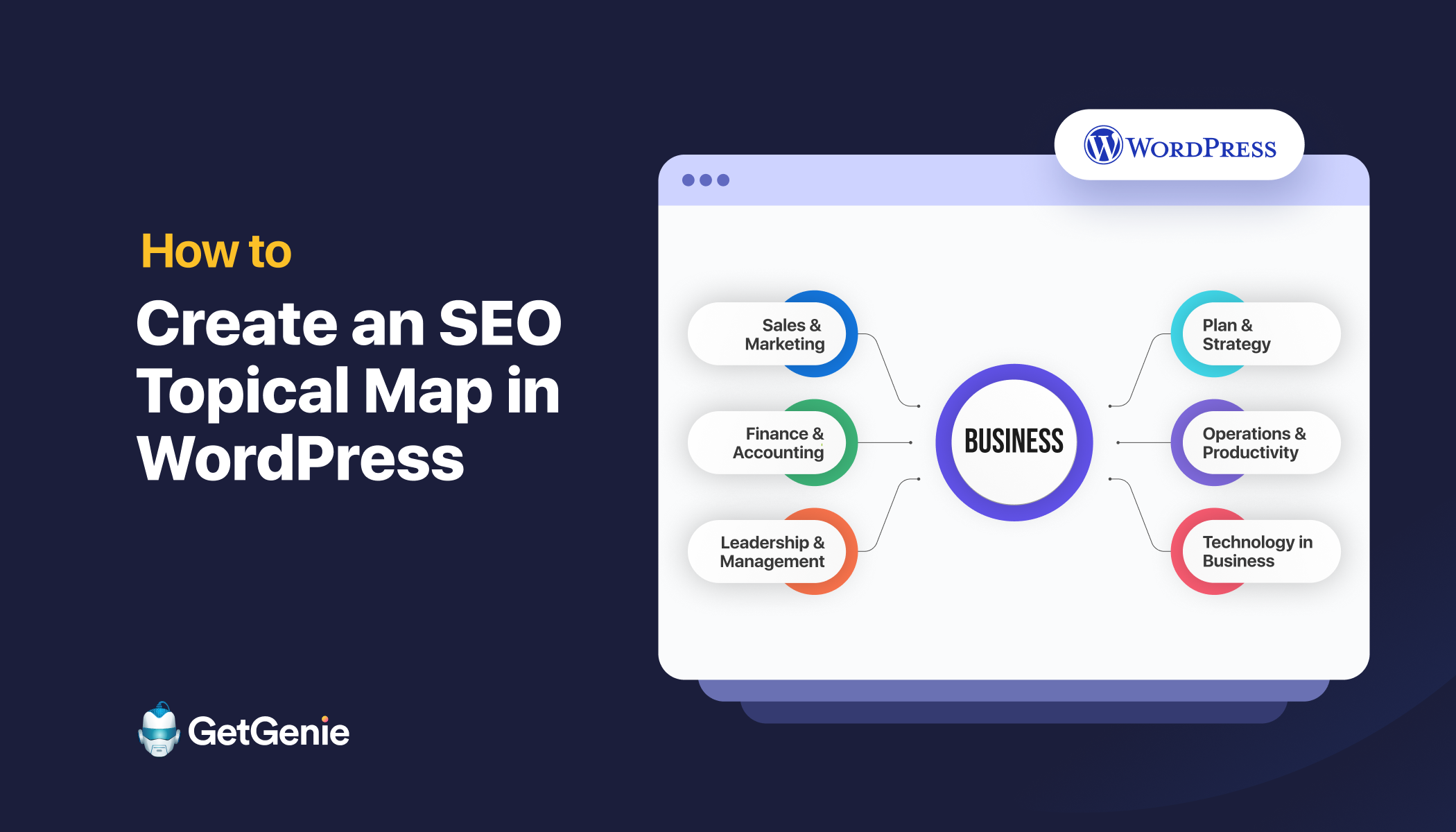
AI SEO Topical Keywords refer to the strategic grouping of semantically related terms and concepts that help search engines understand the complete scope of a subject matter. Unlike traditional keyword targeting that focuses on individual phrases, topical keyword strategies create interconnected webs of content that demonstrate expertise across an entire domain. Search engines like Google use natural language processing and machine learning models such as BERT and MUM to evaluate how comprehensively a website covers a topic.
These AI systems analyze the relationships between words, the context in which they appear, and the overall structure of information. When a website consistently covers related subtopics with depth and accuracy, the algorithm assigns higher topical authority scores. This authority translates into better rankings not just for the primary keywords but for hundreds of related long-tail variations that users actually type into search boxes.
The Evolution from Keywords to Topics
Early SEO relied on exact-match keywords and backlink quantity. The introduction of RankBrain in 2015 marked the beginning of AI-driven search understanding. Today, neural matching and transformer-based models interpret user intent at a sophisticated level. A page optimized for “best running shoes” must now also address cushioning technology, pronation support, shoe durability, and running surface considerations to compete effectively.
This evolution means that creating isolated articles targeting single keywords produces diminishing returns. Instead, successful SEO strategies build comprehensive topic clusters where each piece of content reinforces the others. The AI algorithms recognize these patterns of interlinked, semantically related content as signals of genuine expertise.
How AI Algorithms Process Topical Keywords
Modern search engines process topical keywords through several layers of machine learning. The first layer involves tokenization, where text is broken down into meaningful units. The second layer applies contextual embedding, which maps words to vectors based on their surrounding context. The third layer involves attention mechanisms that weigh the importance of different terms within a document.
These processes allow search engines to distinguish between different meanings of the same word. For example, “apple” in the context of fruit versus technology company produces different vector representations. AI SEO Topical Keywords leverage this understanding by ensuring that content includes sufficient contextual signals to disambiguate meaning and establish clear topical relevance.
Semantic Search and Entity Recognition
Google’s Knowledge Graph contains millions of entities and their relationships. When your content mentions entities like “Nike,” “marathon training,” or “carbon fiber plates,” the algorithm connects these to established knowledge patterns. Topical keyword strategies should therefore include entity-rich language that aligns with how the Knowledge Graph organizes information.
Structured data markup further enhances this process by explicitly telling search engines what your content means. Combining schema markup with strategically placed topical keywords creates a powerful signal that AI systems can process with high confidence.
Building a Topical Keyword Map
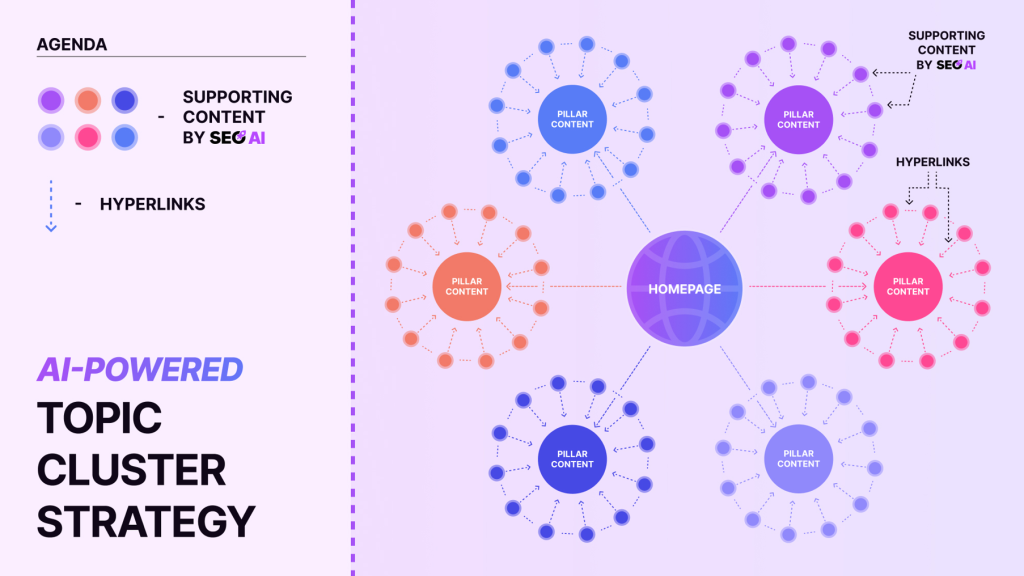
Creating an effective AI SEO Topical Keywords strategy begins with comprehensive topic research. Start by identifying your core subject area and then branch out into all related subtopics that your target audience might search for. Tools like Ahrefs, SEMrush, and AnswerThePublic provide data on related queries and question-based searches.
Your topical map should include three levels of keywords: head terms that define the main topic, body keywords that cover specific aspects, and long-tail variations that address niche questions. Each level serves a different purpose in the AI understanding process. Head terms establish the primary subject, body keywords demonstrate depth, and long-tail variations capture specific user intent.
Creating Topic Clusters and Pillar Pages
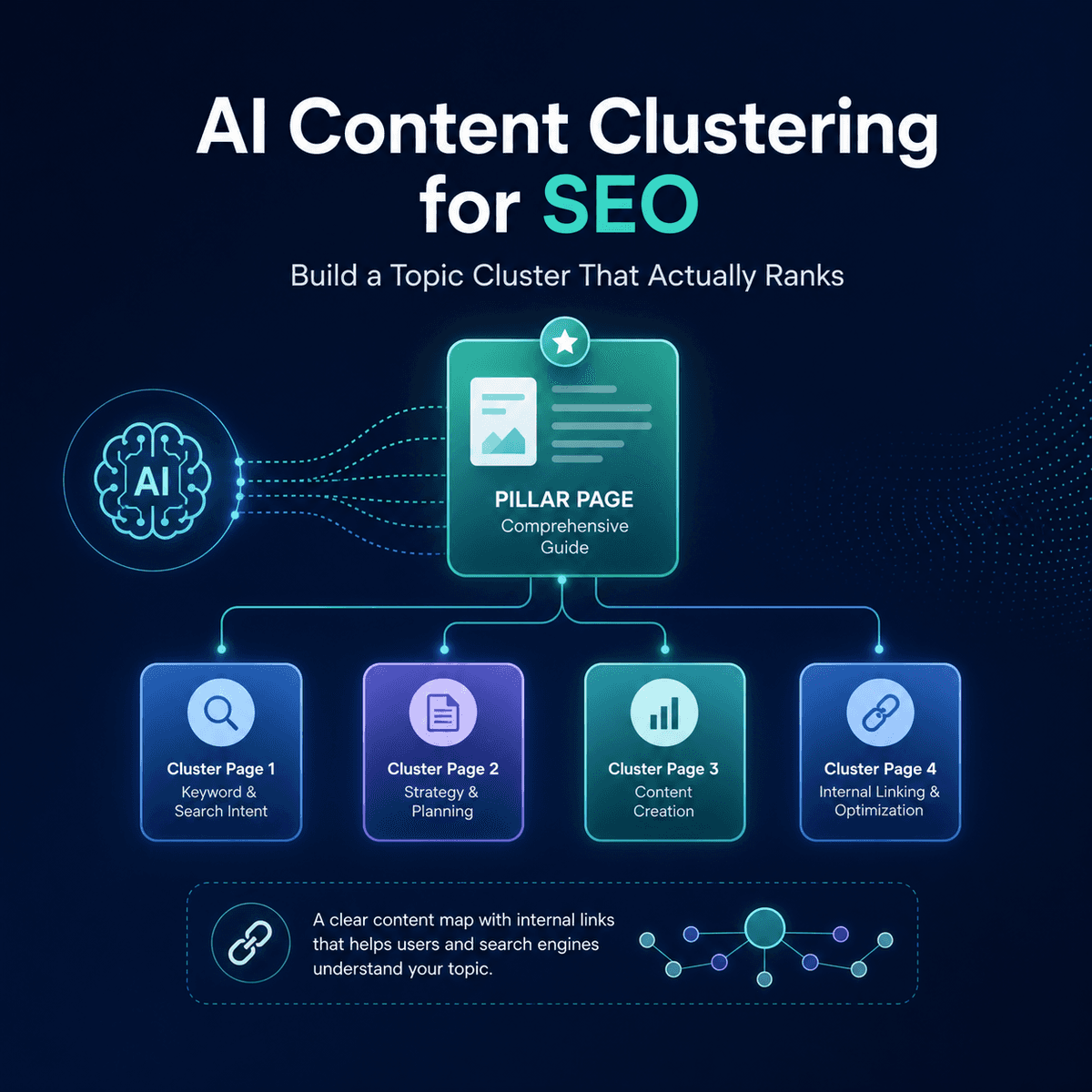
The pillar page strategy remains one of the most effective implementations of topical keyword optimization. A pillar page provides a comprehensive overview of a broad topic, while cluster content addresses specific subtopics in detail. Internal linking between these pages creates a web of contextual relevance that AI algorithms interpret as authoritative coverage.
For example, a pillar page about “digital marketing” might link to cluster articles about “email automation,” “social media advertising,” and “conversion rate optimization.” Each cluster article then links back to the pillar page, reinforcing the topical relationship. This structure helps search engines understand the full scope of your expertise.
Content Optimization for AI Search Systems
Writing content that satisfies AI SEO Topical Keywords requires a shift from writing for keywords to writing for comprehensive understanding. Each piece of content should thoroughly answer the user’s question while naturally incorporating related terms and concepts. The goal is to create content that a subject matter expert would consider complete and accurate.
Natural language processing models reward content that reads smoothly and logically. Avoid keyword stuffing and unnatural phrase repetition. Instead, use variations of your target terms and include synonyms that add semantic richness. AI systems recognize these patterns as indicators of high-quality, human-written content.
Technical Optimization for AI Crawlers
Beyond on-page content, technical factors influence how AI systems process your topical keywords. Page speed, mobile responsiveness, and clean URL structures help crawlers access and index your content efficiently. Internal linking architecture should follow logical hierarchies that mirror your topical map.
Site structure also matters. Organizing content into categories and subcategories that reflect your topical relationships helps AI systems understand the hierarchy of information on your site. This organization supports the entity-based understanding that modern search algorithms rely on.
Benefits of Topical Keyword Optimization
Implementing an AI SEO Topical Keywords strategy delivers measurable benefits beyond traditional keyword optimization. Websites that achieve topical authority typically see improvements in organic traffic across their entire domain, not just for targeted pages. This occurs because search engines begin to trust the site as a reliable source for the entire subject area.
Topical authority also improves click-through rates because your content appears for a wider range of queries. When users find comprehensive answers to their questions, they spend more time on your site, reducing bounce rates and increasing engagement signals. These positive user behaviors further reinforce your topical authority in the eyes of AI algorithms.
Long-Term Sustainability
Keyword-based SEO strategies often suffer from algorithm updates that change ranking factors. Topical keyword strategies prove more resilient because they align with the fundamental goal of search engines: providing users with the most relevant, comprehensive information available. As AI systems become more sophisticated, they increasingly reward genuine expertise over optimization tricks.
This sustainability makes topical optimization a worthwhile investment for businesses that want long-term organic growth. The effort required to build comprehensive topical coverage creates a competitive moat that is difficult for competitors to replicate quickly.
Common Mistakes in Topical Keyword Implementation
Many marketers misunderstand the concept of AI SEO Topical Keywords and make critical errors in implementation. One common mistake involves creating thin content that merely mentions related keywords without providing substantive information. AI systems detect this lack of depth and may penalize the site for attempting to game the system.
Another frequent error involves neglecting internal linking. Creating comprehensive content without connecting it to related pages fails to establish the contextual relationships that AI algorithms look for. Your topical map should guide every internal link you create.
Keyword Cannibalization Issues
When multiple pages target the same or very similar keywords, search engines struggle to determine which page should rank. This cannibalization dilutes your topical authority and confuses AI systems. Conduct regular audits to identify overlapping content and consolidate or differentiate pages as needed.
Each piece of content should have a clearly defined purpose within your topical map. If two pages cover the same subtopic, merge them or redirect one to the other. This consolidation strengthens the remaining page and improves your overall topical signals.
Measuring Topical Authority Success
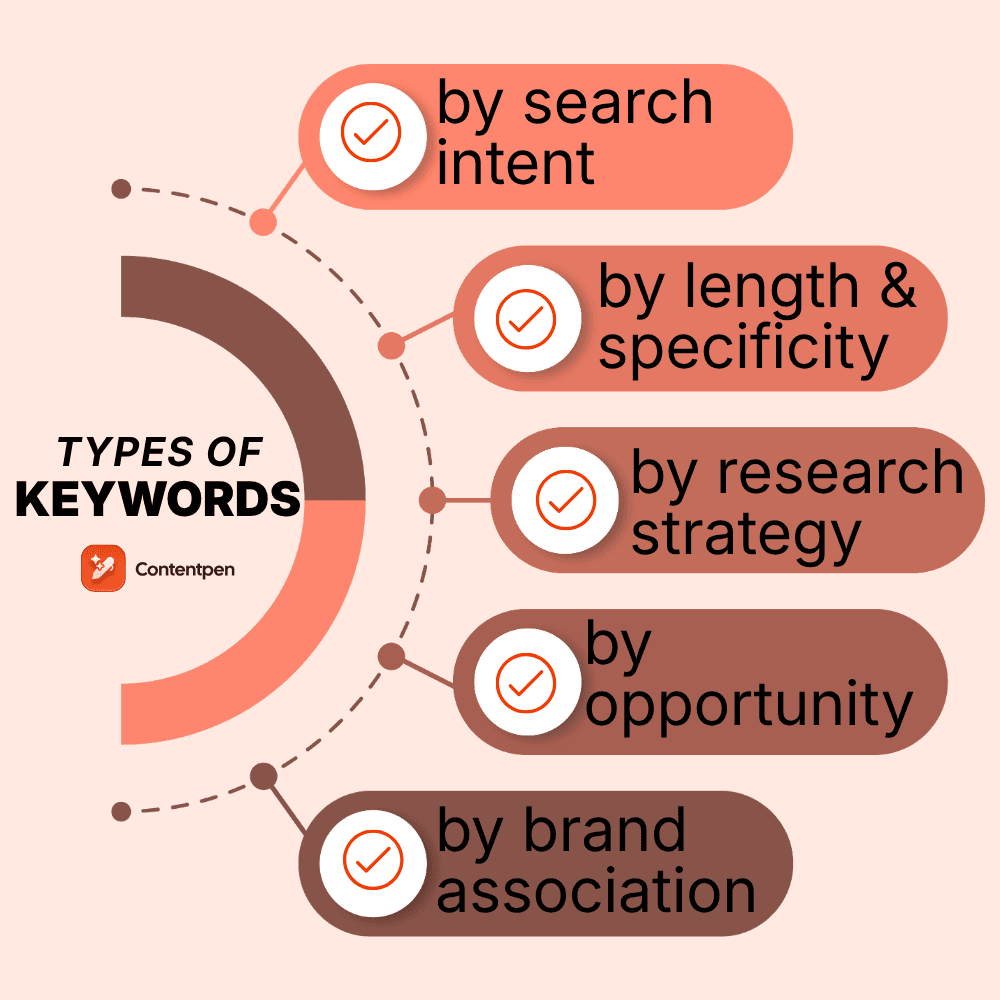
Tracking the success of your AI SEO Topical Keywords strategy requires looking beyond traditional ranking reports. Monitor your site’s visibility for a broad set of related keywords rather than focusing on individual rankings. Tools like Google Search Console provide data on impressions and clicks for thousands of queries.
Also track your site’s topical authority scores from tools like Semrush or Moz. These metrics indicate how well your site covers specific subject areas compared to competitors. Improvements in these scores correlate with increased organic traffic and better ranking stability.
Content Gap Analysis
Regular content gap analysis helps identify subtopics you have not yet covered. Compare your content library against competitor sites and search query data to find opportunities for expansion. Each new piece of content should fill a specific gap in your topical coverage.
This ongoing process ensures that your topical authority continues to grow over time. Search engines reward sites that consistently expand their coverage of relevant subtopics with improved visibility for the entire topic cluster.
AI Tools for Topical Keyword Research
Several AI-powered tools can accelerate your topical keyword research process. Tools like Clearscope and MarketMuse analyze top-ranking content to identify semantic terms and concepts that should be included in your articles. These tools use natural language processing to generate content briefs that align with AI search requirements.
Other tools like Frase and Surfer SEO provide real-time optimization suggestions as you write. These platforms compare your content against top competitors and recommend additional terms, questions, and structural elements to improve topical relevance. Using these tools consistently improves the quality of your content production.
Integrating AI Writing Assistance
AI writing assistants can help generate initial drafts that incorporate topical keywords naturally. However, human editing remains essential to ensure accuracy, tone, and genuine expertise. Use AI tools to overcome writer’s block and generate ideas, but always review and refine the output before publishing.
The most effective approach combines AI efficiency with human judgment. Let AI handle the heavy lifting of research and initial drafting, then apply your subject matter expertise to add unique insights and real-world examples that AI cannot generate.
Practical Implementation Guide
Start your AI SEO Topical Keywords implementation by auditing your current content. Identify your primary subject areas and assess how comprehensively you cover each one. Use this audit to prioritize which topics need additional content and which existing content requires updating.
Next, create a detailed topical map for your highest-priority subject area. List every subtopic, question, and related concept that your target audience might search for. This map becomes your content calendar for the next several months.
Step-by-Step Content Creation Process
For each piece of content in your topical map, follow a structured creation process. Begin with thorough research using both SEO tools and your own expertise. Outline the article to ensure comprehensive coverage of the subtopic. Write naturally, incorporating related terms and concepts without forcing keyword placement.
After drafting, review your content against your topical map to ensure you have covered all relevant aspects. Add internal links to related content and ensure the article fits logically within your site structure. Finally, publish and monitor performance, updating content as new information becomes available.
Important Notes for Long-Term Success
AI SEO Topical Keywords strategies require patience and consistency. Building genuine topical authority takes months of sustained effort. Do not expect immediate results from a few optimized articles. Commit to a long-term content program that systematically expands your coverage.
Stay informed about updates to search algorithms and AI technologies. The field evolves rapidly, and strategies that work today may need adjustment tomorrow. Follow reputable SEO publications and participate in professional communities to stay current.
Remember that user experience remains paramount. AI systems increasingly prioritize content that satisfies user intent and provides genuine value. Every topical keyword decision should ultimately serve the goal of helping your audience find the information they need.
Frequently Asked Questions
What is the difference between traditional keywords and AI SEO Topical Keywords?
Traditional keywords focus on individual search phrases, while AI SEO Topical Keywords involve groups of semantically related terms that establish comprehensive subject matter expertise. AI systems evaluate how well content covers an entire topic rather than just matching specific phrases.
How many articles do I need to establish topical authority?
The number varies by industry and competition level. A good starting point is 10-15 comprehensive articles covering the main subtopics of your primary subject area. Quality matters more than quantity, so focus on creating genuinely useful content rather than hitting arbitrary article counts.
Can I use AI SEO Topical Keywords for local SEO?
Yes, topical keyword strategies work effectively for local SEO. Create content that covers local topics, neighborhood guides, local events, and region-specific information. This approach helps search engines understand your relevance to specific geographic areas.
How long does it take to see results from topical keyword optimization?
Most sites begin seeing improvements within 3-6 months of consistent topical content creation. However, significant authority gains typically require 6-12 months of sustained effort. Patience and consistency are essential for success.
Do I need to abandon my existing keyword strategy?
No, integrate topical keywords into your existing strategy. Use traditional keyword research to identify specific phrases, then build topical clusters around those phrases. The two approaches complement each other when implemented together.
Conclusion
AI SEO Topical Keywords represent the current and future state of search engine optimization. As artificial intelligence continues to shape how search engines understand and rank content, the ability to demonstrate comprehensive topical expertise becomes increasingly valuable. The strategies outlined in this guide provide a roadmap for building the kind of content architecture that AI systems reward with higher visibility and sustained organic traffic.
The shift from keyword-based to topic-based optimization requires a fundamental change in how you approach content creation. Instead of asking what keywords to target, ask what topics your audience needs to understand. Build your content around complete subject coverage, interconnected information, and genuine expertise. This approach aligns with the goals of AI search systems and, more importantly, delivers real value to your audience.
Start implementing these strategies today by auditing your current content, building your topical map, and committing to a consistent program of comprehensive content creation. The effort invested in topical authority will compound over time, creating a durable competitive advantage that withstands algorithm updates and evolving search technologies.
Xem thêm:
- AI SEO Link Building Automation: The Complete 2025 Playbook for Scalable Growth
- AI SEO Automated SEO Tasks: The Complete Guide to Scaling Your Rankings in 2025
- How to Use ChatGPT for SEO: A Complete Blueprint for AI-Driven Search Success
- AI SEO vs Surfer SEO: The Complete Guide to AI-Powered Search Optimization
- AI SEO GEO Citations: The Complete Guide to Future-Proofing Your Local Search Strategy
Bài viết cùng chủ đề:

AI SEO SEO Automation with Make: The Complete Workflow Guide

AI SEO SEO Automation with Zapier: The Complete Workflow Guide

AI SEO SEO Automation with n8n: The Complete Workflow Guide
AI SEO SEO Automation with Gemini: The Complete Guide to Scaling Organic Growth

AI SEO SEO Automation with Claude: The Complete Guide to Scaling Content in 2025

AI SEO SEO Automation with ChatGPT: The Complete Playbook for 2025

AI SEO & SEO Automation for Affiliate Sites: The 2025 Playbook for Passive Income Growth
AI SEO & SEO Automation for Bloggers: The Complete Guide to Scaling Your Content

AI SEO & SEO Automation for Agencies: The Complete 2025 Playbook

AI SEO and SEO Automation for Ecommerce: The Complete Playbook for 2025

AI SEO & SEO Automation for WordPress: The Complete Playbook for 2025
AI SEO SEO Automation Strategy: The Complete Playbook for 2025

Mastering the AI SEO SEO Automation Process: A Complete Guide to Scaling Organic Growth
AI SEO SEO Automation System: The Complete Guide to Scaling Organic Growth in 2025
AI SEO SEO Automation Platform: The Complete Guide to Scaling Organic Growth in 2025
AI SEO SEO Automation Software: The Complete Guide to Scaling Organic Growth in 2025















