
No products in the cart.
Free AI SEO Tools: Supercharge Your Rankings Without Paying a Cent
29
Jul
Jul
Free AI SEO tools are no longer a futuristic fantasy—they are practical, accessible, and surprisingly powerful. Every day, search engine algorithms grow more complex, and the pressure to produce high-ranking content tightens. Marketers, bloggers, and small businesses often assume that advanced SEO assistance requires a hefty monthly subscription. That assumption is outdated. A new wave of artificial intelligence, available at zero cost, now handles keyword discovery, content optimization, technical audits, and even link-building research. The challenge isn’t finding a tool—it’s knowing which ones deliver real value and how to combine them into a seamless workflow. This article dives deep into the world of free AI SEO tools, unpacking exactly how they work, where they shine, and the pitfalls to avoid, so you can compete effectively without breaking the bank.
Understanding Free AI SEO Tools and How They Work
At their core, free AI SEO tools use machine learning models and natural language processing to automate or enhance tasks that once consumed hours of manual labor. Unlike traditional SEO software that relies on static rule sets, these tools learn from vast datasets—search engine results, user behavior patterns, and content libraries. They can predict which keywords will drive traffic, generate content briefs, analyze backlink profiles, and even diagnose technical issues on a website. The “free” component usually comes from limited but functional tiers, open-source models, or ad-supported platforms that grant enough capability for individuals and small teams to see tangible results.
Three main types of AI underpin these utilities. Generative AI creates text, meta descriptions, and headline variations. Analytical AI processes large volumes of data to identify keyword gaps, content cannibalization, or ranking opportunities. Predictive AI uses historical search data to forecast trends and suggest content strategies for future demand. When you use a free tool like Google Search Console combined with a generative model such as ChatGPT’s free tier, you’re essentially layering predictive insights with content creation—two halves of the modern SEO equation.
The Evolution from Manual to AI-Assisted Optimization
A decade ago, an SEO specialist would manually compile spreadsheets of keywords, manually analyze top-ranking pages for structure, and painstakingly craft title tags one by one. AI has collapsed that cycle. Now, a single prompt can generate dozens of long-tail keyword variants along with search intent labels. Site crawlers powered by AI can prioritize critical errors over minor warnings, while content scoring models estimate a page’s likelihood to rank before it even goes live. The shift isn’t just about speed; it’s about precision and scale that were previously unattainable without an enterprise team.
Top Categories of Free AI SEO Tools
Not all free AI SEO tools serve the same purpose. Grouping them by function helps you build a complete optimization stack without paying for overlapping features. Below are the essential categories every practitioner should explore, each containing at least one robust free option.
AI Content Creation and Optimization Assistants
These tools help generate blog drafts, product descriptions, meta tags, and social snippets. ChatGPT’s free plan (GPT-3.5 or limited GPT-4o messages) remains the most versatile, capable of outlining entire content strategies or rewriting paragraphs for better readability. Google Gemini offers a free tier with a generous context window, excellent for summarizing search intent from top-ranking pages. Claude’s free version provides detailed content analysis, though usage limits apply. For on-page optimization, Yoast SEO and Rank Math (free versions) now integrate AI-powered readability checks and keyphrase distribution scoring that instantly flag weak areas in WordPress posts.
Keyword Research and Search Intent Tools
Google Keyword Planner remains the foundational free resource, directly pulling data from Google Ads. Combine it with Google Trends, which uses AI to surface rising queries and seasonal patterns, and you have a powerful discovery duo. AnswerThePublic offers limited free searches that visualize question-based keywords, leveraging NLP to cluster queries by intent. Also.com and Keyword Surfer (a Chrome extension) inject AI-driven volume estimates and related terms directly into search result pages. While these tools lack the raw data scale of paid alternatives, they surface enough semantic keywords to build a complete content calendar for a niche site.
Technical SEO Auditing Tools with AI Features
Google Search Console is non-negotiable and entirely free; its AI underpinnings highlight crawling anomalies, Core Web Vitals issues, and mobile usability problems with increasing intelligence. Screaming Frog SEO Spider’s free version crawls up to 500 URLs and recently added machine learning features that flag duplicate content and missing structured data. Sitebulb’s free trial gives a taste of AI-driven audit prioritization, while the open-source Lighthouse tool (built into Chrome) scores performance, accessibility, and SEO basics with automated recommendations. These tools don’t just list errors—they suggest fixes, which is the hallmark of AI assistance.
Backlink Analysis and Outreach Tools
Ahrefs Webmaster Tools provides a free, AI-augmented backlink checker that displays referring domains, anchor text distribution, and lost links for your verified sites. Moz Link Explorer’s free tier offers limited lookups but uses machine learning to estimate domain authority and spam score. For outreach, Hunter.io’s free plan locates email addresses associated with a domain, while its AI verifier reduces bounce rates. BuzzSumo’s free version reveals content that earned the most backlinks for a topic, effectively reverse-engineering link-building targets without manual guesswork.
Benefits and Limitations of Relying on Free AI SEO Tools
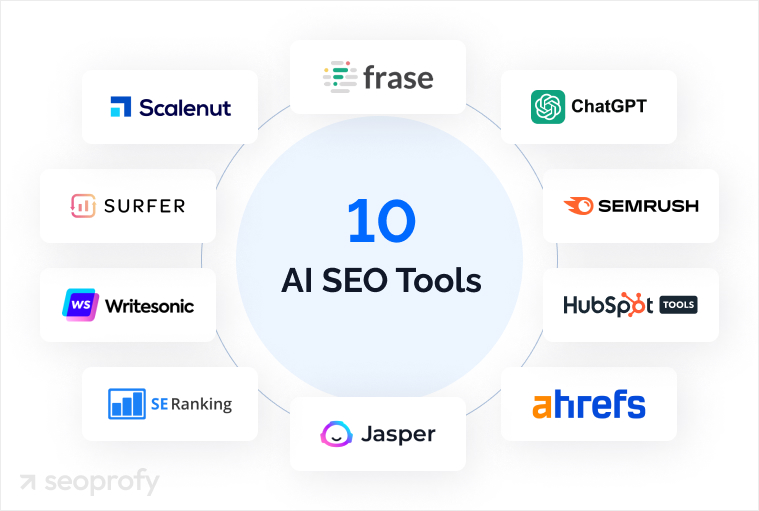
The advantages extend far beyond cost savings. Free AI SEO tools democratize access, letting solo founders and non-profits compete with established brands. They reduce time-to-insight dramatically—a technical audit that once took days can now run in minutes. The iterative learning built into these tools often means they improve over time without additional investment. However, limitations are equally real. Free tiers impose usage caps, watermarked outputs, or delayed processing. The AI models might train on older data, missing the latest algorithm shifts. Crucially, free tools rarely offer integrated workflows, forcing you to juggle multiple logins and manual data transfers.
| Aspect | Benefits | Limitations |
|---|---|---|
| Cost | Zero financial barrier; ideal for testing and learning. | Premium features locked; may stall as site scales. |
| Speed | Instant keyword ideas, content drafts, audit summaries. | Rate limits slow down large projects. |
| Data Freshness | Some tools (like Google Trends) update daily. | Generative AI models often have knowledge cutoffs. |
| Ease of Use | Minimal onboarding; intuitive chat interfaces. | Output requires human verification to avoid errors. |
| Customization | Prompt-based control over tone and format. | Limited training on proprietary business data. |
Comparison: Free AI SEO Tools vs. Paid Suites
Placing free tools alongside industry-standard platforms clarifies where gaps appear and when an upgrade becomes necessary. The table below compares typical free AI SEO tool capabilities with premium all-in-one solutions like Semrush or Ahrefs paid plans.
| Feature | Free AI SEO Tools Stack | Paid Suite (e.g., Semrush, Ahrefs) |
|---|---|---|
| Keyword Database Size | Limited sample or Google-only data; often tens of thousands of suggestions. | Billions of keywords with click, CPC, and trend history. |
| Content Generation | High-quality drafts from ChatGPT/Claude free tiers; prompt engineering required. | Integrated AI writing assistants with brand voice settings. |
| Backlink Index | Restricted to verified site data or limited daily queries. | Massive live index with historical analysis and competitor tracking. |
| Technical Audits | Up to 500 pages (Screaming Frog free) or per-page analysis (Lighthouse). | Enterprise-scale crawls with scheduled monitoring. |
| Reporting | Manual export and assembly; Google Data Studio can bridge gaps. | Automated white-label reports with branding. |
| AI Accuracy Transparency | Model limitations visible; regular updates announced. | Often proprietary scoring; deeper calibration options. |
The free stack works best for sites with fewer than 200 pages and content-centric SEO. Once competitive analysis becomes a weekly requirement or you need historical backlink data, a paid subscription rapidly proves its worth. However, many professionals maintain a hybrid approach—using free AI tools for content ideation and first drafts, then paid platforms for tracking and link intelligence.
Practical Application: Building an SEO Workflow with Free AI Tools
The true power of free AI SEO tools emerges when they’re chained into a repeatable system. Below is a concrete, step-by-step workflow that you can implement today without spending anything.
Step 1: Keyword and Topic Discovery
Start in Google Keyword Planner. Enter a broad seed keyword related to your niche, such as “organic gardening.” Export the list of ideas and filter for low-competition terms with at least 100 monthly searches. Next, open Google Trends and compare several of these terms to identify which ones have steady or rising interest. Finally, use AnswerThePublic’s free searches on your top three keywords to capture question-based queries that AI can later weave into article subheadings. This process generates a list of 15-20 semantically rich topics mapped to real search demand.
Step 2: SERP and Intent Analysis
For each target keyword, manually review the first page of Google—but enhance your analysis with the free Keyword Surfer extension. Note the dominant content type: is it listicles, how-to guides, or product pages? Paste the top-ranking URL into ChatGPT (or Claude) and prompt: “Analyze the structure, headings, and entity coverage of this article. What subtopics does it cover that I should include?” The A
Step 3: Content Drafting and On-Page Optimization
Use the AI content brief to draft an article in ChatGPT or Gemini. Request a structure with recommended headings, then generate section by section to maintain quality. Once the draft is in WordPress, run the free Yoast SEO analysis. Pay close attention to keyphrase density, meta description length, and internal link suggestions. The AI-powered readability checks in Yoast will flag overly complex sentences—simplify them. Insert relevant structured data markup using a free plugin like Schema & Structured Data for WP, which generates FAQ or Article schema with minimal configuration.
Step 4: Technical Health and Indexation
Connect your site to Google Search Console and Screaming Frog (free version). Crawl your top 500 pages in Screaming Frog; the AI-driven “Duplicate Content” tab will surface pages with thin or near-duplicate body text—merge or canonicalize them. In Search Console, filter for pages with decreasing clicks despite stable impressions, which indicates a ranking drop that may need content refresh. Use Lighthouse directly from Chrome DevTools on key pages to audit Core Web Vitals and implement suggested fixes like image compression or font optimization.
Step 5: Basic Link Building with AI Assistance
Identify content that earned many links using the free BuzzSumo search for a topic. Create a significantly improved version—more recent data, original visuals, expert commentary. Then use Hunter.io’s free plan to find contact information for sites that linked to the original pieces. Draft a personalized outreach email with AI, emphasizing the added value of your resource. While this method is manual, it consistently builds backlinks when pursued with genuine relationship intent.
Common Mistakes When Using Free AI SEO Tools and How to Avoid Them
The accessibility of free AI tools brings a hidden risk: overconfidence. Users often treat AI output as publish-ready, forgetting that search engines reward originality and expertise. The following errors derail many otherwise promising campaigns.
Mistake 1: Publishing raw AI content without human review. AI can fabricate statistics, misattribute quotes, or generate text that is grammatically correct but factually hollow. Always verify claims against primary sources and inject your own experience. A simple edit that adds a personal anecdote or unique case study transforms generic AI text into something that demonstrates real-world expertise.
Mistake 2: Ignoring search intent nuances. AI keyword tools might suggest terms with high volume but mismatched intent. For example, “best project management software” requires comparison and review content, not a promotional landing page. Cross-reference keyword lists with manual SERP analysis every time. No free AI tool yet reliably distinguishes between commercial, transactional, and informational intent without human judgment.
Mistake 3: Over-optimizing on-page elements. Some free optimization tools flag missing “exact match” keywords in every heading, leading to keyword stuffing. Instead, use AI to generate natural semantic variants and ensure readability trumps rigid density formulas. Search engines today reward topic comprehensiveness, not mechanical repetition.
Mistake 4: Neglecting technical SEO for content creation. After a few successes with AI-written articles, it’s tempting to pour all energy into more content while site speed deteriorates or index bloat grows. Schedule a monthly Lighthouse and Search Console review, and treat technical debt as seriously as content gaps.
Mistake 5: Trusting AI-generated backlink lists blindly. Free backlink checkers may include spammy domains that could trigger a penalty. Always manually inspect a linking domain’s relevance and authority before pursuing or disavowing. AI can flag patterns, but the final call requires human discernment.
Important Notes for Maximizing Free AI SEO Tools Safely
Data privacy demands attention. Free AI models often use your inputs for training—never paste sensitive business data, customer lists, or proprietary strategies into a public chat interface. Stick to generic prompts or hypotheticals. Additionally, always disclose AI-assisted content to clients when appropriate, maintaining transparency. Another crucial note: free versions evolve. A tool that offered generous limits last month might restrict them tomorrow, so diversify your toolkit. Having alternatives ready prevents workflow disruption. Finally, remember that AI is a multiplier, not a replacement. The best results come from combining machine efficiency with human creativity, subject-matter expertise, and genuine understanding of audience needs.
Frequently Asked Questions About Free AI SEO Tools
What are the best free AI SEO tools for beginners?
Beginners should start with Google Search Console for technical oversight, ChatGPT free plan for content drafting, and Google Keyword Planner for keyword research. These three cover the foundation without any cost. Supplement with the Yoast SEO free plugin for on-page guidance, and you have a complete starter stack. The interfaces are intuitive, and extensive tutorials exist for each tool.
Can free AI tools really replace paid SEO software?
For many individuals and small businesses, yes—within certain limits. Free AI SEO tools can handle content creation, basic keyword research, and technical audits for sites up to a few hundred pages. However, they lack the deep competitive analysis, historical data, and automation of enterprise platforms. As your site grows and revenue depends on SEO, the time saved by a paid suite usually justifies the investment. Think of free tools as the launchpad; you can scale quite far before hitting a hard ceiling.
How accurate are free AI SEO tools for keyword volume?
Accuracy varies. Google Keyword Planner provides the most reliable volume data directly from Google, but it often shows broad ranges. Free third-party tools estimate volumes using clickstream data and search result scraping, which can be 20–40% off. The directionality (whether a term is high or low interest) is typically correct, making them suitable for prioritization. For precise numbers, nothing beats verified Google Ads data in a paid plan, but for content planning, free estimates are sufficient.
Do free AI content generators harm Google rankings?
No, as long as the output is valuable, original, and edited by a human. Google’s guidelines focus on the quality and usefulness of content, not how it was created. AI-generated text that is reviewed, fact-checked, and enriched with expert insights can rank extremely well. Problems arise only when users publish auto-generated spam that adds no value. Treat AI as a drafting assistant, and your rankings will reflect the final quality, not the origin of the words.
Can I use free AI SEO tools for client projects?
Yes, with conditions. Many freelancers and small agencies build entire client deliverables using free AI tools. However, you must verify all data, avoid using free tools that store or claim ownership of your inputs, and always add a layer of professional analysis. Clients pay for your judgment, not just a tool’s output. Transparent communication about your process builds trust, and hybrid workflows—where AI does the heavy lifting and you provide strategy—are becoming an industry standard.
How do free AI SEO tools stay free?
Most operate on a freemium model: the free tier acts as a lead magnet for paid plans. Others monetize through data aggregation, advertising, or open-source community support. Generative AI tools like ChatGPT and Claude offer free tiers to gather user feedback and improve models, with limits to manage server costs. Always review the privacy policy to understand how your data is used, especially with generative platforms.
Conclusion
Free AI SEO tools have fundamentally changed the landscape of search optimization. They’ve stripped away the paywall that once separated serious practitioners from casual website owners. From discovering high-intent keywords to generating full content briefs and auditing technical health, these tools deliver professional-grade assistance at zero cost. The secret isn’t in any single tool, but in weaving them into a disciplined workflow that respects data privacy, human oversight, and authentic expertise. Start with the foundational trio—Google Search Console, a generative AI assistant, and a keyword tool—then expand as you refine your process. The brands that are winning at SEO right now aren’t necessarily the ones with the biggest budgets; they’re the ones smartest about blending free AI capabilities with genuine human insight. That opportunity is open to anyone willing to learn and apply the strategies outlined here. Your next ranking breakthrough doesn’t require a invoice—just curiosity, creativity, and the right free tools at your fingertips.
Xem thêm:
- AI SEO Keyword Suggestions: The Complete Guide to Smarter Search Rankings
- AI SEO Zapier Automation: The Complete Guide to Scaling Your Organic Growth in 2025
- AI SEO Automated Keyword Clustering: The Complete Guide to Smarter Content Architecture
- AI SEO Personalization: The Complete Guide to Hyper-Relevant Search Rankings in 2025
- AI SEO Generative Search Strategy: The Complete Playbook for 2025
Bài viết cùng chủ đề:

AI SEO SEO Automation with Make: The Complete Workflow Guide

AI SEO SEO Automation with Zapier: The Complete Workflow Guide

AI SEO SEO Automation with n8n: The Complete Workflow Guide
AI SEO SEO Automation with Gemini: The Complete Guide to Scaling Organic Growth

AI SEO SEO Automation with Claude: The Complete Guide to Scaling Content in 2025

AI SEO SEO Automation with ChatGPT: The Complete Playbook for 2025

AI SEO & SEO Automation for Affiliate Sites: The 2025 Playbook for Passive Income Growth
AI SEO & SEO Automation for Bloggers: The Complete Guide to Scaling Your Content

AI SEO & SEO Automation for Agencies: The Complete 2025 Playbook

AI SEO and SEO Automation for Ecommerce: The Complete Playbook for 2025

AI SEO & SEO Automation for WordPress: The Complete Playbook for 2025
AI SEO SEO Automation Strategy: The Complete Playbook for 2025

Mastering the AI SEO SEO Automation Process: A Complete Guide to Scaling Organic Growth
AI SEO SEO Automation System: The Complete Guide to Scaling Organic Growth in 2025
AI SEO SEO Automation Platform: The Complete Guide to Scaling Organic Growth in 2025
AI SEO SEO Automation Software: The Complete Guide to Scaling Organic Growth in 2025















