
No products in the cart.
GEO SEO: The Definitive Guide to Generative Engine Optimization in 2025
29
Jul
Jul
Search is no longer a list of blue links. Generative AI engines like ChatGPT, Google AI Overviews, Perplexity, and Bing Copilot are reshaping how billions of people find information. This tectonic shift has birthed a new discipline called GEO SEO – Generative Engine Optimization. Unlike traditional SEO that revolves around ranking on search engine results pages, GEO SEO focuses on becoming the source that AI models cite, summarize, and recommend in their direct answers. Mastering it now means the difference between being invisible to tomorrow’s searchers and dominating the most valuable digital real estate: the AI-generated answer.
This guide breaks down everything you need to know about GEO SEO: what it truly is, how generative engines select and process content, the strategies that already work, and the critical mistakes that will tank your visibility. You will leave with a clear, actionable framework to future-proof your organic presence.
What Is GEO SEO? Understanding Generative Engine Optimization
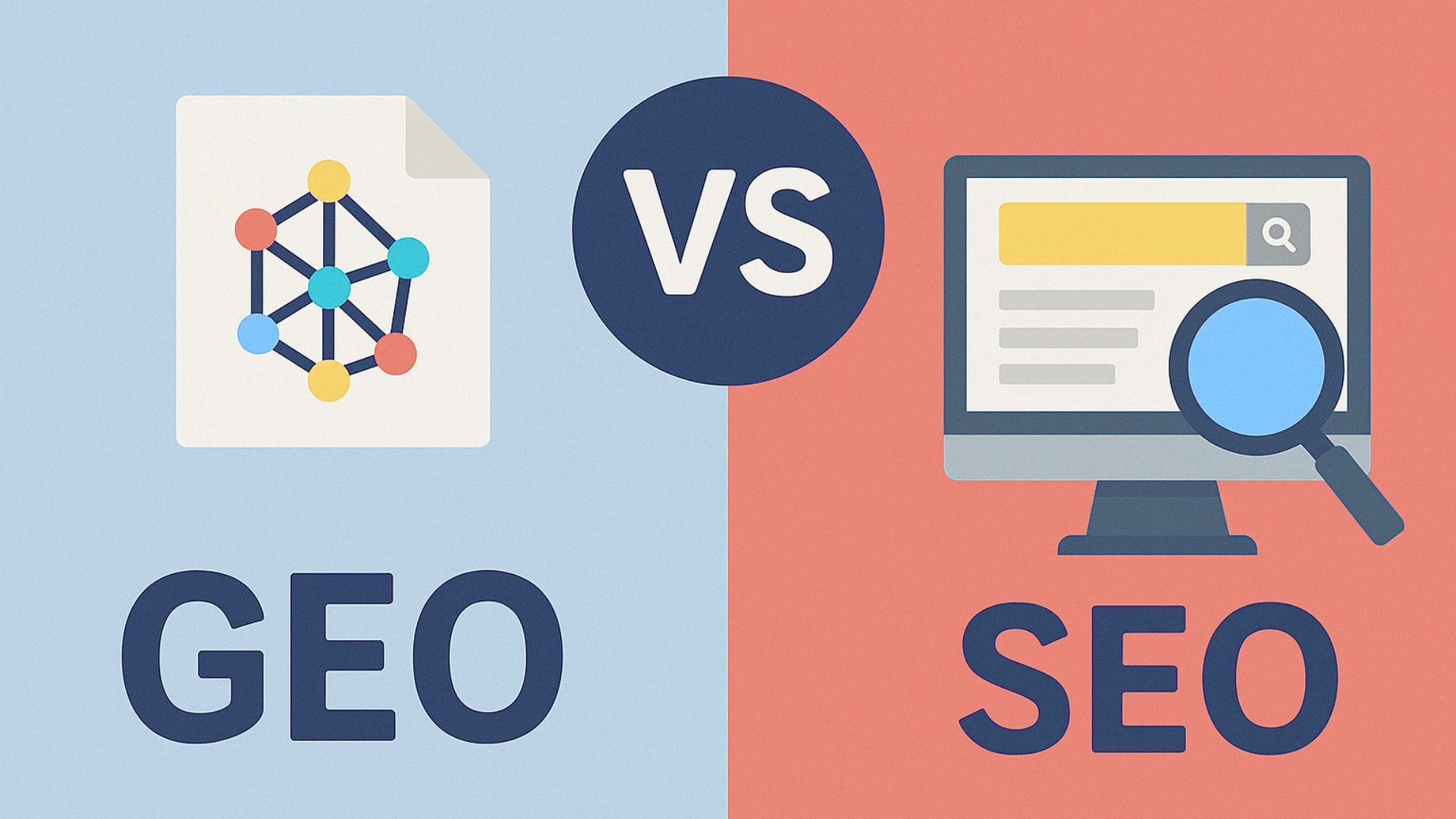
GEO SEO stands for Generative Engine Optimization. It is the set of practices designed to increase the likelihood that your content is selected, cited, and prominently featured by generative AI search engines and large language models (LLMs). These systems do not just retrieve web pages; they generate a new, synthesized answer from multiple sources. GEO SEO ensures your brand’s information, data, and insights make it into that synthesized output.
Traditional SEO optimizes for crawlers that index and rank pages. Generative engines, however, use content as raw material for natural language generation. The goal shifts from “rank in position one” to “be the source an AI model trusts enough to quote and paraphrase.” That means algorithms now care about entity relationships, source authority, factual consistency, citation–worthiness, and how well your content can be restructured into a concise, reliable answer.
GEO SEO is not an entirely new world; it builds on the foundation of technical SEO, topical authority, and E‑E‑A-T (Experience, Expertise, Authoritativeness, Trustworthiness). But it adds new layers: structured clarity, citation-ready formatting, proactive statistical data separation, and explicit answer optimization. As AI overviews become the default interface, ignoring GEO SEO is like ignoring mobile optimization in 2010.
Why Generative Engine Optimization Matters Now
The adoption of AI search has exploded. Google serves AI Overviews on hundreds of millions of queries. ChatGPT crossed 200 million weekly active users. Perplexity processes over a hundred million queries per month. These platforms divert traffic away from traditional organic results, but they also open a new attribution channel: a clickable link or a brand mention inside the generated answer.
Early research from a leading CMS platform found that pages optimized for GEO principles saw a 40% higher chance of being cited in AI-generated summaries. Another study by an enterprise SEO toolset provider showed that citations within generative answers can yield click-through rates comparable to or even exceeding featured snippets in classic search. When your content becomes the source material, you earn brand authority, referral traffic, and influence that compounds as more models incorporate your data.
Ignoring GEO SEO puts you at risk of zero-click irrelevance. The content still exists, but if an AI reads it and decides not to cite it, you become invisible to a fast-growing segment of information consumers.
How Generative Engines Select Content: The GEO Algorithm Mindset

Generative search engines operate differently from traditional keyword-based ranking. They typically follow a multi-step process: query interpretation, information retrieval from a trusted corpus, source evaluation, answer synthesis, and citation. Understanding each step reveals exactly where GEO SEO must exert influence.
Query interpretation and intent matching. The engine parses the question, often reformulating it into a few internal search queries. It looks beyond keywords to understand entity relationships, subtopics, and user intent complexity. Your content needs to cover a topic with enough depth that the engine can extract multiple angles without needing other sources.
Source retrieval and authority filtering. The model searches a real-time or cached index of web pages, documents, and structured data. Authority signals matter immensely: backlinks, co-citations, brand mentions across authoritative sites, and consistent structured data (Schema.org) are weighted heavily. A page that is the consensus reference on a topic is far more likely to be retrieved.
Content relevance and citability scoring. Once retrieved, the content is analyzed for factual density, uniqueness, and structure. The engine prefers content that is well-segmented, with clear statements that can be extracted verbatim. Tables, lists, definitions, and numerically outlined steps dramatically increase citability because they are easy to parse and repackage.
Synthesis and attribution. The language model weaves together points from several sources. It decides which source to cite for each specific claim. This decision is influenced by consensus (does this claim match what other trusted sources say?), freshness, and the semantic clarity of the original sentence. GEO SEO ensures each claim is crystal-clear, standalone, and supported by data that is hard to misinterpret.
Core Differences Between Traditional SEO and GEO SEO
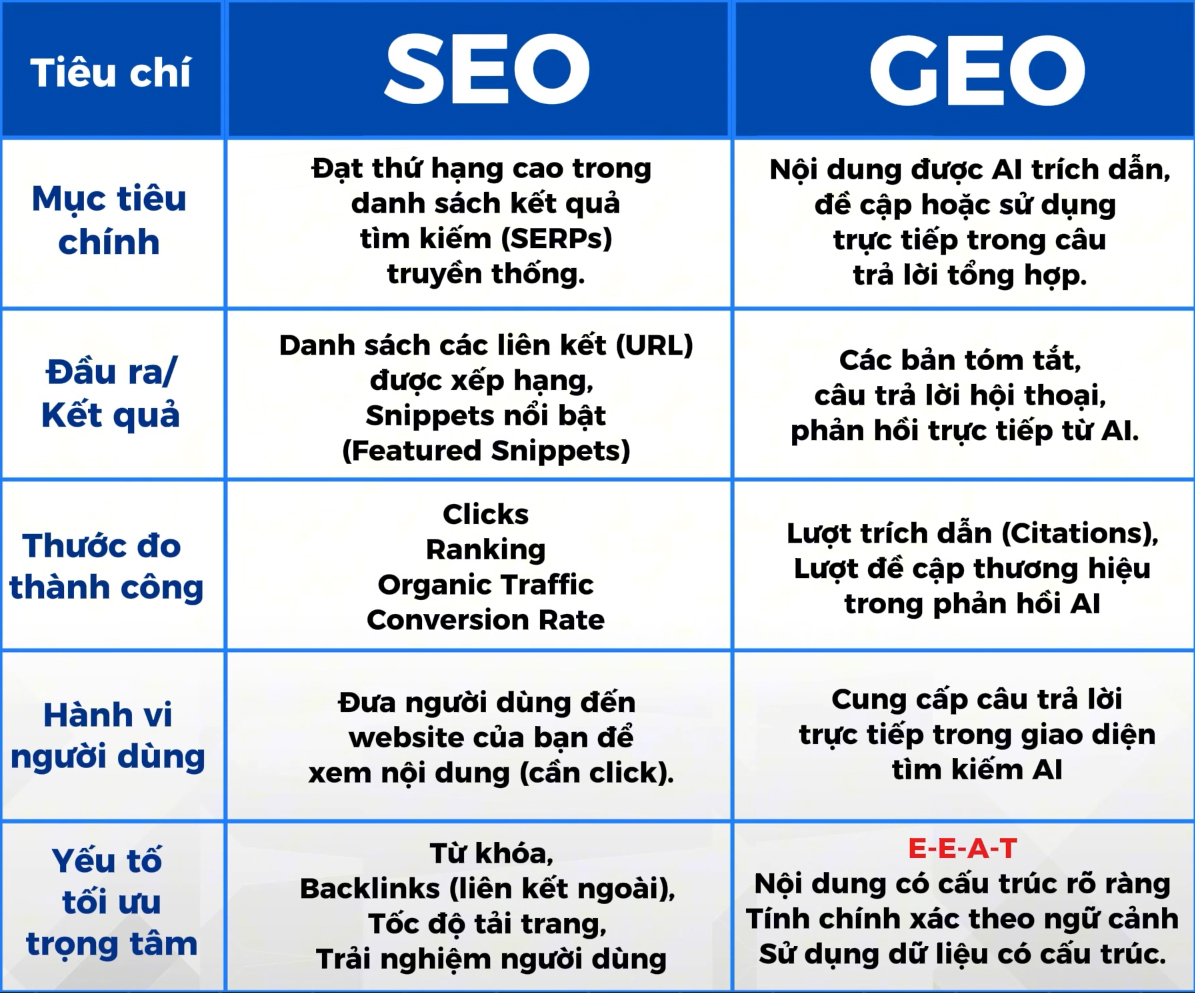
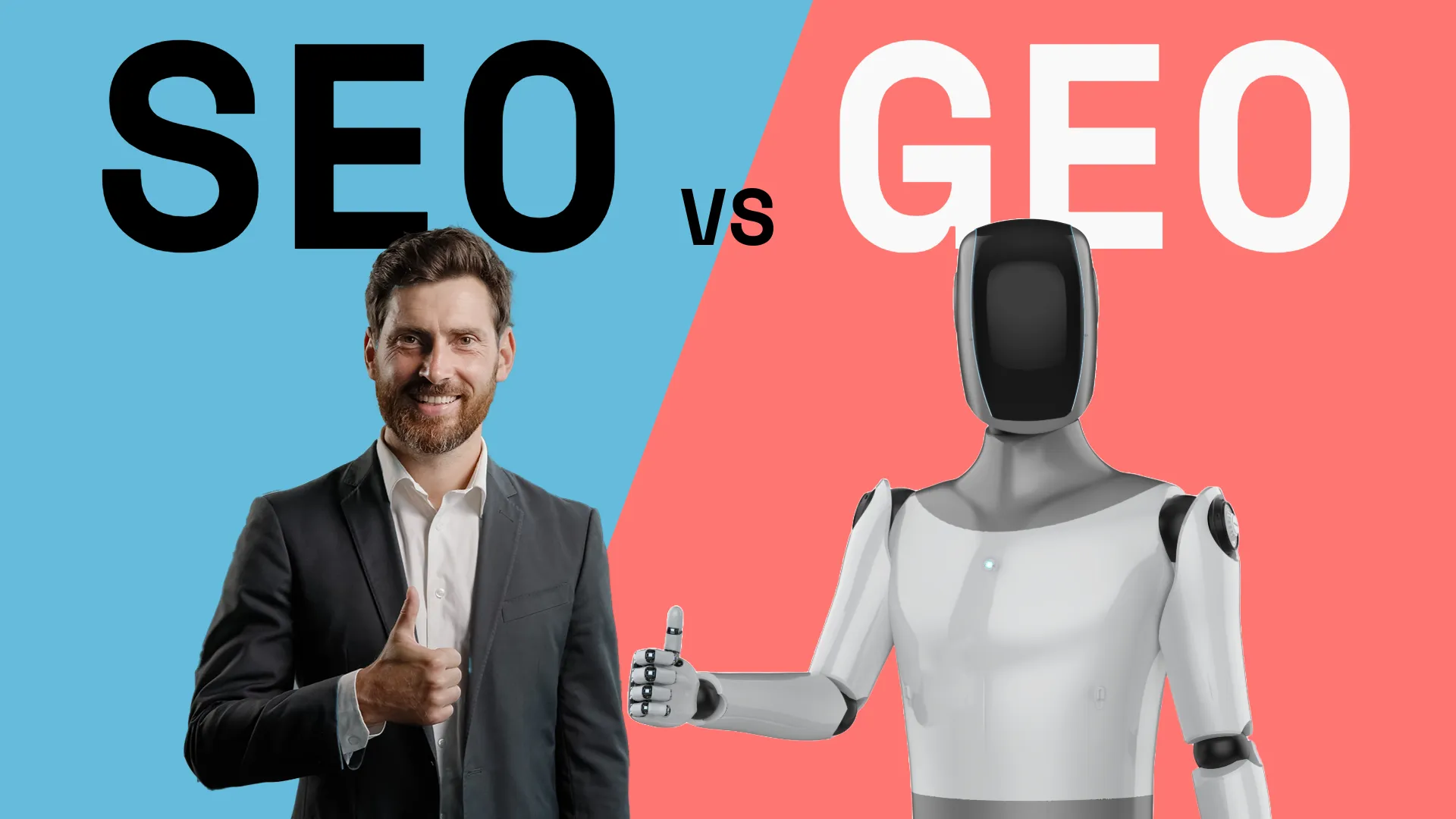
| Dimension | Traditional SEO | GEO SEO |
|---|---|---|
| Primary goal | Rank high on SERP | Be cited in AI-generated answers |
| Success metric | Clicks, rankings, impressions | Citation rate, mention frequency, referral traffic from AI |
| Content format | Landing pages, long-form guides, blogs | Highly structured, citation-ready statements, statistic-rich |
| Keyword approach | Target phrases, related terms | Entity-driven with strong topic clusters |
| Authority building | Backlinks, Domain Rating | Backlinks plus consensus authority across multiple high-trust sources |
| Technical signals | Crawlability, speed, meta tags | Structured data, proper semantic HTML5, clean DOM for extraction |
The GEO SEO Content Framework: Proven Strategies That Drive Citations
Moving from theory to implementation requires a systematic framework. The strategies below are distilled from observable patterns in AI Overviews, ChatGPT browsing sessions, and research reports.
1. Build Topical Authority with Entity-Rich Content Hubs
Generative engines build a knowledge graph around entities – people, places, concepts, products. Instead of writing one-off blog posts, create interconnected content hubs. A hub page covers the core topic broadly, while spoke pages dive deep into subtopics. Each page consistently uses unambiguous entities and links to other pages in the hub using clear, descriptive anchor text. This signals to the model that your site is a comprehensive source for that subject, increasing the chance it will be retrieved for a wider range of queries.
2. Optimize for Citation-Ready Extractability
AI models love content that can be lifted cleanly. Apply these formatting principles:
- Place a concise, one-sentence definition or statement immediately after a subheading.
- Use bold to highlight key terms and answer fragments.
- Break down processes into numbered steps with clear, short labels.
- Present comparison data in HTML tables with machine-readable headers.
- Include statistic cards: standalone sentences that say “According to [source], [statistic]” to make the data attribution trivial for the model.
- Citation occurrence – how often your brand or domain appears across major AI answer engines for a defined set of queries.
- AI referral traffic – visits from domains like chat.openai.com, perplexity.ai, or Google’s AI Overview referrer streams (when available).
- Mention volume – unprompted brand mentions in AI answers, even without a clickable link.
- Share of voice in AI summaries – what percentage of a topic’s AI-generated answer is sourced from your content versus competitors’.
- Engagement depth – for AI referral visitors, measure scroll depth, time on page, and conversion rate to evaluate traffic quality.
- Writing meandering, promotional copy. AI hates fluff. Content that buries facts under marketing language gets stripped out. Write like a journalist reporting facts, not a copywriter selling a product.
- Neglecting semantic HTML. Improper use of headings, lack of list elements, and missing table structures confuse extraction algorithms. Valid, semantic HTML5 is a prerequisite for accurate parsing.
- Ignoring entity disambiguation. If your page talks about “Apple” without context, the model may not know if you mean the fruit or the company. Always use full names and contextual clues on first mention, linking to a recognized knowledge base entry when appropriate.
- Relying solely on outdated keyword research. Focusing on search volume of head terms misses the long-tail, question-based, and multi-intent queries that generative engines handle best. Use “People also ask” data, natural language query datasets, and conversation analysis.
- Blocking AI crawlers. Some publishers, fearing unauthorized use, block GPTBot, CCBot, or Google-Extended. While the copyright debate is real, blocking crawlers guarantees zero citations. At minimum allow selected crawlers and monitor performance.
- Static content without ongoing updates. A one-time “ultimate guide” that hasn’t been refreshed in two years gets deprioritized in fast-moving knowledge domains. Treat content as a living asset.
- Clean, fast HTML delivery. Minimize unnecessary JavaScript rendering for critical content. While some AI crawlers can execute JavaScript, many still prefer server-side rendered or static HTML. The content should be fully present in the initial HTML response.
- Comprehensive Schema.org markup. Go beyond basic organization schema. Use FAQ, HowTo, Article, BreadcrumbList, Speakable, and for data-driven pages, Dataset and StatisticalVariable schemas. Validate with the Schema Markup Validator.
- Semantic outline and heading hierarchy. Only one H1 per page. Logical flow from H2 to H3. This creates a document outline that retrieval models can easily navigate.
- Proper canonicalization. Consolidate duplicate content using canonical tags. An AI model encountering multiple versions of the same article may split authority, reducing citation likelihood.
- Accessible language attributes. Set the correct lang attribute in the HTML tag. This helps models determine the intended language and improve extraction accuracy.
- Author transparency. Each content piece should link to a detailed author page with their real name, photo, credentials, and verifiable experience. For medical, financial, or legal topics, display professional certifications clearly.
- Editorial policy and fact-checking statements. A published “Editorial Policy” page, plus brief fact-checked badges or notes on key claims, signals institutional integrity. Some AI systems now factor this into credibility assessments.
- Consensus alignment with external validation. When you present statistics, link to the primary study or official source. This external linkage creates a verifiable trail that both users and AI can follow, reinforcing your trust score.
- Secure and accessible site infrastructure. HTTPS, a clear privacy policy, and accessible design (WCAG) are baseline trust indicators. Although not directly cited, these influence overall site quality signals used in retrieval layers.
When you format this way, an entire section can be ingested and repurposed without altering meaning or requiring heavy rewrites, which models favor over ambiguous paragraphs they might misinterpret.
3. Use Structured Data to Give Machines a Rosetta Stone
Schema markup remains one of the strongest signals for generative engines. Implement FAQ, HowTo, Article, Dataset, and QAPage schemas relevant to your content. For statistical and factual pages, use ClaimReview if applicable. Structured data acts as an explicit instruction manual, telling the model exactly what each piece of content represents. Sites that thoroughly mark up their content with proper @type and property attributes are far easier for retrieval systems to categorize accurately.
4. Create and Own Unique Data Points
Generative engines love original research, proprietary data, and unique survey results. When multiple sources reference the same data, the originator accumulates a special kind of authority. Publish original studies, benchmark reports, or aggregated industry statistics. Make sure each datapoint is presented with full methodological clarity so the AI can confidently cite it. This transforms your brand into a primary source, not a middleman repeating someone else’s work.
5. Maintain Factual Consensus and Update Fast
Models have a built-in bias toward information that aligns with multiple trusted sources. If your page contains a controversial or outdated claim that contradicts broader consensus, it may be ignored altogether. Use tools to monitor when your topic’s accepted facts evolve, and update content immediately. Version notes and “last updated” timestamps in visible Schema (dateModified) provide a freshness signal. An updated page that matches the current consensus beats a stale, authoritative page every time.
6. Earn Links from High-Trust, Authoritative Domains
The retrieval layer still relies on classic authority signals. Earning backlinks from.edu,.gov, top-tier news outlets, and recognized industry publications remains a pillar of GEO SEO. These backlinks not only improve your retrieval ranking but also shape entity associations. A link from a high-credibility source functions as a trust endorsement that cascades into AI citations.
Measuring GEO SEO Performance: Metrics That Move the Needle
Traditional rank tracking tools are not enough. You need new monitoring signals that reflect citation visibility. Consider tracking:
Build a dashboard that combines data from platform analytics, server logs, and third-party AI citation monitoring tools. This closed-loop measurement is the only way to validate GEO SEO experiments.
Common GEO SEO Mistakes That Cripple Citation Potential
Even seasoned SEO teams stumble when they first approach generative engine optimization. Recognizing these errors early saves months of wasted effort.
GEO SEO for Different Content Types
The application of GEO principles varies by format. Tailoring your approach to the content’s nature yields better results.
Product and Service Pages
For e-commerce and SaaS, emphasize structured product data, clear specifications tables, and concise value propositions. Add a FAQ section with direct answers about use cases, pricing, and comparisons. Include genuine customer review summaries with sentiment data. An AI answering “best CRM for small business” will pull quantifiable features and review consensus, so make those exceptionally easy to extract.
Educational and How-To Content
Maximize step-by-step workflows, list-based instructions, and definitions. Start each section with a direct answer. For instance, “To reset your router, follow these steps: 1. Locate the reset button. 2. Press and hold for 10 seconds.” This kind of instruction is gold for generative summarization. Use HowTo schema religiously.
News and Trending Topics
Speed is critical, but so is factual accuracy. Be the first to publish a structured summary: who, what, when, where, why, a clear timeline table, and verified statements with named sources. Update the article as the story develops, adding “Update: [date]” tags. AI models often prioritize the most recent authoritative snapshot for fast-moving events.
Research and Data Reports
Publish a dedicated “key findings” section at the top, with each finding as a numbered, bold claim. Use Dataset schema and link to the raw data in a machine-readable format (CSV). This makes the entire report citable, not just the summary. Attach an author bio with strong credentials to bolster E‑E-A-T.
Preparing Your Technical Foundation for GEO SEO
Generative engines interact with your site’s code more deeply than a simple crawler. Certain technical optimizations are non-negotiable.
Building Trust Signals That Generative Engines Recognize
E‑E-A-T is the backbone of modern search quality, and it extends into GEO. Generative models are increasingly sensitive to trust signals because they want to avoid hallucinating false information.
The Role of GEO SEO in Zero-Click and Answer-Engine Futures
As generative search matures, the line between a citation and a conversion blurs. Some engines already embed transactional capabilities directly in the answer. When a user asks “best project management tool for remote teams” and the AI recommends a brand with a “try now” button, that’s a high-intent acquisition channel powered by GEO. The brands that invested early in becoming the cited source now enjoy an unfair advantage.
This shifts the marketing funnel leftward. Instead of hoping users click through and read a comparison article, you can achieve brand preference right in the AI response. That means the content you optimize must not only inform but also persuade succinctly. The one-liner that gets cited should communicate not just facts but value.
Frequently Asked Questions About GEO SEO
What does GEO SEO stand for?
GEO SEO stands for Generative Engine Optimization. It is the practice of optimizing content so that generative AI search engines like ChatGPT, Google AI Overviews, and Perplexity cite and feature it in their direct answers.
How is GEO SEO different from traditional SEO?
Traditional SEO aims to improve rankings on search engine results pages for clicks. GEO SEO focuses on becoming the source that AI models quote and paraphrase, prioritizing citability, structured clarity, and authoritative consensus over keyword placement alone.
Can small businesses benefit from GEO SEO?
Absolutely. Small businesses with deep, unique expertise in a niche can become the go-to cited source in that area. By publishing original data, structured guides, and maintaining strong local entity signals, a small publisher can outperform large generic sites in AI citation counts.
Does GEO SEO require blocking AI crawlers?
No, blocking AI crawlers like GPTBot or Google-Extended will prevent your content from being cited, making you invisible in generative answers. A balanced approach is to allow crawling while monitoring and ensuring attribution and traffic value.
What type of content gets cited most often by generative engines?
Content that is highly structured, factual, and citation-ready performs best. This includes statistics presented as standalone sentences, ordered lists, comparison tables, clear definitions, and original research with named sources.
How do I track success in GEO SEO?
You can track citation occurrences, AI referral traffic from known AI platform domains, share of voice in AI-generated answers, and conversion metrics from those referral visits. A combination of analytics, log analysis, and specialized monitoring tools is required.
Conclusion: Act Now Before the AI Answer Gatekeepers Lock You Out
GEO SEO is no longer a futuristic concept; it is the new front line of organic visibility. As generative AI becomes the default information interface for hundreds of millions, the brands that command citations today will own the customer relationship tomorrow. The shift from ranking to being cited is profound, but the underlying principles are accessible: create clearly structured, uniquely valuable, and impeccably sourced content. Build topical authority, ensure machines can read your pages effortlessly, and maintain the kind of trust that makes a language model confident enough to quote you.
Waiting for the landscape to stabilize is a mistake. The algorithms that select citations are already learning from early-adopter content patterns. Every search that happens today trains the next generation of models. Implement the GEO SEO framework now, measure relentlessly, and evolve. The winners in search’s generative era will be those who treated optimization not as a trick but as a deep commitment to becoming the most reliable, extractable source in their field.
Xem thêm:
- AI SEO Redirect Chains: The Complete Guide to Automated Redirect Management
- AI SEO Silo Structure: The Complete Guide to Building Topically Authoritative Websites
- AI SEO Knowledge Graph SEO: The Complete Guide to Dominating Search in 2025
- AI SEO Keyword Expansion: The Complete Guide to Scaling Your Content Strategy
- WP Trove AI Blogging: The Complete Guide to Automated Content Creation in 2025
Bài viết cùng chủ đề:

AI SEO SEO Automation with Make: The Complete Workflow Guide

AI SEO SEO Automation with Zapier: The Complete Workflow Guide

AI SEO SEO Automation with n8n: The Complete Workflow Guide
AI SEO SEO Automation with Gemini: The Complete Guide to Scaling Organic Growth

AI SEO SEO Automation with Claude: The Complete Guide to Scaling Content in 2025

AI SEO SEO Automation with ChatGPT: The Complete Playbook for 2025

AI SEO & SEO Automation for Affiliate Sites: The 2025 Playbook for Passive Income Growth
AI SEO & SEO Automation for Bloggers: The Complete Guide to Scaling Your Content

AI SEO & SEO Automation for Agencies: The Complete 2025 Playbook

AI SEO and SEO Automation for Ecommerce: The Complete Playbook for 2025

AI SEO & SEO Automation for WordPress: The Complete Playbook for 2025
AI SEO SEO Automation Strategy: The Complete Playbook for 2025

Mastering the AI SEO SEO Automation Process: A Complete Guide to Scaling Organic Growth
AI SEO SEO Automation System: The Complete Guide to Scaling Organic Growth in 2025
AI SEO SEO Automation Platform: The Complete Guide to Scaling Organic Growth in 2025
AI SEO SEO Automation Software: The Complete Guide to Scaling Organic Growth in 2025















